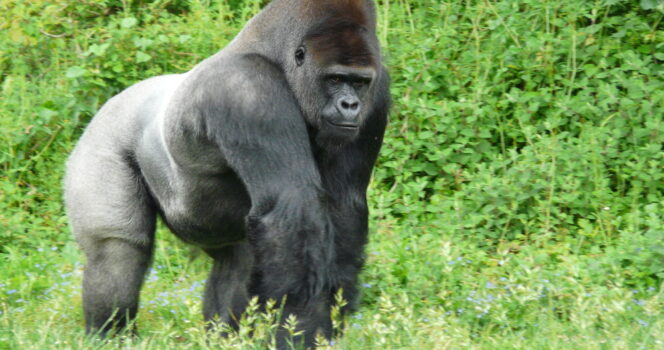
Harambe Remembered A Decade After Fatal Zoo Incident That Sparked Global Debate
Tribute Revives Global Memory of a Widely Discussed Incident
A public message shared from the White House on X marked a moment of remembrance for Harambe, a critically endangered western lowland gorilla whose death became one of the most widely discussed zoo incidents in modern internet history. The post was shared one day after what would have been Harambe’s 27th birthday.
The message described Harambe as a “true patriot” and reflected on how his name and story continued to be remembered years after the event that led to his death. The tribute once again brought attention to a case that had remained part of online culture and public conversation for a decade.
“Today, we remember a legend,” the post read. “On this day in history, Harambe would have celebrated another birthday. An icon that became part of internet history, American culture, and an entire generation’s timeline.”
It continued by referencing the time that had passed since the incident and the lasting attention surrounding it. “Tomorrow marks 10 years since we lost him. He became a symbol of loyalty, strength, chaos, unity, and the strange beauty of the internet bringing millions of people together for one cause: never forgetting Harambe.”
The message concluded with, “Everyone remembers where they were when they heard the news. And somehow, a decade later, his legacy still lives on. Gone, but never forgotten. Rest easy to a true patriot.”
Life at the Cincinnati Zoo Before the Incident
Before the global attention surrounding his death, Harambe lived at the Cincinnati Zoo as a 17-year-old gorilla. His daily life was part of a structured habitat designed for animal care and public viewing, where visitors observed his behavior as part of the zoo experience.
At the time, Harambe was part of an established wildlife program, and his enclosure followed standard safety designs used in similar facilities. Nothing at that stage suggested he would become a central figure in a widely discussed zoo incident.
The situation changed shortly after his 17th birthday, on May 28, 2016, when a sequence of events unfolded inside the enclosure that would later attract global attention.
The Day the Incident Began Inside the Enclosure
On May 28, 2016, a child identified as 3-year-old Isaiah Dickerson was visiting the zoo with his parents, Michelle and Deonne. During the visit, the child climbed over a 3-foot barrier and fell approximately 13 feet into the gorilla habitat.
The situation immediately triggered an emergency response. Zoo staff acted quickly to manage the enclosure and guide the animals away from the area where the child had entered. Two female gorillas moved away from the scene under staff direction.
Harambe remained in the enclosure area and moved toward the child. This marked the beginning of a rapidly developing situation that allowed very little time for reassessment or alternative planning.
Witnesses inside the zoo observed the gorilla interacting with the child within the habitat. Harambe, a 450-pound silverback, was seen dragging the child through the moat while remaining close during the unfolding event.
Reactions from visitors varied, with some expressing alarm and others attempting to record the situation on their phones while uncertainty grew about what would happen next.
Growing Tension and Urgent Decision-Making
As the situation escalated, zoo officials were forced to evaluate rapidly changing conditions involving a large animal and a child in close proximity. The unpredictability of the environment created significant pressure on response teams.
“The gorilla was clearly agitated; the gorilla was clearly disoriented,” zoo director Thane Maynard said of Harambe. “His arms are as big as our legs. They have huge hands, extremely strong. And that was the risk.”
The limited time available meant that officials had to make a critical decision without extended opportunity for alternative interventions. The combination of movement, proximity, and uncertainty created a high-risk scenario that intensified the urgency of the response.
The decision made during these moments would later become one of the most widely discussed zoo-related actions, influencing conversations about safety, animal behavior, and emergency protocols in controlled environments.
The Final Decision and Immediate Outcome
Zoo officials ultimately decided to use lethal force against Harambe. The gorilla was shot during the response, while the child survived the incident with minor injuries.
The outcome immediately sparked widespread public reaction and emotional debate. The incident quickly expanded beyond a local emergency and became a global subject of discussion across media and online platforms.
Public attention focused heavily on the speed of the decision and the irreversible result. At the same time, others emphasized the unpredictability of animal behavior under extreme stress and the difficulty of managing such emergencies safely.
The incident transitioned rapidly from a contained zoo event into a cultural moment that continued to be referenced in public discourse for years.
Public Reaction and Diverging Perspectives
Following the incident, public reaction developed into sharply divided viewpoints. Some observers questioned the circumstances that led to the child entering the enclosure and interpreted Harambe’s behavior in different ways.
Others emphasized the challenges faced by zoo officials in responding to an unpredictable and potentially dangerous situation involving a large animal and a human child.
Attention also turned toward the child’s family, particularly the mother, Michelle Gregg, who faced significant public scrutiny in the aftermath of the incident.
“My son is safe and was able to walk away with a concussion and a few scrapes… no broken bones or internal injuries,” Michelle Gregg wrote in a since-deleted Facebook post. “As a society, we are quick to judge how a parent could take their eyes off of their child, and if anyone knows me, I keep a tight watch on my kids.
