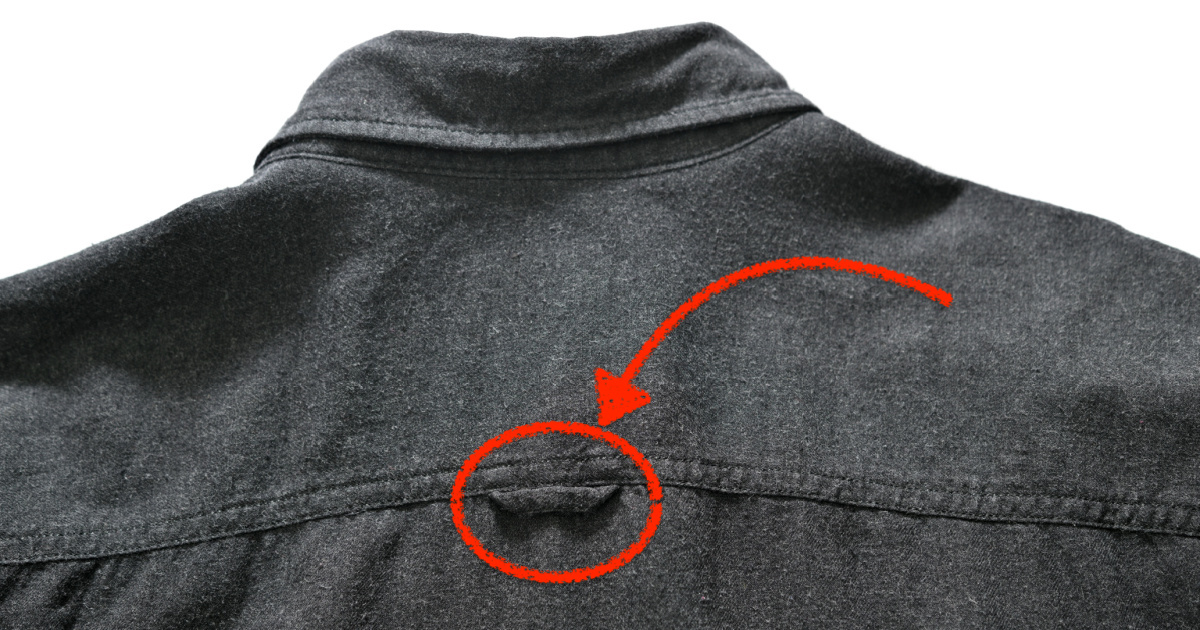
The Hidden Story Behind the “Locker Loop” on Button-Down Shirts
A Small Detail With a Long History
The button-down shirt has remained one of the most enduring staples in modern wardrobes. While its clean design and versatility are widely recognized, a small feature on the back of many shirts often goes unnoticed: a fabric loop commonly referred to as the “locker loop.”
Though it may appear decorative today, this detail carries a history rooted in practicality, cultural symbolism, and evolving fashion trends. Over time, it has shifted from a functional necessity to a subtle nod to tradition.
Practical Beginnings in Naval Life
The origins of the locker loop can be traced back to naval uniforms, where practicality was essential. Sailors often worked in confined environments with limited storage options, making traditional hanging methods inconvenient.
To address this issue, loops were added to the back of shirts to allow easier hanging and storage. This simple adjustment provided a practical solution, ensuring uniforms could be kept organized and less prone to damage or wrinkling.
At this stage, the feature had no fashion intention. It was purely functional, designed to meet the demands of daily life at sea.

Transition Into Civilian Fashion
By the 1960s, the locker loop had moved beyond its naval origins and entered mainstream clothing. As civilian fashion began adopting elements inspired by utilitarian design, the loop found a new audience.
A major influence in this transition came from clothing manufacturer GANT, which helped popularize the feature in button-down shirts. The company promoted the idea that the loop helped keep shirts neat when stored in lockers, particularly appealing to students and young professionals.
This association with organized, wrinkle-free storage gave the design a new identity, transforming it from a military utility into a recognizable fashion detail.
Ivy League Influence and Style Symbolism
The locker loop soon became associated with Ivy League fashion culture, where appearance and subtle details carried social meaning. Among style-conscious students, the loop was seen as part of a refined, collegiate aesthetic.
As this look spread, several clothing brands began incorporating their own versions of the design. It became a recognizable feature in the growing trend of preppy menswear, symbolizing a connection to tradition, education, and understated style.
Over time, the presence of the loop on a shirt became less about storage and more about identity and fashion alignment within a specific cultural style.
Social Meaning and Evolving Traditions
As the locker loop gained popularity, it also became associated with informal social customs among students. In some settings, removing the loop from a shirt was interpreted as a signal of a change in relationship status.
This symbolic behavior added an unexpected social layer to what had originally been a practical feature. Clothing details that once served purely functional purposes began to carry meaning within youth culture and everyday interactions.
In some cases, playful interactions involving the loop even led to damaged shirts, as casual tugging could tear the fabric. These behaviors reflected how fashion details can evolve beyond their original intent when adopted by social groups.
From Utility to Style Statement
As Ivy League-inspired fashion spread more broadly, the locker loop transitioned into a recognizable design element. It was no longer essential for storage, but it remained a signature detail associated with quality and tradition.
Various clothing makers incorporated the feature into their designs, reinforcing its presence in menswear collections. Over time, it became a subtle marker of classic style rather than a necessary structural component.
Even as modern closets and hangers replaced the need for functional shirt loops, the detail persisted as a stylistic nod to its origins.
Modern Use and Fashion Preservation
Today, locker loops are no longer required for practical storage. However, they continue to appear on shirts from well-known fashion brands that draw inspiration from traditional menswear.
Retailers such as Ralph Lauren and J.Crew still include the feature in certain designs, maintaining its connection to heritage style. For many wearers, the loop serves as a small but meaningful link to classic fashion history.
While its function has largely faded, its presence continues to represent continuity between past and present design approaches.

Customization and Tailoring Choices
Modern tailoring allows individuals to modify or remove the locker loop depending on personal preference. Some choose to keep it as a traditional detail, while others prefer a cleaner, more minimal look.
This flexibility reflects how fashion has shifted toward personalization, where historical elements can be preserved or adjusted without affecting the overall garment structure.
In some cases, loops can also be added to shirts that do not originally include them, further demonstrating how adaptable this small design feature has become.
A Lasting Symbol in Everyday Clothing
Although no longer essential for hanging shirts, the locker loop remains a recognizable part of button-down shirt design. Its continued presence highlights how practical innovations can evolve into long-standing style elements.
From naval uniforms to Ivy League campuses and modern wardrobes, the loop has followed a unique path through fashion history. What began as a functional solution has become a quiet reminder of how clothing adapts over time.
Today, it stands as a subtle connection between utility, tradition, and style, preserved in fabric as a small but enduring detail on a classic garment.
