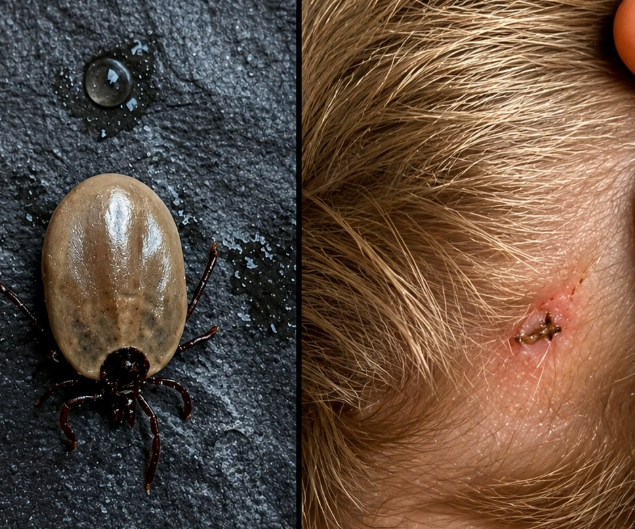
Tick Season 2026 Sparks Public Health Warning as ER Visits Reach Highest Levels in Nearly a Decade
Early Surge in Tick Bites Across the United States
Emergency rooms across the United States are reporting a sharp rise in tick bite cases during the 2026 season, with doctors describing an unusually early and widespread increase in patients seeking treatment after outdoor exposure.
From Maine to Minnesota, individuals are arriving at hospitals after routine activities such as backyard work, hiking familiar trails, or walking pets in local parks. Medical professionals note that while seasonal increases are expected, the timing and intensity of this year’s surge stand out compared to previous years.
Health surveillance data indicates that reported cases are at their highest levels in nearly a decade. Federal health officials have already issued warnings ahead of the typical peak summer months, signaling concern over the early onset of tick activity.
For many Americans, especially those who regularly spend time outdoors, the trend represents a growing public health concern rather than a distant or seasonal issue.
Emergency Room Data Shows Significant Increase
According to national surveillance data tracking emergency department visits, tick-related cases have risen notably across multiple regions. Reports show that emergency room visits for tick bites increased by more than 25 percent in April compared to the same month the previous year.
In the Northeast, the increase has been even more pronounced, with emergency department visits rising by approximately 40 percent compared to April of the previous year. These figures do not include urgent care visits or cases where individuals did not seek medical attention.
Data from multiple regions indicates that, aside from the South Central United States, weekly rates of emergency room visits for tick bites are the highest recorded for this time of year since 2017.
The trend suggests that the issue is not limited to traditionally high-risk areas, but is instead affecting large portions of the country simultaneously.
Regional Breakdown of Tick Activity
Public health data reveals distinct regional differences in emergency department visits related to tick exposure.
The Northeast currently records the highest rate, followed by the Midwest. The Southeast reports moderate levels, while the West and South Central regions show comparatively lower but still elevated figures for the season.
In the Northeast, the rate stands at 58 emergency department visits per 100,000 cases, while the Midwest follows at 40. The Southeast records 21 per 100,000, with the West at 16 and the South Central region at seven.
These numbers reflect a nationwide pattern of increased activity, with the Midwest now ranking second nationally in tick-related emergency visits.
State-level data also highlights localized concerns. In Alabama alone, more than 200 emergency room visits linked to tick bites have already been recorded this year, a level not typically seen so early in the season.
Health officials in the region have noted that the peak tick season traditionally occurs in late summer and early fall, making the early rise in cases particularly unusual.
Factors Driving the 2026 Increase
Experts attribute the surge in tick activity to a combination of environmental and ecological conditions that have created favorable circumstances for population growth.
Mild winter temperatures have allowed more ticks to survive through colder months, leading to earlier seasonal emergence. Wetter weather patterns have also contributed to ideal breeding conditions.
At the same time, increased populations of small mammals such as white-footed mice, which serve as key hosts for certain tick species, have further supported tick expansion in several regions.
Long-term climate trends are also believed to be influencing the shift. Warmer average temperatures and shorter, less severe winters allow ticks to remain active for longer periods of the year, increasing the likelihood of human exposure.
Researchers note that these combined factors are not temporary fluctuations but part of broader environmental changes affecting vector-borne disease patterns across the country.
Why Tick Bites Often Go Unnoticed
One of the most concerning aspects of tick exposure is that bites are frequently painless and difficult to detect. Many tick species are extremely small, with some appearing no larger than a poppy seed or pencil tip in their early stages.
These ticks can attach to the skin and feed for extended periods without causing immediate discomfort. Their saliva contains compounds that suppress immune response and reduce pain signals, allowing them to remain undetected while feeding.
Medical experts note that transmission of certain diseases, including Lyme disease, often requires the tick to remain attached for at least 24 hours. Because of this delay in detection, individuals may unknowingly be exposed even after spending only brief time outdoors.
Tick Distribution Across the United States
Different species of ticks are distributed across various regions of the country, each associated with specific disease risks.
In the Northeast and Upper Midwest, the blacklegged tick is the dominant species. It is commonly associated with Lyme disease, anaplasmosis, babesiosis, and other infections.
In the South and Central regions, the lone star tick is widely present and is associated with conditions including alpha-gal syndrome, a potentially serious allergic reaction to red meat and other mammalian products.
Along the Pacific Coast, the western blacklegged tick is found primarily in northern California, Oregon, and Washington, and can also transmit Lyme disease at lower rates than its eastern counterpart.
The American dog tick is widely distributed east of the Rocky Mountains and is known to transmit diseases such as Rocky Mountain spotted fever and tularemia.
Meanwhile, the invasive Asian longhorned tick has been detected in multiple states across the eastern and central United States since its identification in the country in 2017, and continues to be closely monitored by health authorities.
Diseases Associated with Tick Exposure
Lyme disease remains the most commonly reported tick-borne illness in the United States. Early symptoms often include fever, fatigue, headache, muscle aches, and swollen lymph nodes. In some cases, a distinctive circular rash may appear.
If left untreated, Lyme disease can lead to more serious complications affecting the heart, nervous system, and joints. Early antibiotic treatment is typically effective when the disease is detected promptly.
Rocky Mountain spotted fever is another serious illness transmitted by ticks. It requires immediate medical treatment, as delays can result in severe complications or death.
Alpha-gal syndrome represents a different type of reaction linked to tick bites. It can trigger allergic responses to red meat and other mammalian products hours after consumption, making diagnosis difficult.
Public health data suggests that cases of alpha-gal syndrome have increased significantly in recent years, with growing recognition of its spread beyond traditional geographic regions.
Recognizing Symptoms and Taking Action
Health officials emphasize that early detection and prevention remain the most effective tools for reducing tick-borne illness.
Recommended protective measures include using EPA-approved insect repellents, wearing permethrin-treated clothing, and avoiding high-risk areas where ticks are commonly found.
After spending time outdoors, individuals are advised to perform thorough tick checks, shower promptly, and inspect clothing, pets, and exposed skin areas carefully.
If a tick is found attached, it should be removed as quickly as possible using fine-tipped tweezers, pulling straight outward without twisting or applying heat or chemicals.
Medical attention is recommended if symptoms such as fever, rash, joint pain, facial weakness, or allergic reactions develop following a bite.
Public Health Guidance for 2026
Health experts stress that the 2026 tick season requires heightened awareness due to earlier onset and increased activity across multiple regions of the country.
Officials recommend preventative steps before outdoor exposure, including applying approved repellents and treating clothing with protective agents designed to reduce tick attachment.
Regular yard maintenance, including clearing brush and leaf litter, can also reduce local tick populations in residential areas.
Pet owners are encouraged to routinely check animals for ticks, particularly after outdoor activity during peak season periods.
Federal health authorities continue to emphasize that prevention is the most effective defense, as many tick-borne diseases can develop serious complications if not identified and treated early.
Conclusion: A Season Requiring Heightened Awareness
The 2026 tick season is emerging as one of the most active in recent years, with data showing elevated emergency room visits and earlier-than-expected tick activity across the United States.
While regional differences exist, the overall trend indicates a nationwide increase driven by environmental changes and ecological factors.
Public health officials continue to urge vigilance, emphasizing that simple preventive measures can significantly reduce the risk of infection.
As outdoor activity increases during warmer months, awareness and early action remain critical tools in protecting against tick-borne illnesses that continue to affect hundreds of thousands of people each year.
