

Three Thugs Tried to Rob an Elderly Man — But Left His House in Silence and Fear
A House They Believed Would Be Easy to Take
The three men had only recently been released from prison, but nothing about their behavior suggested change or reflection. Instead, they returned to the same pattern that had once put them behind bars—targeting vulnerable people, isolating them, and taking whatever they could by force or intimidation.
Over time, they had identified a particular house at the edge of a quiet street. It stood on a large plot of land, old but solid, with no nearby neighbors and no visible family connections. In their minds, it represented the perfect opportunity. A lonely elderly man. No protection. No witnesses. No resistance.
They convinced themselves it would be simple. They had done this before. They believed they understood fear, control, and power. That confidence led them straight to the front gate that evening, where they knocked without hesitation.

The First Encounter at the Door
The door opened to reveal an elderly man dressed in dark clothing and a worn leather jacket. His posture was steady, his expression calm, and his eyes carried a quiet attentiveness that did not match the vulnerability the intruders expected.
The men immediately began their intimidation, speaking with arrogance and certainty. They made their intentions clear: they wanted the house. They spoke of “settling things” and implied consequences if he refused. Their words were sharp, rehearsed, and meant to provoke fear.
But the old man did not react the way they anticipated. He did not step back. He did not panic. Instead, he observed them carefully, as though assessing something beyond their words. His calmness unsettled them more than any resistance could have.
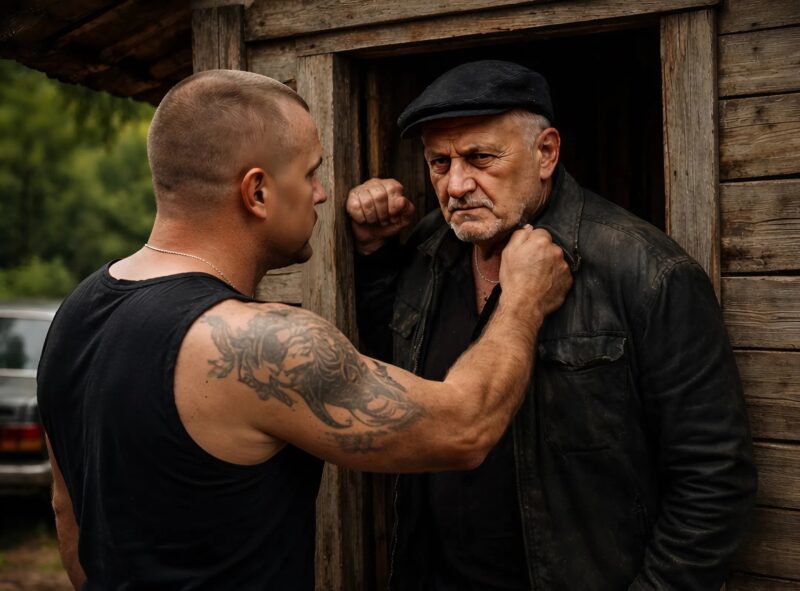
Even as they grew more aggressive—grabbing him by the collar and raising their voices—his expression remained unchanged. He did not appear weak or frightened. He appeared patient.
An Unexpected Invitation Inside
After a tense moment, the elderly man unexpectedly invited them inside. He spoke calmly, offering tea and mentioning house documents as if the situation were entirely ordinary. The sudden shift disarmed them.
Believing they had already won, the three men exchanged glances and followed him into the house. Confidence returned as they stepped through the doorway. They assumed he had surrendered, that fear had replaced resistance.
Once inside, the man closed the door and locked it from within. The sound of the key turning echoed through the quiet room, marking a shift in atmosphere that none of them fully understood at first.
The Shift in Power Inside the House
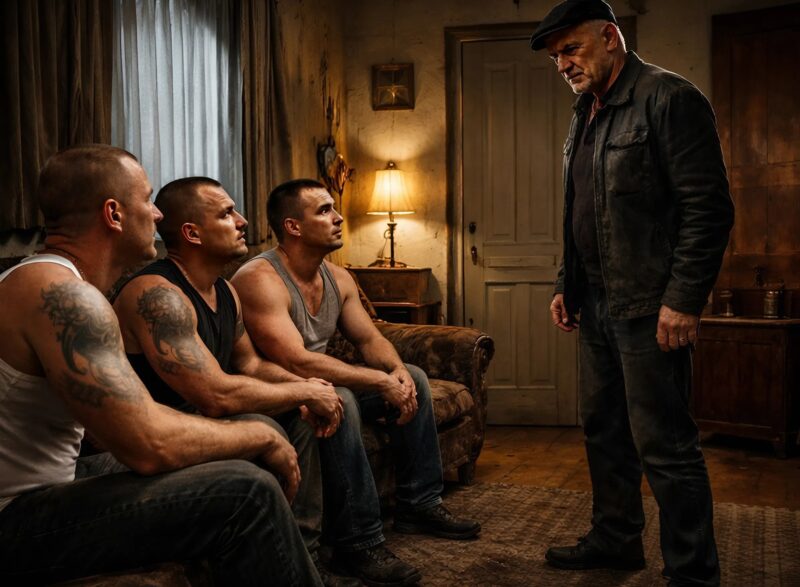
The elderly man calmly instructed them to sit. Though hesitant, they complied, still attempting to maintain dominance through posture and expression. One leaned back casually, another stayed alert near the exit, while the third watched closely, trying to read the situation.
The man then took a seat opposite them. His calm demeanor had not changed, but something about the room now felt different—heavier, more contained. The confidence they had carried inside was beginning to fade into uncertainty.
He began speaking in a measured tone, stating that they did not know who he was. He suggested that while they were unfamiliar with him, others—particularly older generations—might recognize his past.
At that moment, the conversation shifted entirely. The room grew quiet as he revealed that he had once been deeply involved in criminal circles, that he had previously held influence in the area, and that his past was far more serious than they had assumed.
Fear Replaces Confidence
The reaction among the three men was immediate but subtle. The smirks faded. The relaxed postures stiffened. One of them attempted to dismiss his words, but the atmosphere no longer supported bravado.
The elderly man continued, explaining that their first mistake had been entering his home without understanding where they were stepping. The second mistake, he said, was assuming his age meant weakness.
He then gestured toward a closed room in the house and implied that he had resources and capabilities they could not see or understand. He did not raise his voice. He did not need to. His calm delivery carried more weight than threats shouted in anger.
The men no longer laughed. Their confidence had shifted into doubt, then into caution. The situation they believed they controlled was no longer predictable.
A Decision to Leave
Silence filled the room as the tension peaked. One of the men eventually asked if what the old man was saying was true. The question alone revealed uncertainty that had not been there earlier.
Without changing his tone, the elderly man told them they had a choice—leave, apologize, and never return, or continue and face consequences they did not fully understand.
After a long pause, the group exchanged glances. Whatever confidence had brought them to the house was gone. One of them stood first, signaling the others to leave.
They moved toward the door without further confrontation. The elderly man unlocked it and stepped aside, allowing them to exit. His final words were calm, almost dismissive, as he acknowledged their decision.
The Silence Afterward
Once outside, the three men did not speak. They walked quickly away from the house, their earlier arrogance replaced with unease. The gate closed behind them, and the sound of their footsteps faded into the night.
What they had expected to be an easy takeover had instead become an encounter they did not want to repeat or fully understand. The house they had targeted no longer represented opportunity—it represented something unpredictable.
Inside, the elderly man remained alone once more, the silence of his home restored. But the balance of power had shifted in a way none of them had anticipated. What began as an attempt to intimidate had ended in retreat, leaving behind more questions than answers.

