The Rifleman Remains a Television Classic Decades Later Thanks to Its Heartfelt Storytelling and Memorable Behind-the-Scenes History
A Western That Continues to Win Over Generations
More than six decades after its original run, The Rifleman remains one of television’s most beloved Western series. The program earned a loyal audience through its compelling stories, memorable characters, and strong focus on family values.
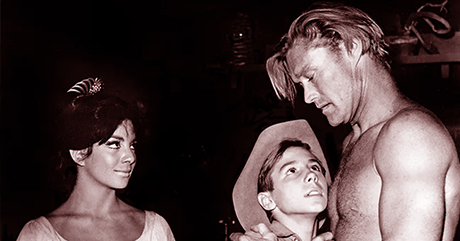
At the center of the series was the relationship between Lucas McCain and his son Mark, a bond that many viewers still regard as one of the most touching father-son relationships ever portrayed on television.
While the series delivered action, adventure, and dramatic confrontations, it also became known for teaching lessons about honesty, responsibility, respect, and compassion.
These themes helped distinguish it from many other programs of its era and contributed to its lasting popularity.
Beyond the stories themselves, however, the production developed a fascinating history filled with little-known facts, casting stories, continuity mistakes, and memorable behind-the-scenes moments.
The Success of Lucas and Mark McCain
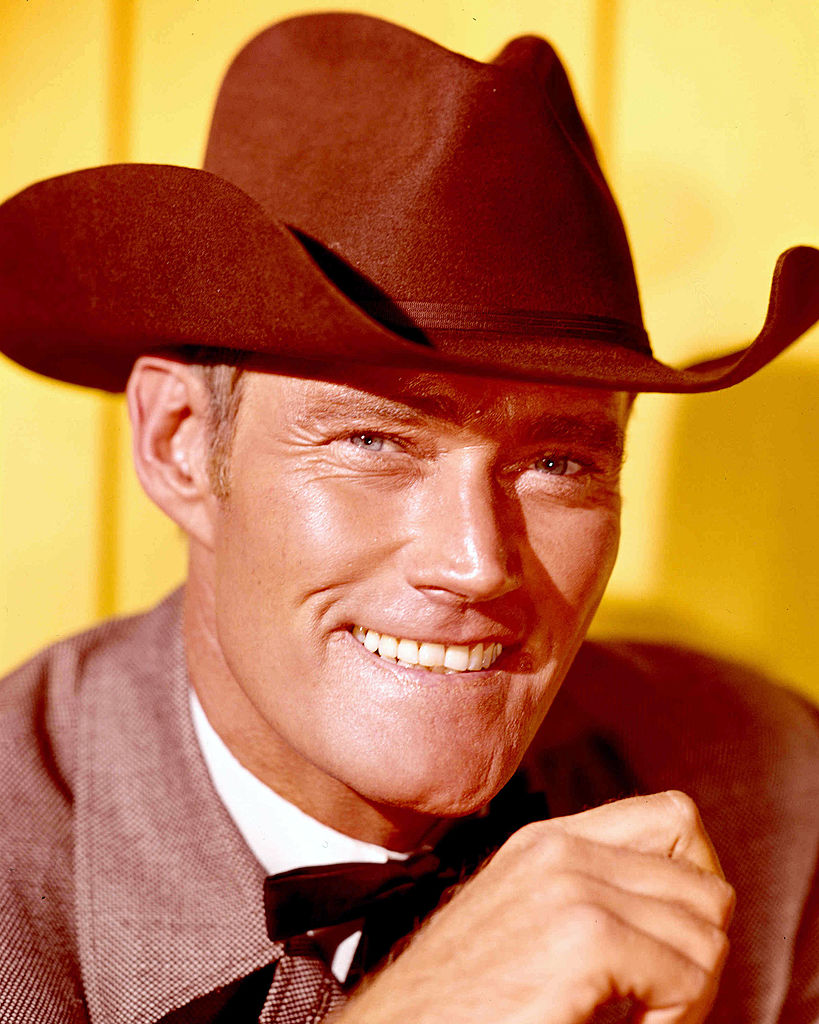
The Rifleman starred Chuck Connors as Lucas McCain, a widowed rancher known for his remarkable skill with a rifle and his unwavering dedication to raising his son.
Johnny Crawford portrayed Mark McCain, the young boy who often learned valuable life lessons through the experiences he shared with his father.
The chemistry between the two actors played a major role in the show’s success.
Audiences connected with their believable relationship, which balanced warmth, discipline, and mutual respect.
Unlike many television programs of the period, The Rifleman placed family relationships at the center of its storytelling.
That approach resonated strongly with viewers and helped the series establish a unique identity among Western dramas.
A Cowboy Ahead of His Time
Although The Rifleman was set during the 1870s and 1880s, attentive viewers may have noticed an interesting historical inconsistency involving Lucas McCain’s wardrobe.
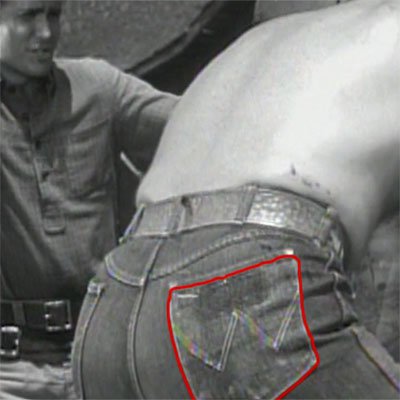
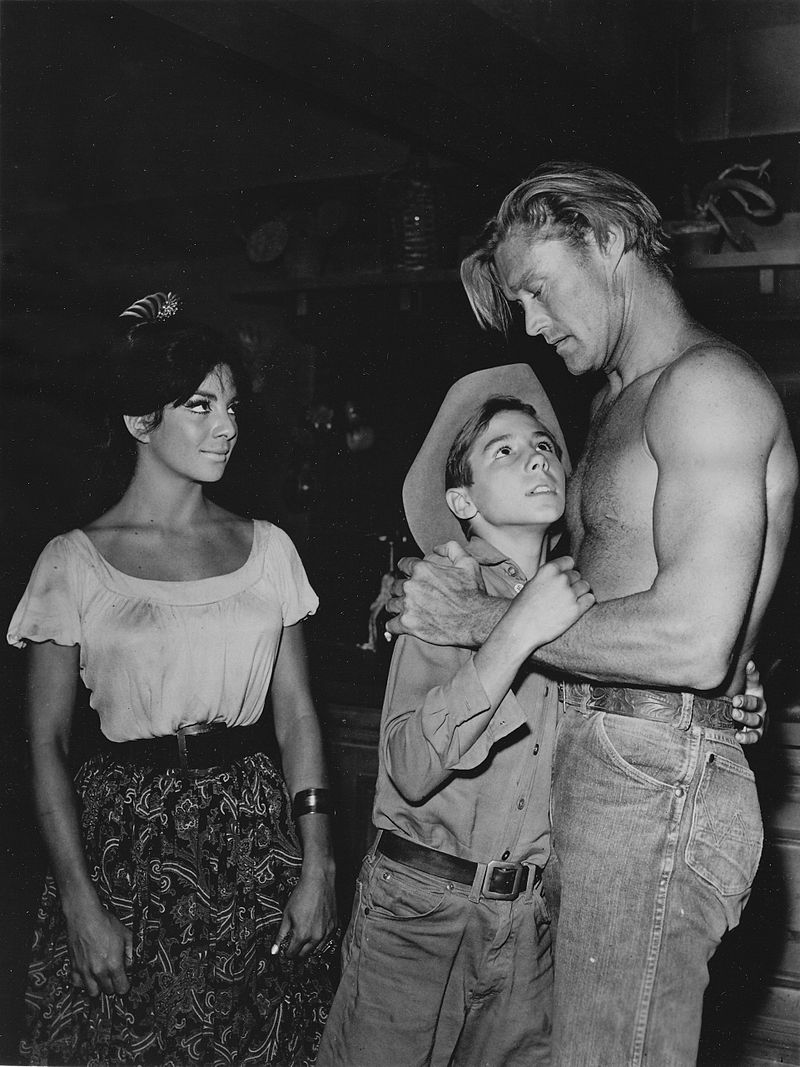
In the episode “End of a Young Gun,” Lucas is seen repairing a wagon wheel while shirtless.
Sharp-eyed fans spotted a distinctive “W” stitched onto the back pocket of his jeans.
The detail revealed that Lucas was wearing Wranglers.
The problem, of course, is that Wrangler jeans were not introduced until the 1940s, many decades after the period depicted in the series.
As a result, Lucas unknowingly became one of television’s most fashionable accidental time travelers.
The wardrobe oversight has since become one of the show’s most frequently discussed continuity errors.
Chuck Connors’ Son Appeared on the Series
The family-centered nature of The Rifleman extended beyond the script and onto the set itself.
One memorable episode featured an appearance by Chuck Connors’ real-life son.
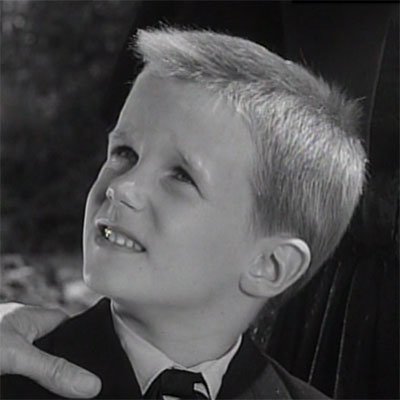
In the episode “Tension,” Lucas and Mark attend the funeral of a friend named Sid Halpern.
Among those present are the widow and her young son Toby.
Toby was portrayed by Jeff Connors, Chuck Connors’ second son with Faith Quabius.
Although his role consisted of only a few lines, it remains a noteworthy piece of The Rifleman history.
Jeff Connors later passed away in 2014.
Winning the Lead Role Was Not Easy
Although Chuck Connors became synonymous with Lucas McCain, obtaining the role was far from straightforward.
Reports indicate that approximately 40 actors were considered before Connors ultimately secured the part.
Initially, he rejected the offer because the salary proposed by ABC was lower than what he could earn working as a freelance actor.
The situation changed when the producers reconsidered their choice.
After seeing Connors portray a strong father figure in Old Yeller, they became increasingly convinced he was right for the role.
The producers eventually returned with a more attractive offer.
In addition to improved compensation, Connors received a five-percent ownership stake in the show.
The revised agreement convinced him to accept the role that would define his career.
The Famous Rifle That Defined the Series
One of the most iconic elements of The Rifleman was Lucas McCain’s customized Winchester rifle.
The opening sequence showcased Connors firing rapid shots while skillfully manipulating the weapon.
The dramatic introduction became one of television’s most recognizable opening scenes.
To create the sequence, the production used two identical 1892 Winchester rifles.
One served as the primary filming weapon, while the other functioned as a backup.
Many viewers assumed special effects or camera tricks were responsible for the rapid-fire action.
In reality, Connors performed the movements himself.
His athletic background contributed significantly to his ability to handle the rifle with remarkable speed and coordination.
The firearm itself was modified to allow faster firing through its lever-action mechanism.
A Surprising Connection to John Wayne
The famous rifle carried another interesting piece of Hollywood history.
Despite The Rifleman taking place decades before the weapon’s manufacture, the 1892 Winchester used in the series had already appeared in a classic film.
Producer Arnold Levin later revealed that the rifle previously appeared in the 1939 film Stagecoach.
According to Levin, it was the same firearm used by John Wayne in the legendary Western.
The connection linked two iconic productions and added another layer of fascination to the weapon’s legacy.
For fans of classic Westerns, the revelation became one of the show’s most interesting behind-the-scenes facts.
The Mystery of the Madera Hotel
Another small detail that has intrigued dedicated viewers involves a familiar North Fork landmark.
The Madera Hotel appeared regularly throughout the series and became a recognizable part of the show’s setting.
However, observant fans noticed that in the pilot episode, “The Sharpshooter,” the building carried a different name.
At that time, it was called California House.
No explanation was ever clearly provided for the sudden change.
Some viewers speculated that ownership changed within the show’s fictional world, while others assumed it was simply a production oversight.
Whatever the reason, the mystery continues to intrigue longtime fans.
Johnny Crawford’s Childhood Story
Long before becoming Mark McCain, Johnny Crawford had already experienced the unpredictable nature of the entertainment business.
At just three years old, he participated in an early acting opportunity.
The experience did not go as planned.
Recalling the event years later, Crawford explained that a scene involving chocolate bars had to be reshot.
According to his account, he refused to return the chocolate bar he had received.
“I don’t remember the picture and I wound up on the cutting room floor anyway. But I played one of a bunch of refugee children and I was in a scene where Rosalind Russel was supposed to give us all chocolate bars. I think I got blacklisted after this film because the scene had to be reshot and I refused to give back my chocolate bar for the second take,” Johnny Crawford told The Miami Herald in 1973.
The story became one of his favorite childhood anecdotes.
The Search for a New Romantic Lead
Although Lucas McCain devoted most of his attention to raising Mark, the series occasionally explored romantic storylines.
One of the most notable involved Milly Scott, portrayed by Joan Taylor.
Many viewers believed Lucas and Milly were headed toward a lasting relationship.
Those expectations changed when Milly departed during the fourth season.
Her exit created a challenge for the production team.
The writers needed a new character capable of developing believable chemistry with Lucas McCain.
Chuck Connors took an active role in the search process.
Numerous actresses were considered, but finding the right match proved difficult.
“A few months ago, I was handed what I thought was a dream assignment. At least it started out on a dreamlike note but almost snowballed into becoming a nightmare,” Connors said.
After reviewing more than 60 candidates, producers selected Patricia Blair to portray Lou Mallory.
Baseball Legends Visit North Fork
Chuck Connors possessed an impressive athletic background, having played professional baseball before entering acting.
Even so, several famous athletes made memorable guest appearances on The Rifleman.
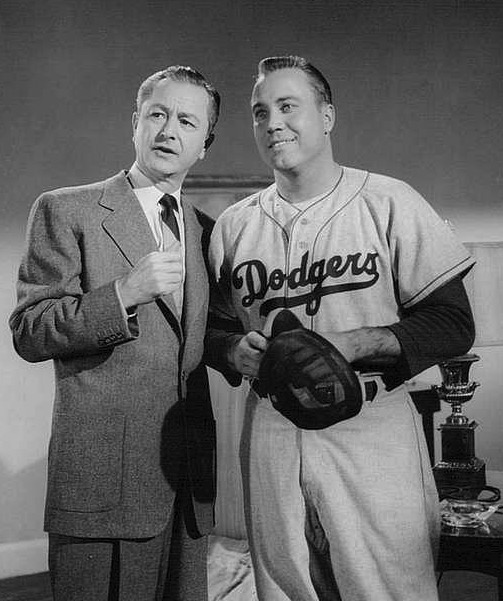
One notable example was Duke Snider, the legendary Dodgers player nicknamed “the Duke of Flatbush.”
Snider appeared as Wallace in the episode “The Retired Gun.”
Another baseball star, Don Drysdale, also appeared during the series.
The inclusion of well-known athletes added another layer of interest for viewers familiar with the sports world.

Another Crawford Family Connection
The Rifleman also featured another member of Johnny Crawford’s family.
His brother, Bobby Crawford, appeared in the episode “Second Witness.”
Bobby portrayed a character named Freddy.
Both brothers received Emmy nominations in 1959, a remarkable achievement for siblings appearing on the same television series.
Robert Lawrence Crawford Jr., known professionally as Bobby Crawford, later continued acting and appeared in the television series Laramie.
His participation further strengthened the show’s family connections.
The Protective Environment on Set
Johnny Crawford often spoke warmly about his relationship with Chuck Connors.
Off-screen, Connors acted as both mentor and protector to the young actor.
Crawford admired Connors from an early age, particularly because of his accomplishments in baseball.
Their friendship extended well beyond the conclusion of the series.
“It was a fascinating part of my education listening to Chuck tell his baseball stories or he’d be reciting Casey at the Bat or he’d be doing speeches from Shakespeare. This always surprises people, that Chuck Connors knows Shakespeare,” Crawford told The Buffalo News.
Actor Paul Fix, who portrayed Marshal Micah Torrence, was equally protective.
He paid close attention to firearm safety on set and ensured weapons were properly secured.
His commitment stemmed from a childhood accident in which a firearm nearly cost him his life.
The experience left a lasting impression and influenced how he approached safety during filming.
Unusual Casting Choices
The series occasionally featured casting decisions that surprised viewers.
One example involved comedian Buddy Hackett.
In a memorable episode, Hackett portrayed Daniel Malakie, the father of two adult sons.
The unusual aspect of the casting was that Christopher Dark, who played one of those sons, was actually older than Hackett.
Dark was born in 1920, while Hackett was born in 1924.
The age difference created an unusual but entertaining example of Hollywood casting flexibility.
It remains one of the more amusing production facts associated with the series.
A Baby Girl Played by a Baby Boy
Another surprising detail involves the episode “The Baby Sitter.”
In that story, a baby girl named Fancy played a central role.
Many viewers naturally assumed the infant performer was a girl.
In reality, the child was portrayed by Robert Anacher, a baby boy.
The casting choice went unnoticed by most audiences but has since become one of the show’s more unusual pieces of trivia.
Sammy Davis Jr.’s Memorable Appearance
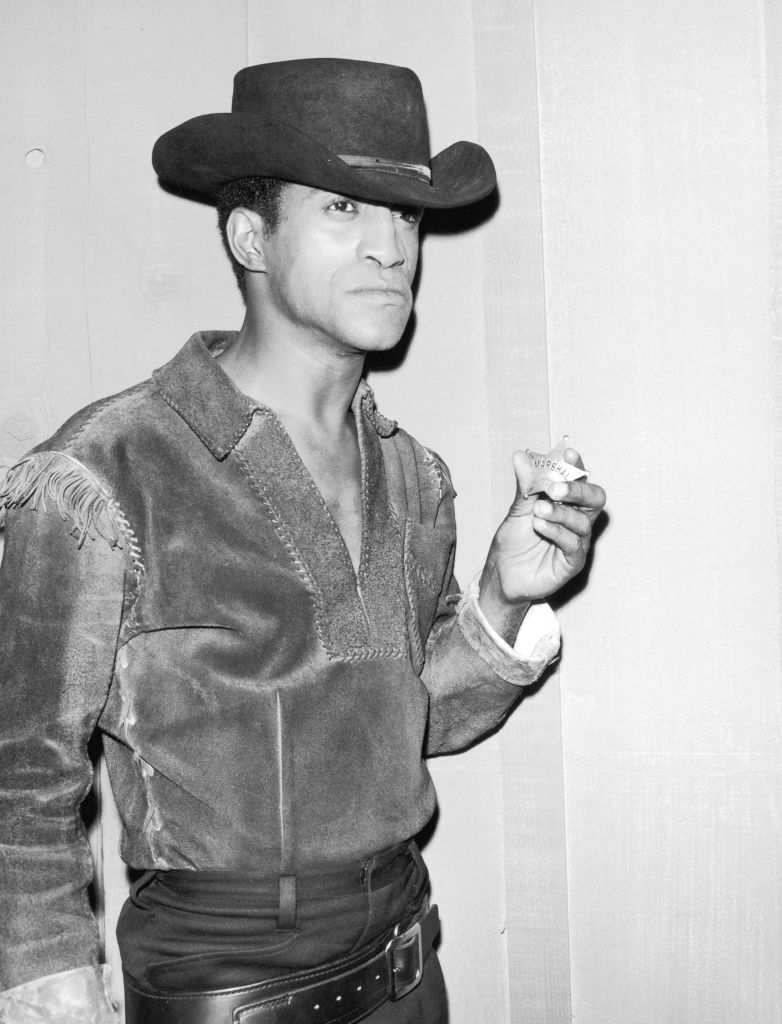
The Rifleman welcomed numerous guest stars throughout its run, but few were as celebrated as Sammy Davis Jr.
In the episode “Two Ounces of Tin,” Davis portrayed an outlaw named Tip Corey.
His performance impressed both viewers and crew members.
During the episode, Davis demonstrated impressive gun-handling abilities, including quick draws and spinning techniques.
What made the scenes particularly impressive was that Davis performed the stunts himself.
No stand-in was required.
His appearance remains one of the series’ most memorable guest performances.
Fashion Choices from Another Era
Although The Rifleman was set in the nineteenth century, many costumes reflected the styles of the era in which the show was produced.
Hairstyles frequently resembled those popular during the 1950s and 1960s rather than the Old West.
Wardrobe choices presented additional historical inconsistencies.
Many male characters wore full-front button-down shirts.
Those garments did not emerge until decades after the period depicted in the series.
While historians may notice such details, they have done little to diminish viewers’ enjoyment of the program.
Instead, they have become part of the show’s enduring charm.
Chuck Connors’ Lasting Legacy
Chuck Connors enjoyed a remarkable career both as an athlete and an actor.
He remains one of only a small number of individuals to have played in both Major League Baseball and the NBA.
Later in life, health challenges emerged.
In the fall of 1992, he was hospitalized with pneumonia.
Three weeks later, he passed away from lung cancer.
Connors was buried at San Fernando Mission Cemetery.
His headstone reflects his unique athletic accomplishments, featuring the logos of the Boston Celtics, Chicago Cubs, and Brooklyn Dodgers.
The tribute serves as a reminder of a life that achieved success in both sports and entertainment.
A Television Legacy That Endures
Decades after its original broadcast, The Rifleman continues to occupy a special place in television history.
Its combination of compelling stories, memorable performances, and heartfelt lessons has allowed it to remain relevant across generations.
The relationship between Lucas and Mark McCain remains one of the most admired parent-child portrayals ever shown on television.
At the same time, the show’s collection of fascinating behind-the-scenes stories, production quirks, and unexpected trivia continues to delight longtime fans.
Whether viewers are discovering the series for the first time or revisiting it through reruns, The Rifleman remains a powerful reminder of an era when television storytelling placed family, character, and morality at the heart of every episode.
Its enduring popularity demonstrates that great stories and meaningful relationships never go out of style.
