Scientists Warn Antarctica’s “Doomsday Glacier” Could Threaten Major Global Cities if Collapse Occurs
Growing Concerns Over a Massive Antarctic Ice Formation
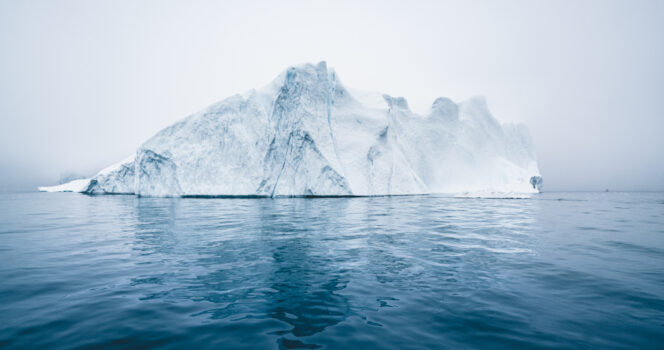
Scientists are increasingly concerned about the future of Antarctica’s Thwaites Glacier, a massive ice formation that has earned the nickname “Doomsday Glacier” because of the potentially devastating consequences associated with its collapse.
Located in West Antarctica, the glacier has become one of the most closely monitored regions in the world as researchers attempt to understand how climate-related changes are affecting its stability.
Recent findings have intensified those concerns, with experts warning that the glacier may be more vulnerable than previously believed.
If the glacier were to collapse entirely, the consequences could extend far beyond Antarctica, affecting coastlines, infrastructure, and populations across the globe.
Among the areas considered most at risk are some of the world’s best-known cities, including London, New York, and Bangkok.
The prospect of significant sea-level rise has transformed Thwaites Glacier into a focal point for scientists seeking to better understand the future impact of a warming climate.
The Link Between Climate Change and Rising Seas
Climate change has long been associated with rising ocean levels, increasing global temperatures, and more frequent extreme weather events.
As temperatures rise, glaciers and ice sheets lose mass, contributing additional water to the world’s oceans.
Although sea-level rise is already being observed in many regions, scientists warn that certain ice formations have the potential to accelerate the process dramatically.
Thwaites Glacier is considered one of the most important among them because of its enormous size and strategic location within the Antarctic ice system.
Researchers believe that changes affecting this glacier could have consequences extending far beyond the ice itself.
The glacier’s condition is now viewed as a critical indicator of broader changes taking place throughout Antarctica.
Why Thwaites Glacier Is So Important
Thwaites Glacier contains a tremendous amount of frozen water.
Scientists estimate that the glacier alone holds enough ice to raise global sea levels by more than two feet if it were completely lost.
That figure is significant on its own, but researchers are concerned about an even larger threat.
The glacier acts as an important barrier within the Antarctic ice system.
If it were to collapse, experts fear it could destabilize surrounding sections of the much larger Antarctic ice sheet.
Such a chain reaction could unleash consequences on a far greater scale than the loss of Thwaites Glacier alone.
In the most severe scenario described by researchers, the resulting sea-level rise could eventually reach approximately 10 feet.
A rise of that magnitude would dramatically reshape coastlines around the world.
Major Cities Could Face Severe Flooding
Among the most alarming implications of a potential collapse is the threat posed to densely populated coastal cities.
London, New York, and Bangkok have been identified as examples of major urban centers that could face severe consequences if sea levels rise dramatically.
These cities are home to millions of residents and serve as important economic, cultural, and transportation hubs.
In addition to their permanent populations, they attract large numbers of visitors from around the world each year.
Significant sea-level increases could place critical infrastructure at risk and increase the likelihood of widespread flooding.
Low-lying areas would be particularly vulnerable, potentially requiring extensive adaptation measures or relocation efforts over time.
The possibility of such impacts has contributed to growing international interest in understanding exactly how stable the glacier remains.
An International Effort to Study the Glacier
Recognizing the importance of Thwaites Glacier, researchers launched the International Thwaites Glacier Collaboration in 2018.
The initiative was created to bring together experts from multiple disciplines to investigate the glacier’s behavior and evaluate future risks.
Since its formation, the collaboration has conducted extensive research aimed at understanding the processes influencing the glacier’s retreat.
Scientists have examined ocean conditions, ice movement, geological features, and hidden activity occurring beneath the glacier’s surface.
The findings have revealed a complex system that continues to surprise researchers.
One of the most significant discoveries involves large reservoirs of water concealed beneath the ice.
The Discovery of Hidden Lakes Beneath the Ice
Researchers have identified numerous subglacial lakes located beneath Thwaites Glacier.
These hidden bodies of water exist below the surface and remain largely invisible without specialized scientific observation.
Initially, scientists suspected that water beneath the glacier might influence melting patterns.
However, recent research suggests the impact may be far greater than previously understood.
The lakes appear capable of releasing enormous amounts of water into areas that directly affect the glacier’s stability.
Such drainage events can alter the interaction between ice and ocean water, potentially accelerating the glacier’s retreat.
Understanding these hidden systems has become a major focus of ongoing research efforts.
New Findings Raise Alarm
In March 2025, research led by Professor Noel Gourmelen provided new insight into the role these subglacial lakes play.
The study concluded that drainage from the hidden lakes was significantly increasing ice loss in critical sections of the glacier.
The findings offered researchers a rare opportunity to observe the direct effects of large-scale water movement beneath the ice.
According to Gourmelen, scientists had long expected water beneath the ice sheet to influence ocean-driven melting.
The magnitude of the drainage event, however, exceeded expectations and provided valuable new data.
He explained, “We expected that water draining from the underside of the ice sheet plays a role in modulating ocean melting.”
Gourmelen continued, “The sheer magnitude of this lake drainage gave us the opportunity to finally observe and quantify its impact.”
The research suggested that the release of water occurred in an especially sensitive region of the glacier.
This location is considered particularly important because it directly influences the glacier’s structural stability.
A Temporary Surge in Ice Loss
The drainage event appeared to have an immediate effect on the glacier’s retreat.
Researchers observed that the sudden release of water intensified melting processes occurring where the glacier meets the ocean.
Gourmelen described the event as a temporary but significant acceleration of ongoing ice loss.
He stated, “The lake outflow took place in a key sector impacting Thwaites’ stability. The drainage in effect momentarily turbo-charged Thwaites’ ocean-driven retreat.”
The phrase drew attention because it highlighted how hidden processes beneath the glacier can rapidly influence its behavior.
Rather than progressing at a steady rate, the glacier may experience periods of accelerated retreat driven by events occurring far below the surface.
Such findings have increased concern among scientists studying future scenarios for the region.
Have you heard about the Thwaites Glacier, aka the Doomsday Glacier?
It’s melting rapidly, and scientists are warning that its collapse could mean global flooding and disaster.
Here's what's happening and how supply chains can adapt: pic.twitter.com/LR3iD7kbxn
— Glenn Koepke (@LogTech1999) December 23, 2024
Unusually Warm Conditions Add to Concerns
The latest research comes at a time when parts of the Southern Hemisphere are experiencing higher-than-expected temperatures during 2025.
Scientists view these conditions as an additional source of concern.
Warmer temperatures can contribute to increased melting and place further pressure on already vulnerable ice formations.
When combined with the newly observed effects of subglacial lake drainage, the warming trend raises questions about how quickly changes could occur.
Researchers continue to monitor the glacier closely in an effort to determine whether current trends represent temporary fluctuations or part of a longer-term pattern.
The answers could have significant implications for projections involving future sea-level rise.
Experts Say Conditions Have Changed
Dr. Alastair Graham, a marine geologist at the University of South Florida and a member of the International Thwaites Glacier Collaboration, has also expressed concern about recent developments.
According to Graham, a collapse of Thwaites Glacier alone would have substantial consequences for global sea levels.
He explained, “If Thwaites Glacier collapses, it would cause a rise of around 65cm (25 inches) in sea level.”
While that increase falls short of the larger projections associated with broader Antarctic destabilization, it would still represent a major global challenge.
Graham also emphasized that current conditions appear different from previous years.
He stated, “This year is really different. It’s very difficult to recover from this in one season. The game has changed.”
His comments reflect growing concern among researchers that recent developments may indicate a shift in how the glacier is responding to environmental pressures.
The Timeline Remains Uncertain
Despite the alarming findings, scientists stress that a complete collapse of Thwaites Glacier is not considered imminent.
Current projections suggest that such an event could still be decades or even centuries away.
However, the latest research indicates that critical thresholds may arrive sooner than previously hoped.
The challenge for scientists is determining exactly when those tipping points might be reached.
Glacier systems are influenced by numerous interacting factors, including ocean temperatures, atmospheric conditions, ice dynamics, and geological processes.
This complexity makes precise forecasting difficult.
Nevertheless, each new study contributes valuable information that helps refine future projections.
The discovery of powerful subglacial drainage events represents one of the most significant developments in recent years.
A Glacier With Global Consequences
The importance of Thwaites Glacier extends far beyond Antarctica.
Its future stability carries implications for coastlines, economies, infrastructure, and communities across the world.
Millions of people live in areas that could be affected by long-term sea-level rise.
Ports, transportation networks, residential neighborhoods, and commercial districts all face varying levels of risk depending on future conditions.
As a result, research into the glacier has become a matter of international significance.
Scientists continue working to better understand the forces driving change within the region and to provide clearer assessments of future risks.
While many uncertainties remain, recent findings have reinforced one conclusion: Thwaites Glacier is undergoing important changes that deserve close attention.
The combination of hidden subglacial lakes, accelerating ice loss, and unusually warm conditions has intensified concern among researchers studying Antarctica’s future.
Although the most dramatic consequences may still lie years ahead, the latest evidence suggests that developments beneath the glacier could play a critical role in shaping the future of global sea levels.
