
Common Items You Should Never Leave Inside a Hot Car During Summer
Rising Temperatures Create Hidden Risks
As summer arrives and temperatures begin to climb, many people spend more time traveling, running errands, visiting parks, heading to the beach, or attending seasonal events.
During busy days, it is common for personal belongings to remain inside a vehicle long after the engine has been turned off.
A shopping bag left on the seat, a bottle of water in a cup holder, or a few forgotten items in the back seat may not seem like a cause for concern.
However, the interior of a parked vehicle can become extremely hot in a relatively short amount of time.
Once temperatures begin to rise, certain everyday objects can become damaged, lose their effectiveness, or even create safety hazards.
Many drivers understand the importance of never leaving children or pets unattended inside a vehicle.
Yet there are numerous other items that can also be affected by prolonged exposure to heat.
Understanding which belongings should not remain inside a hot car can help prevent unnecessary damage, inconvenience, and potential safety issues.
The Habit of Leaving Items Behind
For many people, a vehicle becomes a temporary storage space during daily life.
Jackets, gym bags, shopping purchases, work supplies, and personal items often accumulate over time.
After a long day, carrying everything indoors can feel inconvenient, especially when the intention is to use those items again the next day.
As a result, many belongings remain inside vehicles for extended periods.
While this habit may seem harmless, summer conditions can quickly turn an ordinary parked car into an environment that is much harsher than many people realize.
Heat trapped inside the vehicle can affect a wide variety of products, including items that are commonly stored in cars for convenience.
What appears safe during cooler weather may become problematic once temperatures begin to soar.
Why Heat Inside Vehicles Is a Concern
A parked vehicle exposed to sunlight can experience significant temperature increases throughout the day.
Even when outdoor conditions feel manageable, the temperature inside the cabin can rise much higher.
Closed windows and direct sunlight allow heat to accumulate, creating conditions that may affect sensitive materials and products.
Items left behind are often subjected to hours of heat exposure.
Some products may deteriorate gradually, while others can become hazardous in a much shorter period of time.
Understanding how heat affects common belongings is an important step toward maintaining both safety and product quality.
Aerosol Products Can Become Dangerous
Many households contain products packaged in pressurized aerosol cans.
Items such as spray paint, hairspray, and various household cleaning products are commonly transported in vehicles.
While these products are generally safe when stored properly, extreme heat can create problems.
As temperatures rise, pressure inside the can may increase.
This buildup of pressure can raise the risk of leaks, ruptures, or other failures.
In severe conditions, the contents may escape from the container, potentially damaging the vehicle’s interior.
The possibility of a can bursting also creates an avoidable safety concern.
For that reason, aerosol products are among the items that should not remain inside a hot car for extended periods.
Disposable Lighters Require Special Attention
A disposable lighter is a small object that many people carry every day without giving it much thought.
Despite its size, it can become a significant concern when exposed to excessive heat.
High temperatures may affect the fuel and internal pressure within the lighter.
Under extreme conditions, the lighter may leak or fail.
This creates a potential fire hazard inside the vehicle.
Because parked cars can become very hot during summer months, leaving disposable lighters behind is generally not advisable.
Removing them before leaving the vehicle can help reduce unnecessary risk.
Canned Beverages Can Create a Mess
Many drivers keep soft drinks, sparkling beverages, or other canned drinks inside their vehicles.
These beverages may seem harmless, but heat can affect them as well.
When temperatures rise, pressure inside the can may increase.
If the pressure becomes excessive, the container can burst.
The result is often a sticky and difficult-to-clean mess that spreads throughout the vehicle.
Cleaning spilled beverages from seats, carpeting, and interior surfaces can be time-consuming and frustrating.
Preventing the problem is usually as simple as removing canned drinks before leaving the car for long periods.
Loose Batteries Can Be Damaged by Heat
Batteries are another commonly overlooked item that should not be stored in a hot vehicle.
Whether used for electronics, flashlights, or other devices, loose batteries can be sensitive to extreme temperatures.
Exposure to heat may cause batteries to leak.
The substances released from damaged batteries can be corrosive.
If leakage occurs, nearby belongings may be affected.
The interior surfaces of the vehicle may also suffer damage.
Replacing batteries is often far less costly than repairing personal property that has been exposed to leaking chemicals.
Keeping batteries in a temperature-controlled environment helps preserve their condition and reduces the risk of damage.
The Surprising Concern With Plastic Water Bottles
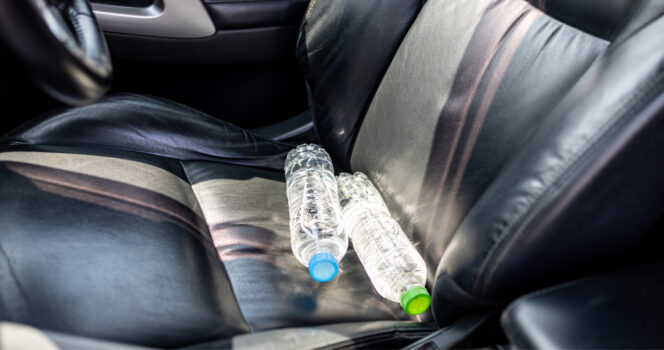
A plastic water bottle is one of the most common items found inside vehicles.
Drivers frequently leave bottles in cup holders, door compartments, or on seats for convenience.
Because water itself appears harmless, many people assume there is no issue with leaving a bottle behind.
However, prolonged exposure to heat may affect the plastic container.
There are concerns that chemicals from the plastic could enter the water after extended periods in high temperatures.
Although experts continue studying the long-term effects, many people prefer to avoid drinking water that has been sitting in a hot vehicle for hours.
Fresh water stored under appropriate conditions is generally considered a better choice.
Replacing bottles that have been exposed to significant heat can provide added peace of mind.
Medications May Lose Effectiveness
Many individuals keep medications in their vehicles because it offers quick access when needed.
While convenient, this practice can create problems during hot weather.
Various medications are sensitive to temperature fluctuations.
Repeated exposure to heat may reduce their effectiveness.
In some cases, the medication may no longer perform as intended.
Since medications are often relied upon during important situations, maintaining their quality is essential.
Keeping them in a temperature-controlled environment helps ensure they remain reliable.
For this reason, leaving medications in a hot car is generally discouraged.
Convenience Can Lead to Oversights
Many of the items commonly left inside vehicles are not forgotten intentionally.
They often remain behind simply because daily schedules are busy.
A person may plan to return to the vehicle shortly, only for several hours to pass unexpectedly.
Work commitments, family responsibilities, and travel plans can make it easy to overlook what remains inside the car.
Unfortunately, heat does not require much time to affect sensitive items.
What seems like a short absence can be enough for temperatures to rise substantially.
Developing a habit of checking the vehicle before leaving it can help prevent many of these issues.
Protecting Belongings During Summer
Summer presents unique challenges for vehicle owners.
Beyond concerns about comfort, high temperatures can affect a wide range of products and materials.
Items that perform perfectly well under normal conditions may react differently when subjected to prolonged heat exposure.
Removing sensitive belongings at the end of each trip can reduce the chances of damage.
It can also help avoid unnecessary expenses and inconvenience later.
A quick inspection of the seats, floorboards, storage compartments, and cargo area often takes only a few moments.
Those few moments may prevent damaged property, spoiled products, or avoidable safety hazards.
Small Precautions Can Make a Difference
Many vehicle-related problems occur not because of major mistakes, but because of small oversights.
A lighter left in a console, a can of soda forgotten on the seat, or medication stored in a glove compartment may not seem important at first.
Yet each of these items can be affected by the intense heat that develops inside a parked vehicle.
Taking simple precautions can significantly reduce potential risks.
Bringing belongings indoors, storing sensitive products properly, and checking the vehicle before leaving it can become useful habits during the warmer months.
These actions require little effort but can help preserve both safety and peace of mind.
Understanding What Should Stay Out of a Hot Car
The summer season encourages travel, outdoor activities, and time spent on the road.
With that increased activity comes a greater likelihood of leaving personal belongings inside vehicles.
While many objects can tolerate temporary storage in a car, others may not respond well to prolonged heat exposure.
Aerosol products, disposable lighters, canned beverages, batteries, plastic water bottles, and medications are among the items that deserve special attention.
Each can be affected differently by rising temperatures, but all carry some level of risk when left in a hot vehicle.
Recognizing these risks allows drivers to make better decisions about what stays in the car and what should be taken inside.
A Simple Reminder for Hot Weather
Summer heat can affect more than just comfort levels inside a vehicle.
It can influence the condition, safety, and performance of everyday items that many people use without a second thought.
What appears harmless during cooler months may become problematic once temperatures begin climbing.
By paying attention to what is left behind after each trip, drivers can reduce the likelihood of damage and avoid unexpected problems.
A quick check of the vehicle before walking away may be one of the simplest and most effective habits to adopt during the hottest part of the year.
Small preventive measures can go a long way toward protecting belongings, preserving product quality, and maintaining a safer vehicle environment throughout the summer season.

