The Fascinating World of Podomancy: Exploring Personality Through Foot Shapes
An Unusual Tradition Focused on the Feet
Throughout history, people have looked for clues about personality in many different parts of the body. Various traditions have connected physical characteristics with behavior, emotions, and temperament, creating systems that claim to reveal aspects of an individual’s inner nature.
Among these traditions is podomancy, a practice centered on the shape and structure of the feet. Rather than examining facial features or hand lines, podomancy focuses on the toes, their proportions, and the overall outline of the foot.
The central idea is that certain foot shapes may symbolically correspond with particular personality traits. Supporters of these interpretations believe that characteristics such as creativity, ambition, sensitivity, confidence, or sociability can be reflected in the arrangement of a person’s toes.
While these beliefs remain popular in many personality discussions, there is no scientific evidence demonstrating that foot shape determines character. Personality is influenced by a wide range of factors and cannot be accurately measured through physical foot structure.
Even so, podomancy continues to attract interest because it offers a lighthearted and engaging way to think about human behavior and self-perception.
The Origins of Personality Readings Based on Physical Features
Humans have long been fascinated by the possibility that external features might reveal something about internal qualities. Across cultures and generations, numerous systems emerged that attempted to connect physical appearance with personality.
These traditions often developed from a desire to understand human nature more deeply. Observing differences in appearance led many people to search for symbolic meanings behind those variations.
Podomancy developed within this broader tradition. The feet became a subject of interest because they support movement, balance, and physical progress through life.
As a result, some interpretations began treating the feet as symbolic representations of how individuals navigate their personal journeys, relationships, and ambitions.
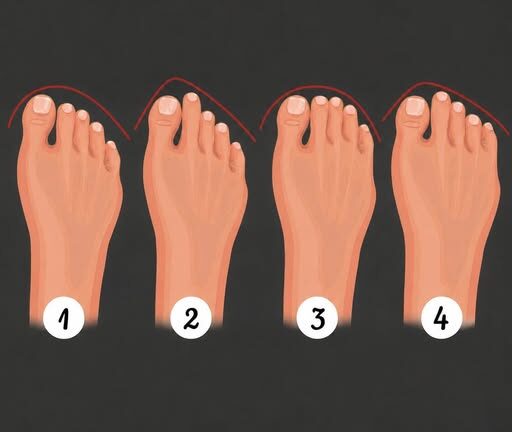
Modern discussions of podomancy generally focus on four primary foot types: the Egyptian Foot, the Greek Foot, the Roman Foot, and the Celtic Foot. Each shape is associated with a unique personality profile and set of characteristics.
These profiles are intended for reflection and entertainment rather than factual assessment. They provide symbolic descriptions rather than scientifically established conclusions.
The Egyptian Foot: A Symbol of Imagination and Privacy
The Egyptian Foot is considered one of the easiest shapes to identify. It features a smooth descending pattern beginning with the big toe and continuing through each smaller toe.
In this arrangement, every toe is slightly shorter than the one before it. The result is a clean diagonal line that slopes gently toward the smallest toe.
Within podomancy traditions, this foot shape is often associated with individuals who possess rich inner worlds and active imaginations.
People linked to the Egyptian Foot are frequently described as thoughtful and introspective. They may enjoy spending time alone reflecting on ideas, dreams, and personal interests.
Privacy is one of the defining traits commonly connected to this foot type. Such individuals may be selective about what they share and often prefer to reveal personal thoughts gradually.
Many descriptions portray them as emotionally deep people who carefully guard their feelings. Trust often plays an important role in determining how openly they communicate with others.
Creativity is another characteristic frequently associated with the Egyptian Foot. Individuals fitting this profile may be drawn to artistic pursuits, literature, music, design, or activities that allow for self-expression.
The profile also suggests sensitivity to atmosphere and emotion. These individuals may notice subtle details that others overlook and often appreciate beauty in their surroundings.
Podomancy interpretations sometimes connect this foot type with occasional impulsiveness. Strong emotions may influence decisions more heavily than strict logic in certain situations.
Overall, the Egyptian Foot is often viewed as representing mystery, imagination, and a strong connection to personal emotions.
The Greek Foot: Energy, Leadership, and Loyalty
The Greek Foot differs significantly from the Egyptian pattern. Its most recognizable feature is a second toe that extends beyond the big toe.
This creates a distinctive shape that appears elevated near the center of the foot. Because of its appearance, some descriptions refer to it as a flame-like profile.
Within personality readings, the Greek Foot is commonly linked with enthusiasm, passion, and dynamic energy.
People associated with this shape are often described as individuals who approach life with excitement and determination. They may enjoy pursuing goals, embracing challenges, and remaining active.
Leadership is another trait frequently connected with the Greek Foot. Those fitting this profile are often portrayed as capable of motivating others and stepping forward when guidance is needed.
Many interpretations emphasize kindness alongside strength. Individuals with this foot type may be viewed as supportive friends and dependable family members.
Loyalty occupies a central role within this personality profile. Trust is considered highly important, and meaningful relationships are often valued deeply.
As a result, people associated with the Greek Foot may be especially protective of those they care about. They are frequently described as willing to stand beside loved ones during difficult circumstances.
Another common characteristic involves intuition. Podomancy readings often suggest that these individuals possess a strong ability to sense dishonesty or recognize underlying tensions within social situations.
The profile also highlights determination and resilience. Challenges are often viewed as opportunities rather than obstacles, encouraging a forward-moving attitude.
Creativity and high energy further contribute to the image of the Greek Foot as a symbol of action, confidence, and emotional commitment.
The Roman Foot: Confidence and Social Strength
The Roman Foot is identified by the relatively even length of the first three toes. Instead of forming a descending line, these toes appear nearly level with one another.
This creates a more squared appearance at the front of the foot and contributes to its distinctive shape.
Podomancy interpretations frequently associate the Roman Foot with social confidence and communication skills.
People connected to this profile are often described as outgoing individuals who enjoy interacting with others. They may feel comfortable in social settings and naturally engage in conversation.
Charisma is one of the most commonly cited traits within this category. These individuals are often portrayed as people who attract attention through their confidence and presence.
Public speaking and leadership are also recurring themes. The Roman Foot is frequently associated with those who can express ideas clearly and comfortably address groups.
Another feature linked to this personality type is practicality. Individuals fitting this description may approach decisions with structure and organization.
Business-minded thinking often appears in podomancy readings involving the Roman Foot. Such people may enjoy planning, problem-solving, and identifying opportunities for growth.
Many interpretations also suggest a natural ability to build networks and maintain relationships across diverse social circles.
The confidence associated with this foot type can be a major strength. However, some descriptions note that strong self-assurance may occasionally be misunderstood by others.
When balanced with humility and consideration, the Roman Foot profile is often presented as representing capable leadership, social adaptability, and strategic thinking.
The Celtic Foot: Complexity and Ambition
The Celtic Foot is considered one of the more distinctive shapes within podomancy traditions. Like the Greek Foot, it often features a second toe that is longer than the big toe.
However, the remaining toes do not follow a smooth descending pattern. Instead, they create an uneven arrangement that gives the foot a stepped appearance.
This irregular structure has led many personality readings to associate the Celtic Foot with complexity and depth.
Individuals linked to this profile are often described as people who cannot be easily categorized. Their personalities may reveal different sides depending on circumstances and relationships.
Ambition is frequently highlighted as a dominant characteristic. These individuals may possess strong goals and a persistent drive to achieve them.
Many interpretations portray them as highly motivated people who enjoy growth, progress, and personal development.
Despite their ambitious nature, they are also often described as possessing a softer emotional side that is not immediately visible.
This more private dimension may be shared only with trusted friends and family members. To outsiders, they may appear reserved, focused, or difficult to fully understand.
The Celtic Foot is commonly presented as combining elements of multiple personality styles. It blends creativity with practicality, confidence with caution, and openness with privacy.
This mixture contributes to its reputation as one of the most layered and intriguing foot types within podomancy.
Many people who identify with this profile see themselves as individuals who balance strength and sensitivity while continually striving toward meaningful goals.
Why These Personality Profiles Remain Popular
Despite the lack of scientific support, podomancy continues to capture public attention. One reason for its popularity is its simplicity.
Foot shapes are easy to observe, making the process accessible to anyone interested in exploring the tradition.
Another factor is the universal appeal of personality discussions. People naturally enjoy learning about themselves and comparing their experiences with symbolic descriptions.
The categories used in podomancy are broad enough that many individuals can recognize aspects of themselves within the interpretations.
This sense of familiarity often encourages reflection and conversation. Friends and family members may compare foot shapes and discuss which descriptions seem most accurate.
The practice also appeals to those interested in cultural traditions and historical beliefs about human behavior.
For many participants, the enjoyment comes not from proving the claims but from considering different perspectives on personality.
These readings function more like storytelling tools than objective assessments, offering symbolic portraits rather than factual diagnoses.
The Difference Between Symbolism and Science
An important distinction exists between traditional personality readings and scientific understanding.
Modern psychology studies personality through research, observation, and evidence-based methods. Traits such as extroversion, emotional stability, and conscientiousness are explored through systematic investigation.
Podomancy operates differently. It relies on symbolism and cultural interpretations rather than measurable scientific findings.
There is no verified connection between toe length and emotional tendencies, nor is there evidence that foot structure can predict future behavior.
Recognizing this distinction allows people to enjoy podomancy without treating it as a factual tool for evaluating character.
The tradition can remain entertaining and thought-provoking while still being understood within its proper context.
A Playful Approach to Self-Reflection
One reason podomancy has endured is that it encourages people to think about themselves in a relaxed and imaginative way.
Whether someone identifies with the privacy of the Egyptian Foot, the energy of the Greek Foot, the confidence of the Roman Foot, or the ambition of the Celtic Foot, the process often sparks meaningful reflection.
People may consider how accurately a description matches their experiences and which traits they value most in themselves.
The tradition also highlights the complexity of personality. Few individuals fit perfectly into a single category.
Many people recognize qualities from several profiles, reflecting the reality that human character is rarely simple or fixed.
This flexibility helps explain why podomancy continues to appeal to modern audiences.
Rather than offering rigid labels, it provides symbolic narratives that encourage curiosity and self-exploration.
The Enduring Appeal of Foot-Based Personality Traditions
Podomancy remains an intriguing example of humanity’s long-standing fascination with understanding personality through physical features.
Its classifications—the Egyptian, Greek, Roman, and Celtic foot types—offer distinctive portraits of imagination, leadership, sociability, ambition, and emotional depth.
Although these interpretations are not supported by scientific evidence, they continue to inspire conversation and personal reflection.
For many people, the appeal lies not in determining objective truth but in exploring symbolic possibilities and discovering new ways to think about themselves.
The shape of a foot cannot define a person’s character, predict future choices, or reveal hidden abilities.
Yet the stories attached to these shapes remain fascinating because they reflect a universal human desire to better understand identity, relationships, and individuality.
Whether viewed as tradition, entertainment, or a tool for self-reflection, podomancy continues to demonstrate how even the smallest details of the human body can inspire curiosity and imagination.
