The 1975 Oscars: A Night of Controversy, Politics, and Lasting Hollywood Drama
A Ceremony Defined by Tension and Debate
The 1975 Academy Awards are remembered as one of the most debated ceremonies in Hollywood history. What unfolded that night went far beyond film recognition, becoming a blend of political expression, public criticism, and unexpected controversy.
The event brought together major stars, outspoken personalities, and emotionally charged moments that would continue to be discussed long after the awards concluded.
Rather than a straightforward celebration of cinema, the evening reflected deeper cultural and political tensions of its time.
Dustin Hoffman and His Criticism of the Oscars
Actor Dustin Hoffman became one of the most talked-about figures of the night, not only because of his nomination for Best Actor, but due to his outspoken criticism of the ceremony itself.
Nominated for his role in Lenny, Hoffman publicly described the Oscars as “grotesque” and compared them to a superficial beauty pageant.
His comments sparked immediate reactions inside and outside the venue, highlighting a growing divide between Hollywood tradition and critical voices within the industry.
Veteran entertainer Bob Hope responded with a sharp joke referencing another actor, adding humor to an already tense atmosphere.
Despite the attention surrounding him, Hoffman did not win the award, and his stance remained one of the most discussed elements of the evening.

Frank Sinatra’s Role and Audience Reaction
Frank Sinatra’s participation as a co-host added further controversy to the ceremony.
His remarks during the broadcast were considered by some attendees to be offensive, creating discomfort in parts of the audience.
At one point, reactions in the room reflected visible disapproval, with critics and observers noting the uneasy atmosphere.
Sinatra’s humor and commentary failed to resonate with everyone present, contributing to the fragmented tone of the evening.
Political Statements on Hollywood’s Biggest Stage
The 1975 Oscars also became a platform for political expression during a period marked by global tensions and the nearing end of the Vietnam War.
Documentary filmmaker Bert Schneider used his acceptance speech to make a pointed political remark referencing the situation in Vietnam.
He further emphasized his message by presenting a telegram from a representative associated with the Viet Cong, which expressed greetings to American audiences.
These moments introduced a strong political dimension to the ceremony, shifting attention away from purely artistic recognition.
In response, a disclaimer was later read during the broadcast distancing the Academy from the political statements made on stage.
The Intersection of Entertainment and Politics
The events of the night highlighted the growing overlap between entertainment and political discourse in public ceremonies.
While award shows traditionally focused on artistic achievement, the 1975 Oscars demonstrated how quickly the stage could become a platform for broader messages.
This tension between celebration and controversy became one of the defining characteristics of the event.
It also set a precedent for future award ceremonies where political expression would continue to play a visible role.
Ingrid Bergman’s Emotional Recognition
Another major moment of the evening came with Ingrid Bergman’s win, which was met with a standing ovation from the audience.
Despite the warm reception, her victory carried emotional complexity.
It was suggested that her recognition may have been influenced by long-standing sentiment within Hollywood connected to her personal history decades earlier.
Bergman herself reportedly had mixed feelings about the honor, reflecting on the complicated nature of her relationship with the film industry.
Her win symbolized both professional achievement and unresolved emotional history within Hollywood’s evolving culture.
The Dominance of The Godfather Part II
One of the most significant artistic highlights of the ceremony was the success of The Godfather Part II.
The film established itself as a major force at the awards, reinforcing its status as one of the most influential cinematic works of its era.
Its recognition at the Oscars further cemented its legacy in film history.
The film’s success ensured that, despite surrounding controversies, the ceremony also celebrated one of the defining achievements in modern cinema.

Memorable Images and Public Reaction
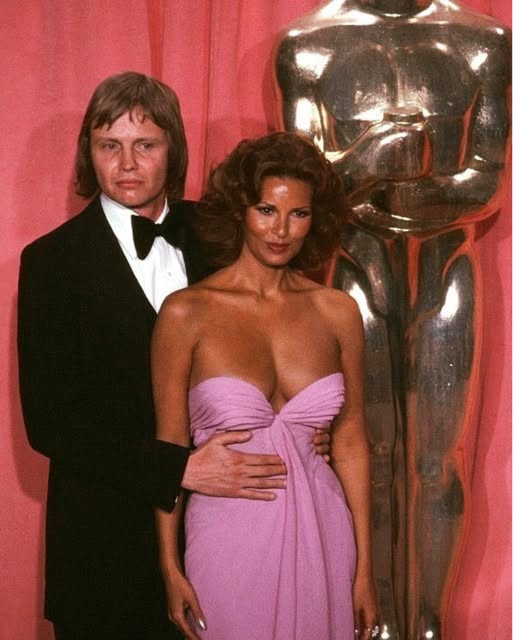
The 1975 Oscars also produced photographs that continued to generate discussion long after the event.
One widely circulated image featuring John Voight and Raquel Welch became a point of public debate and interpretation.
Different viewers offered contrasting opinions, with some praising its elegance while others viewed it more critically.
These reactions demonstrated how a single moment captured on camera can take on a life of its own in public memory.
A Night That Blended Fame, Politics, and Controversy
The ceremony ultimately became a convergence of entertainment, personal expression, and political commentary.
From outspoken remarks by major actors to emotionally charged award moments, the event reflected the complexity of Hollywood during the era.
The mixture of celebration and conflict ensured that the 1975 Oscars would be remembered as more than just an awards show.
Instead, it became a snapshot of a changing cultural landscape where film, politics, and personality intersected on a global stage.
Enduring Legacy of the 1975 Oscars
Decades later, the 1975 Academy Awards continue to be analyzed and discussed by critics, historians, and film enthusiasts.
The ceremony remains a reference point for understanding how award shows can reflect broader social and political shifts.
Its most notable moments—controversial speeches, strong opinions, and iconic film achievements—continue to shape how it is remembered.
The event stands as a reminder that Hollywood ceremonies often extend beyond entertainment, capturing the cultural atmosphere of their time.
In the end, the 1975 Oscars remain a defining example of how one night in film history can leave a lasting impact far beyond the stage.
