
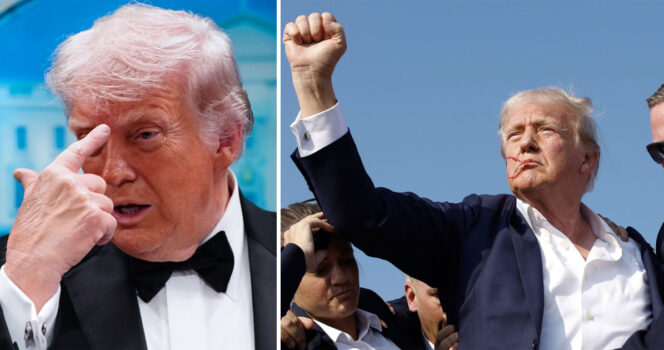
Donald Trump has stated that he has no intention of wearing a bulletproof vest, even after recent security incidents and renewed discussions about personal safety measures for high-profile public figures. His comments came shortly after a serious security situation on April 25, 2026, during the White House Correspondents’ Dinner, which led to an emergency evacuation of both Donald Trump and First Lady Melania Trump.
According to the reported sequence of events, the incident involved a man opening fire at the venue, prompting immediate action from security personnel. The suspect was later charged with multiple offenses, including attempted assassination of the President of the United States, use of a firearm during a violent crime, and assault on a federal officer with a dangerous weapon. The situation was quickly contained, and law enforcement agencies took control of the scene.
Following the incident, attention turned to the condition of those involved, particularly members of the Secret Service who responded during the attack. Trump later confirmed that one Secret Service officer had been injured during the shooting. He emphasized, however, that the officer’s life was protected due to wearing a bulletproof vest. According to Trump’s remarks, the agent was struck at close range by a powerful weapon, but the protective vest played a critical role in preventing a more serious or potentially fatal outcome.
Trump expressed appreciation for the officer’s service and recovery, noting that the agent was doing well and recovering in good spirits. He described the officer as someone dedicated and proud of his role, highlighting the commitment shown by Secret Service personnel in high-risk situations. His comments focused on respect for the agent’s professionalism and the effectiveness of protective equipment in critical moments.
In the days following the incident, public discussion emerged regarding whether Trump himself might consider wearing additional protective gear, such as a bulletproof vest, during public appearances. Given that this was not the first reported security threat involving him in recent years, questions were raised about whether personal safety measures might be adjusted moving forward.
During an official moment at the White House, a journalist directly asked Trump whether there had been any consideration of him wearing a bulletproof vest in the future. The question reflected broader public interest in presidential safety protocols, especially after repeated incidents involving threats or attempted attacks against high-profile political figures.
Trump responded to the question in a light and informal manner, indicating that he did not see himself adopting such protective clothing. He made a joking remark about the physical appearance of wearing a vest, suggesting that it would make him look noticeably heavier. His response drew laughter from those present, reflecting a conversational and non-technical approach to the question.
He further commented that wearing such protective gear could add a significant amount of bulk, reinforcing his perspective that it was not something he personally intended to use. While his tone was lighthearted, the underlying message remained clear that he did not plan to change his approach to personal attire in response to the incident.
Despite acknowledging the effectiveness of bulletproof protection in the case of the injured Secret Service officer, Trump reiterated that he would not be adopting similar measures for himself. His stance suggests a distinction between the protective requirements of security personnel and his own personal preferences regarding safety equipment.
The incident itself has drawn renewed attention to the broader issue of security at high-profile political events. Large public gatherings involving political leaders, media representatives, and guests require extensive planning and coordination to ensure safety. The response by security personnel during the April 25 event highlights the importance of rapid reaction protocols and the role of protective equipment in minimizing harm during emergencies.
In situations involving potential threats, Secret Service agents are trained to act quickly to protect individuals under their protection. This includes physical intervention, evacuation procedures, and the use of protective gear such as bulletproof vests. In this case, the officer who was injured reportedly benefited directly from wearing such protection, which significantly reduced the severity of the injury.
Following incidents of this nature, public discourse often shifts toward evaluating current security measures and considering whether additional precautions should be implemented. This includes discussions about whether public figures themselves should adopt protective equipment during appearances or rely entirely on security personnel and established protocols.
Trump’s decision not to wear a bulletproof vest reflects a personal choice regarding how he approaches his public presence and security arrangements. While some individuals in similar positions may choose to adopt additional protective measures, others may prefer to rely on external security systems rather than personal gear. In this case, Trump has clearly expressed that he does not intend to change his approach.
The broader context of the incident also highlights the risks associated with public life, particularly for political figures who frequently appear in large and open settings. Security agencies continuously assess threats and adapt strategies to address evolving risks. The use of protective equipment by trained personnel remains one of the key components of these strategies.
At the same time, public reactions to such events often include discussions about perception, image, and practicality. In Trump’s case, his remarks suggest that personal appearance and comfort are factors in his decision-making process regarding whether to wear additional protective gear. His comments reflect a balance between acknowledging security realities and maintaining personal preference.
As of now, there has been no indication that Trump plans to alter his position. He continues to emphasize confidence in existing security arrangements and the work of his protective detail. The incident has nonetheless reinforced awareness of the challenges involved in ensuring safety during high-profile public events.
In summary, following the April 25, 2026 security incident at the White House Correspondents’ Dinner, Donald Trump confirmed that while a Secret Service officer was injured but protected by a bulletproof vest, he himself does not intend to wear one. His response combined humor with a clear personal decision, stating that he prefers not to adopt such protective clothing despite the risks highlighted by recent events.

