
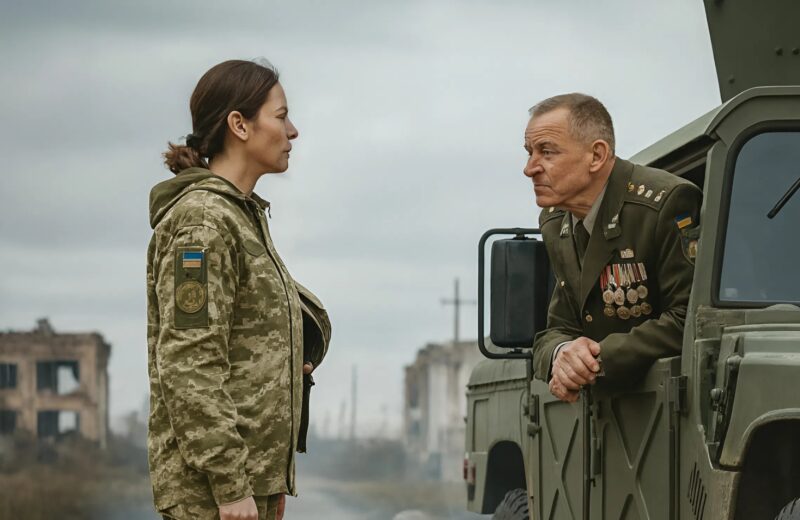
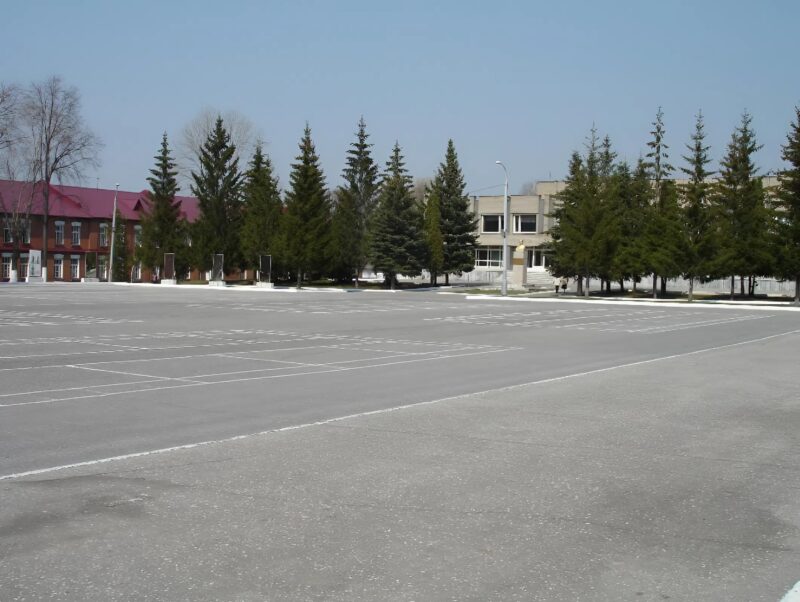
On a quiet day at a military base, an unexpected confrontation unfolded during what was meant to be a routine inspection. Soldiers stood in formation on the parade ground, waiting for the arrival of a senior officer known for his strict discipline and commanding presence.
The officer, a lieutenant colonel, had built a reputation among his subordinates as someone who demanded absolute obedience. His leadership style was often described as rigid, and many within the unit were careful to avoid drawing his attention. On that day, as his vehicle entered the base, the usual protocol was followed: the company commander called the formation to attention, and the soldiers saluted as expected.
Amid this structured scene, one detail stood out.
A young woman in uniform was walking calmly across the parade ground. She carried her helmet in one hand and continued moving at a steady pace, without stopping or acknowledging the arriving officer. Her behavior immediately drew the lieutenant colonel’s attention.
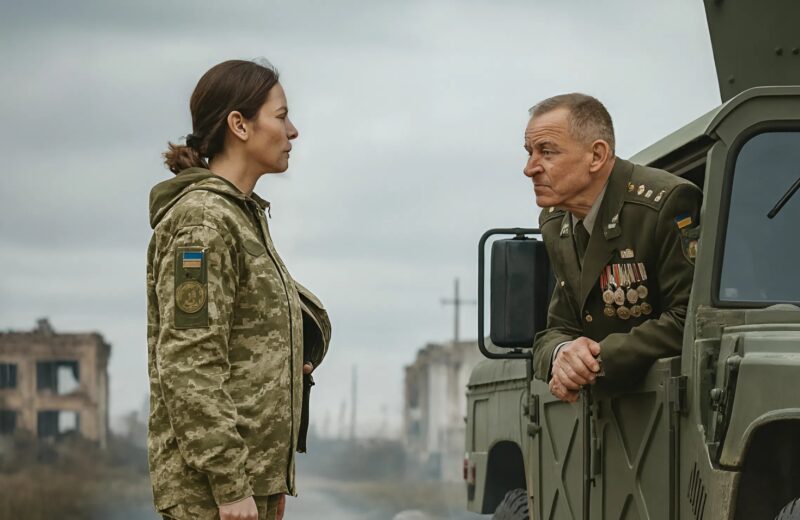
He reacted quickly.
Stopping the vehicle, he called out sharply, demanding to know why she had not saluted. His tone was firm and authoritative, reflecting both expectation and frustration. In a setting where protocol is taken seriously, such an omission is often interpreted as a breach of discipline.
The woman stopped and turned to face him.
Her response was composed and direct. She stated that she was aware of who he was. However, her calm demeanor did not match the reaction he anticipated. Interpreting her tone as defiance, the lieutenant colonel escalated the situation, stepping out of the vehicle and addressing her more forcefully.
The surrounding soldiers remained still. Situations involving senior officers are rarely interrupted, and no one stepped forward as the exchange continued.
Then, the situation took an unexpected turn.
The woman clarified her position with a firm statement: she was not required to salute someone of a lower rank. This assertion caused immediate confusion. The lieutenant colonel responded by pointing out his rank insignia, emphasizing his authority within the unit.
At that point, she provided further context.
She identified herself as a colonel assigned to an internal investigation division. According to her statement, she had been sent by higher command to review conduct within the base following multiple complaints. These complaints, she indicated, were related to the treatment of personnel and the exercise of authority.
The atmosphere shifted.
What had initially appeared to be a disciplinary issue involving a subordinate now revealed itself as part of a formal oversight process. The lieutenant colonel, who had approached the situation with confidence, found himself confronted with an unexpected development.
The woman maintained a professional tone as she explained the purpose of her visit. Her presence on the base was not incidental; it was connected to an official review of leadership practices and adherence to standards.
For the soldiers present, the moment underscored the structured nature of military hierarchy and accountability. Rank determines protocol, but it also carries responsibility. Oversight mechanisms exist to ensure that authority is exercised within established guidelines.
The exchange concluded without further escalation. The lieutenant colonel, now aware of her position, had no immediate response. The situation shifted from confrontation to recognition of formal authority.

Incidents like this highlight the importance of clarity in rank, communication, and procedure within structured organizations. They also illustrate how quickly assumptions can influence reactions, particularly in environments where hierarchy plays a central role.
In this case, what began as a perceived breach of discipline became an example of how oversight functions within a chain of command. It reinforced the principle that authority is not only about command, but also about accountability.

