Why Ants Suddenly Appear in Your Home and What Their Presence Can Teach Us
The Unexpected Arrival of Tiny Visitors
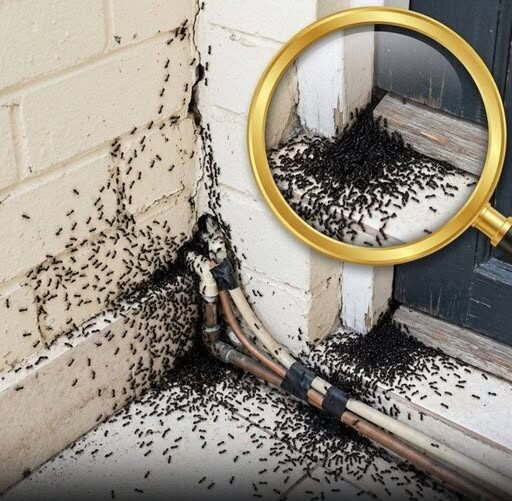
Many homeowners have experienced the same surprising situation. One day, everything appears normal, and then suddenly a line of ants can be seen moving across a kitchen counter, along a window frame, or through a corner of the bathroom.
Their appearance often seems abrupt. Because ants travel in organized groups and follow precise routes, it can feel as though they appeared overnight.
For many people, this raises immediate questions. Why are the ants suddenly here? What attracted them to the house? Is there a hidden problem that needs attention?
The answer is usually connected to simple biological needs. Ants are constantly searching for resources that help their colonies survive and grow.
At the same time, these tiny insects have long inspired symbolic interpretations. Throughout history, people have admired ants for their discipline, persistence, and ability to work together toward common goals.
Whether viewed through a practical or symbolic lens, the appearance of ants often captures attention and encourages closer observation.
Masters of Organization in the Natural World
Ants are among the most organized creatures found in nature. Despite their small size, they operate within highly structured colonies where every member contributes to a larger purpose.
Each ant performs specific duties that help maintain the success of the colony.
Some search for food and water, while others focus on protecting the nest. Certain ants care for developing young, and others maintain the colony’s infrastructure.
These responsibilities are carried out with remarkable efficiency.
The result is a system that functions smoothly even though no single ant controls the entire operation.
This impressive level of organization has made ants powerful symbols of discipline and responsibility.
Many people see them as reminders of the value of structure, planning, and consistency.
Their behavior demonstrates how even small individual efforts can contribute to significant collective success.
A Powerful Example of Persistence
One of the qualities most commonly associated with ants is determination.
Ants frequently encounter obstacles while searching for resources, yet they rarely abandon their objectives.
Instead of stopping when faced with a barrier, they adjust their path and continue moving forward.
Their persistence is especially impressive considering their size.
Ants are capable of carrying loads that seem enormous compared to their own bodies. They continue working despite challenges that would appear overwhelming.
This behavior has inspired countless observations about perseverance.
Rather than relying on dramatic breakthroughs, ants achieve results through steady effort repeated over time.
Their actions illustrate how progress is often the result of patience and consistency rather than sudden success.
For many observers, this serves as a useful reminder that small steps taken regularly can eventually produce meaningful outcomes.
The Importance of Cooperation
Another reason ants attract admiration is their ability to work together.
An individual ant can accomplish only a limited amount on its own. However, when thousands of ants combine their efforts, the results can be extraordinary.
Every member of the colony contributes to a shared objective.
Food gathering, nest construction, defense, and care of the young all depend on cooperation.
The success of the colony is not built on individual achievement but on collective effort.
This has made ants enduring symbols of teamwork and mutual support.
Their behavior demonstrates the strength that can emerge when individuals work toward a common purpose.
Many people interpret the appearance of ants as a reminder of the importance of collaboration, communication, and shared responsibility.
The Practical Reason Ants Enter Homes
While symbolic interpretations can be interesting, the most direct explanation for an ant infestation is far simpler.
Ants enter homes because they are searching for essential resources.
Like all living creatures, they require food, water, and shelter.
When these resources become available indoors, ants often take advantage of the opportunity.
Even a small amount of food can attract them.
Crumbs left behind after meals, sugary spills, open food containers, and pet food dishes can provide everything ants need to begin investigating an area.
What may appear insignificant to a homeowner can represent a valuable food source to an ant colony.
Once a resource is discovered, ants often return repeatedly.
This is why even a few forgotten crumbs can eventually result in a noticeable trail of insects.
Water Is Just as Important as Food
Food is not the only thing that attracts ants indoors.
Water is another major factor.
Ants require moisture for survival, and many homes provide convenient access to it.
Areas around sinks, leaking pipes, bathrooms, laundry rooms, and damp surfaces can become attractive locations for scouting ants.
Even small amounts of moisture may be enough to draw attention.
In some cases, homeowners notice ants in rooms where food is rarely present.
When this happens, a nearby water source is often the reason.
Reducing excess moisture can therefore play an important role in preventing ant activity.
How Ants Communicate with One Another
One reason ant activity can appear so sudden is the sophisticated way these insects communicate.
When a scout ant discovers a useful source of food or water, it does not keep the information to itself.
Instead, it returns to the colony while leaving behind a chemical trail.
This trail contains substances known as pheromones.
Other ants detect these chemical signals and follow the path to the resource.
As more ants travel along the same route, the trail becomes stronger.
Additional workers join the effort, reinforcing the path and increasing activity.
What begins with a single scout can quickly become a visible stream of ants moving through a home.
This efficient communication system allows colonies to locate and exploit resources with remarkable speed.
Why Ants Sometimes Appear Overnight
Many people are surprised by how quickly ants seem to arrive.
In reality, the process often begins before anyone notices.
A single scout ant may enter a home unnoticed and discover a valuable food or water source.
Once it returns to the colony and establishes a pheromone trail, numerous ants can begin following the route.
Within a relatively short period, the activity becomes impossible to ignore.
This rapid increase creates the impression that ants appeared suddenly.
In most cases, however, the colony has simply responded efficiently to a newly discovered opportunity.
The speed of their response is one of the reasons ants are considered such successful survivors.
The Influence of Weather and Seasonal Changes
Environmental conditions often affect ant behavior.
Changes in weather can encourage colonies to explore new locations and search for alternative resources.
Heavy rainfall is one common example.
When outdoor nests become flooded, ants may seek higher and drier ground.
Homes frequently provide the shelter they need.
Extended periods of heat can produce similar results.
As outdoor conditions become harsh, ants may increase their search for water.
Indoor plumbing, sinks, and damp areas become attractive destinations.
Drought conditions can also reduce access to natural resources, prompting colonies to expand their search into residential areas.
Seasonal transitions further influence movement and activity.
As conditions change throughout the year, ants continuously adapt in order to survive.
Reducing the Chances of an Infestation
Preventing ant problems often begins with basic household maintenance.
Regular cleaning can significantly reduce the likelihood of attracting ants.
Removing crumbs, wiping up spills, and cleaning food preparation areas eliminates many of the resources ants seek.
Food storage is equally important.
Keeping food in sealed containers limits access and reduces opportunities for ants to locate meals.
Pet food should also be monitored, especially if bowls remain accessible for long periods.
Simple preventive measures can make a noticeable difference.
The fewer resources available, the less incentive ants have to remain indoors.
Managing Moisture Around the Home
Because water attracts ants, controlling moisture can be an effective strategy.
Repairing leaking pipes and faucets helps eliminate unnecessary water sources.
Standing water should be removed whenever possible.
Bathrooms, kitchens, laundry rooms, and utility areas deserve special attention.
Keeping these spaces dry can reduce their attractiveness to ants.
Good ventilation may also help by preventing excessive humidity.
Addressing moisture problems benefits not only ant prevention but also overall household maintenance.
Blocking Potential Entry Points
Ants often enter through surprisingly small openings.
Cracks near foundations, gaps around windows, and spaces beneath doors can all serve as entry points.
Inspecting these areas regularly may help identify vulnerabilities.
Sealing openings can reduce the number of routes available to exploring ants.
Combined with proper cleaning and moisture control, this approach creates a less inviting environment for colonies seeking resources.
Although no solution guarantees complete prevention, limiting access can significantly reduce indoor activity.
The Symbolic Meaning Many People Associate with Ants
Beyond practical explanations, ants have accumulated rich symbolic meaning over time.
Because of their disciplined behavior, they are often associated with preparation and responsibility.
Their persistence has linked them to resilience and determination.
Their cooperative nature has made them symbols of teamwork and community.
For some people, noticing ants serves as a reminder to stay organized and focused.
Others view them as examples of patience and steady effort.
These interpretations vary widely, but they all stem from the same observable behaviors that make ants remarkable creatures.
Whether or not someone embraces symbolic meanings, it is easy to understand why ants have inspired such associations.
Small Actions Can Produce Big Results
Perhaps the most enduring lesson ants offer is the value of small actions.
Individually, a single ant appears insignificant.
Together, colonies accomplish extraordinary tasks through consistent effort and cooperation.
Their success is rarely based on speed or strength alone.
Instead, it emerges from persistence, preparation, and collective action.
These qualities resonate with many people because they apply to everyday life as well.
Large achievements are often built through repeated small efforts rather than dramatic moments.
In that sense, ants provide a powerful example of how seemingly minor actions can create substantial results over time.
Final Thoughts
When ants suddenly appear in a home, the most likely explanation is practical. They are searching for food, water, shelter, or a safer environment.
Their organized trails and rapid arrival are the result of highly effective communication and survival strategies developed over countless generations.
At the same time, ants continue to capture human attention because of the qualities they represent.
Discipline, persistence, cooperation, preparation, and resilience are all reflected in their behavior.
Whether viewed as a household challenge or as a reminder of important life principles, ants offer valuable insights.
They demonstrate that careful planning, consistent effort, and attention to detail can have a lasting impact.
