
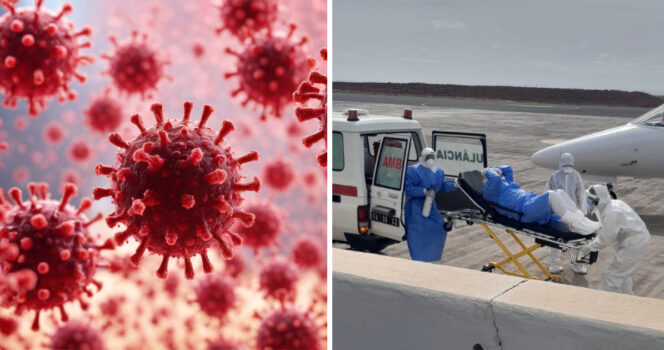
As concern continues to grow over the hantavirus outbreak linked to the cruise ship MV Hondius, the World Health Organization has attempted to reassure the public while also emphasizing the seriousness of the situation. The outbreak, which has already been connected to multiple deaths and suspected infections, has triggered comparisons online to the early days of the Covid-19 pandemic. However, health officials insist that the current situation is significantly different and that the overall public health risk remains low.
The Dutch expedition vessel MV Hondius became the focus of international attention after several passengers and crew members reportedly developed symptoms associated with hantavirus infection while traveling across the Atlantic. Nearly 150 people remain onboard the ship as health authorities continue monitoring the situation closely.
On Wednesday, World Health Organization Director-General Tedros Adhanom Ghebreyesus shared an update regarding emergency medical evacuations connected to the outbreak. Writing on social media, he confirmed that several suspected patients had been transported off the vessel for advanced medical care.
“Three suspected hantavirus case patients have just been evacuated from the ship and are on their way to receive medical care in the Netherlands in coordination with WHO, the ship’s operator and national authorities from Cabo Verde, the United Kingdom, Spain, and the Netherlands,” he stated.
He also explained that the World Health Organization continues working with national authorities and the ship’s operators to monitor passengers and crew members both onboard and after disembarkation. According to the organization, follow-up procedures and health monitoring are already underway for those potentially exposed.
Despite growing concern online, WHO officials stressed that the current outbreak should not be viewed as the beginning of another global pandemic. During a recent press conference, WHO epidemiologist Maria Van Kerkhove directly addressed comparisons between hantavirus and Covid-19.
“This is not the next Covid, but it is a serious infectious disease,” she explained. “If people get infected, and infections are uncommon, they can die. People on the ship who are hearing this are very scared, rightly so.”
She also emphasized the importance of sharing accurate information and avoiding unnecessary panic. According to Van Kerkhove, most people around the world are unlikely to ever encounter the virus directly.
“The general public might be scared as well. Accurate information is critical. Knowing what your actual exposure might be – most people will never be exposed to this,” she added.
Hantavirus is considered a rare but potentially dangerous infection that is usually associated with exposure to rodents. According to health experts, the virus can spread through contact with rodent urine, saliva, or droppings. In some situations, contaminated particles can become airborne and inhaled, leading to infection.
The illness can develop into hantavirus cardiopulmonary syndrome, often abbreviated as HCPS, a severe respiratory condition that can become life-threatening without rapid medical intervention. The World Health Organization states that HCPS carries a fatality rate commonly estimated between 20% and 40%, making it a serious public health concern despite its rarity.
One of the most unusual and concerning aspects of the current outbreak is that investigators reportedly have not found rodents onboard the ship. This has led researchers to consider other possibilities regarding transmission.
Health authorities are examining whether person-to-person spread could have occurred. While such transmission is considered extremely uncommon, experts note that a specific strain known as the Andes virus has previously demonstrated limited human-to-human transmission in rare cases.
That possibility has increased anxiety among passengers and observers, especially because cruise ships involve close living quarters and shared indoor spaces. However, experts continue to stress that sustained person-to-person spread of hantavirus remains highly unusual compared to respiratory viruses such as Covid-19 or influenza.
At the same time, officials are carefully balancing caution with reassurance. WHO representatives have repeatedly stated that the overall public health risk is currently considered low. Monitoring efforts remain focused on identifying additional cases quickly and ensuring that anyone showing symptoms receives appropriate medical attention.
Images released during the evacuations highlighted the seriousness of the response. Photographs showed patients in protective medical gear being transferred from the ship through coordinated emergency operations involving ambulances, medical aircraft, and personnel wearing protective equipment.
Authorities confirmed that the evacuated individuals included passengers from several different countries. Reports indicated that one of the patients transferred for treatment may have been the ship’s doctor, who had previously been described as being in serious condition before reportedly showing signs of improvement.
Meanwhile, passengers remaining onboard continue to face uncertainty as health officials monitor for additional symptoms during the virus’s incubation period. Experts note that symptoms of hantavirus infection can take several days to appear after exposure.
Early symptoms may resemble flu-like illness and can include fever, fatigue, muscle aches, headaches, nausea, and dizziness. In severe cases, breathing difficulties can develop rapidly as fluid accumulates in the lungs, requiring intensive hospital treatment.
Because there is currently no specific antiviral cure for hantavirus, treatment mainly focuses on supportive medical care, including oxygen therapy and intensive respiratory support when necessary. Early detection and hospitalization are considered critical for improving survival chances.
The outbreak has also renewed public discussion about infectious disease preparedness and health safety aboard international cruise ships. While cruise operators routinely follow sanitation and health protocols, outbreaks involving rare diseases can create unique logistical and medical challenges, especially when ships are far from major healthcare facilities.
For now, international health authorities continue working together to monitor the situation and coordinate medical responses where necessary. Officials maintain that the risk to the broader global population remains low, though investigations into the source and transmission of the virus remain ongoing.
As attention stays focused on the passengers and crew of the MV Hondius, experts continue encouraging calm, accurate reporting, and reliance on verified medical information rather than speculation circulating online.

