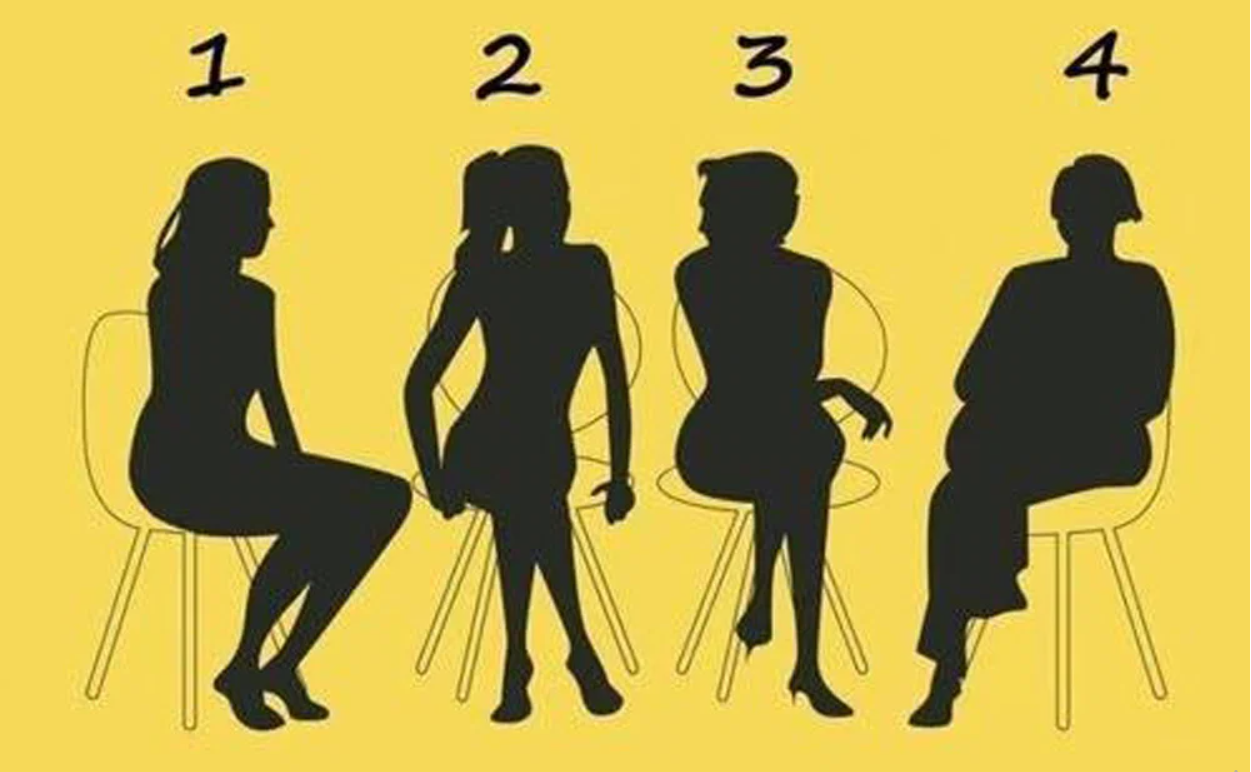
The Viral “Which Woman Looks Oldest?” Challenge and What It Claims to Say About Your Personality
A Simple Question That Sparks Curiosity
Personality quizzes continue to attract enormous attention online, drawing millions of people who enjoy exploring what their choices might reveal about their thoughts, habits, and behavior.
Among the many visual challenges circulating on social media, one of the most talked-about involves a surprisingly straightforward question: Which woman appears to be the oldest?
At first, the task seems easy. Participants are presented with an image showing several women and are asked to choose the one they believe looks oldest.
The challenge itself takes only a few seconds to complete, yet the popularity of the test comes from what happens afterward.
Each answer is linked to a personality profile that supposedly reflects how a person thinks, feels, and interacts with the world.
Supporters of the challenge claim that the choice can provide insights into emotional tendencies, social behavior, leadership qualities, and decision-making patterns.
Although the test is designed primarily for entertainment, many participants find the results surprisingly relatable and enjoy comparing answers with friends and family.
Understanding the Concept Behind the Test
The foundation of the “Which Woman Looks Oldest?” challenge is based on visual observation.
Participants are asked to study an image containing several women and identify the person who appears oldest based on their first impression.
What makes the activity interesting is the belief that people focus on different details depending on their personality traits and personal experiences.
Some individuals may immediately notice facial features.
Others may focus on posture, clothing, expressions, or body language.
According to the concept behind the test, these unconscious preferences reveal how a person processes information and interprets social situations.
The result is intended to offer a glimpse into characteristics such as confidence, empathy, logic, creativity, and emotional awareness.
Whether or not participants fully believe the interpretation, the process often encourages reflection and discussion.
Why Personality Quizzes Remain So Popular
The internet has transformed personality quizzes into a global phenomenon.
People of all ages regularly participate in visual puzzles, image challenges, and self-discovery activities designed to provide quick and entertaining insights.
Part of their appeal comes from their accessibility.
Most tests require only a few seconds to complete and do not involve complicated instructions.
Participants can immediately compare their results with others, making the experience interactive and engaging.
Another reason for their popularity is the sense of curiosity they create.
People naturally enjoy learning more about themselves, even when the information is presented in a lighthearted format.
These quizzes often encourage users to think about their emotions, preferences, and relationships from a different perspective.
They also generate conversation.
Friends frequently compare outcomes, debate interpretations, and share results on social media platforms.
This combination of entertainment and self-reflection helps explain why visual personality tests continue to spread rapidly across the internet.
How Visual Judgments Influence Responses
Human beings are naturally skilled at making quick observations.
Within moments of seeing another person, the brain begins evaluating facial expressions, body language, and emotional cues.
This ability plays an important role in everyday social interactions.
Visual personality tests attempt to use these rapid judgments as the basis for interpretation.
The idea is that people notice different elements of an image depending on their mindset and personality.
For example, someone who pays close attention to detail may focus on subtle signs of aging or posture.
An emotionally sensitive individual may be more influenced by facial expressions and perceived mood.
People who prefer analytical thinking might compare physical characteristics and appearance before making a decision.
Creative personalities may focus less on physical details and more on the overall impression or energy projected by the image.
Because everyone approaches visual information differently, the challenge often produces a wide variety of answers.
Building the Foundation of the Test
Creating a successful visual personality challenge begins with a clear concept.
The central question must be simple enough to encourage quick participation while remaining interesting enough to generate curiosity.
In this case, the focus is identifying which woman appears oldest.
The straightforward nature of the question allows participants to rely on instinct rather than lengthy analysis.
A strong personality test often presents itself as uncomplicated while subtly encouraging deeper thought.
This balance helps maintain engagement and increases the likelihood that participants will become emotionally invested in the result.
The simpler the challenge appears, the easier it is for people to join in without hesitation.
Selecting the Right Images
The choice of images plays a crucial role in determining the effectiveness of the test.
The women shown should appear similar enough to make the decision difficult.
If one person clearly looks older than the others, the challenge loses much of its appeal.
Subtle differences create the uncertainty that keeps participants engaged.
Various visual elements can be adjusted to influence perception.
These may include facial expressions, hairstyles, posture, clothing choices, makeup, and body language.
The goal is not to create obvious distinctions but to encourage viewers to rely on instinct when making their selection.
This uncertainty often leads participants to wonder whether their choice reveals something meaningful about their personality.
Most versions of the challenge feature between three and six women, providing enough options to generate diverse responses without overwhelming the viewer.
The Importance of Image Presentation
Beyond selecting suitable images, presentation is another key component of the test.
The arrangement of the photographs can significantly influence how participants perceive them.
Images are typically displayed side by side in equal sizes.
This approach helps prevent any single picture from attracting disproportionate attention.
Balanced spacing, consistent lighting, and neutral backgrounds create a level playing field for each image.
Maintaining similar image quality across all options also reduces distractions.
When the presentation is carefully structured, participants are more likely to rely on genuine impressions rather than external factors.
This increases the effectiveness of the challenge and enhances the overall experience.
Creating Personality Profiles
The personality interpretations attached to each answer represent the most important creative aspect of the test.
Each selection is associated with a unique profile that describes certain personal characteristics.
One answer may be linked to logic, practicality, and calm decision-making.
Another may emphasize empathy, kindness, and emotional awareness.
A different choice might highlight independence, confidence, and leadership potential.
The objective is to create descriptions that feel meaningful and relatable.
Participants are more likely to engage with the results when they recognize aspects of themselves in the interpretation.
Positive and balanced descriptions generally perform best because they encourage sharing and discussion.
People enjoy reading results that acknowledge strengths while also providing opportunities for reflection.
The Role of Broad Personality Statements
Many successful personality tests use descriptions that can apply to a wide range of individuals.
These statements often feel highly personal even though they are broadly relevant.
Examples include observations about caring deeply for others, valuing honesty, offering support to friends, or preferring meaningful relationships.
Such descriptions resonate because they reflect experiences and emotions shared by many people.
Participants frequently recognize parts of themselves within the result, increasing the sense that the interpretation is accurate.
This emotional connection is one of the reasons personality quizzes continue to attract large audiences.
The results feel personal enough to spark interest while remaining flexible enough to apply to diverse personalities.
Encouraging Instinctive Decisions
The most engaging visual challenges encourage participants to make quick choices.
Instructions often emphasize responding without overthinking.
This approach helps create a stronger emotional reaction and increases curiosity about the outcome.
A typical introduction invites viewers to examine the image carefully and select the woman who appears oldest based on their first impression.
By relying on instinct rather than lengthy analysis, participants become more invested in discovering what their answer might reveal.
The simplicity of the process contributes significantly to the challenge’s popularity.
People appreciate activities that can be completed within seconds while still providing an entertaining result.
Why These Challenges Spread Online
Visual personality tests are particularly well suited for social media.
Their short format encourages participation, sharing, and discussion.
Users often compare answers with friends and family members, creating additional engagement.
Unexpected results frequently spark conversations and debates.
Many participants enjoy tagging others and encouraging them to take the same challenge.
The combination of curiosity and interaction helps these quizzes reach large audiences quickly.
Because the tests require minimal effort to complete, they can easily be shared across multiple platforms.
This viral potential has made visual personality challenges a recurring trend in online communities.
Entertainment Versus Scientific Analysis
While many people find personality tests fascinating, it is important to understand their purpose.
Most viral image-based quizzes are created primarily for entertainment rather than professional psychological evaluation.
Formal personality assessments typically involve extensive research, structured methodologies, detailed questionnaires, and statistical analysis.
Visual challenges do not provide the same level of scientific reliability.
Their interpretations are intended to be engaging rather than diagnostic.
Even so, participants often enjoy the opportunity to reflect on their thoughts, emotions, and behavior.
The value of these quizzes frequently lies in the conversations they inspire rather than the accuracy of the results.
The Lasting Appeal of Self-Discovery
The enduring popularity of personality tests reflects a fundamental aspect of human nature.
People are naturally curious about themselves and the way they relate to others.
Even simple activities can encourage meaningful reflection about personal strengths, emotions, and relationships.
The “Which Woman Looks Oldest?” challenge succeeds because it combines curiosity, entertainment, and self-exploration into a single experience.
Participants enjoy testing their instincts and comparing results while considering what their choices might reveal.
Whether viewed as a serious exercise or simply a fun diversion, the challenge continues to attract attention because it taps into a timeless desire to better understand ourselves.
That combination of visual intrigue, personal interpretation, and social interaction ensures that personality quizzes remain one of the internet’s most enduring forms of entertainment.
