What Your Choice of Couples Walking in the Rain May Reveal About Your View of Love
The Psychology Behind Simple Relationship Choices
Many people believe they already know exactly what they want in a romantic partner. Common answers often include honesty, kindness, loyalty, and a sense of humor. While those qualities certainly matter, human relationships are usually far more layered and emotionally complex than a simple checklist can explain.
Love rarely looks like a perfect movie scene filled with dramatic declarations and flawless moments. In reality, relationships are often shaped by quiet routines, shared responsibilities, emotional reactions, and the way two people respond to ordinary challenges together.
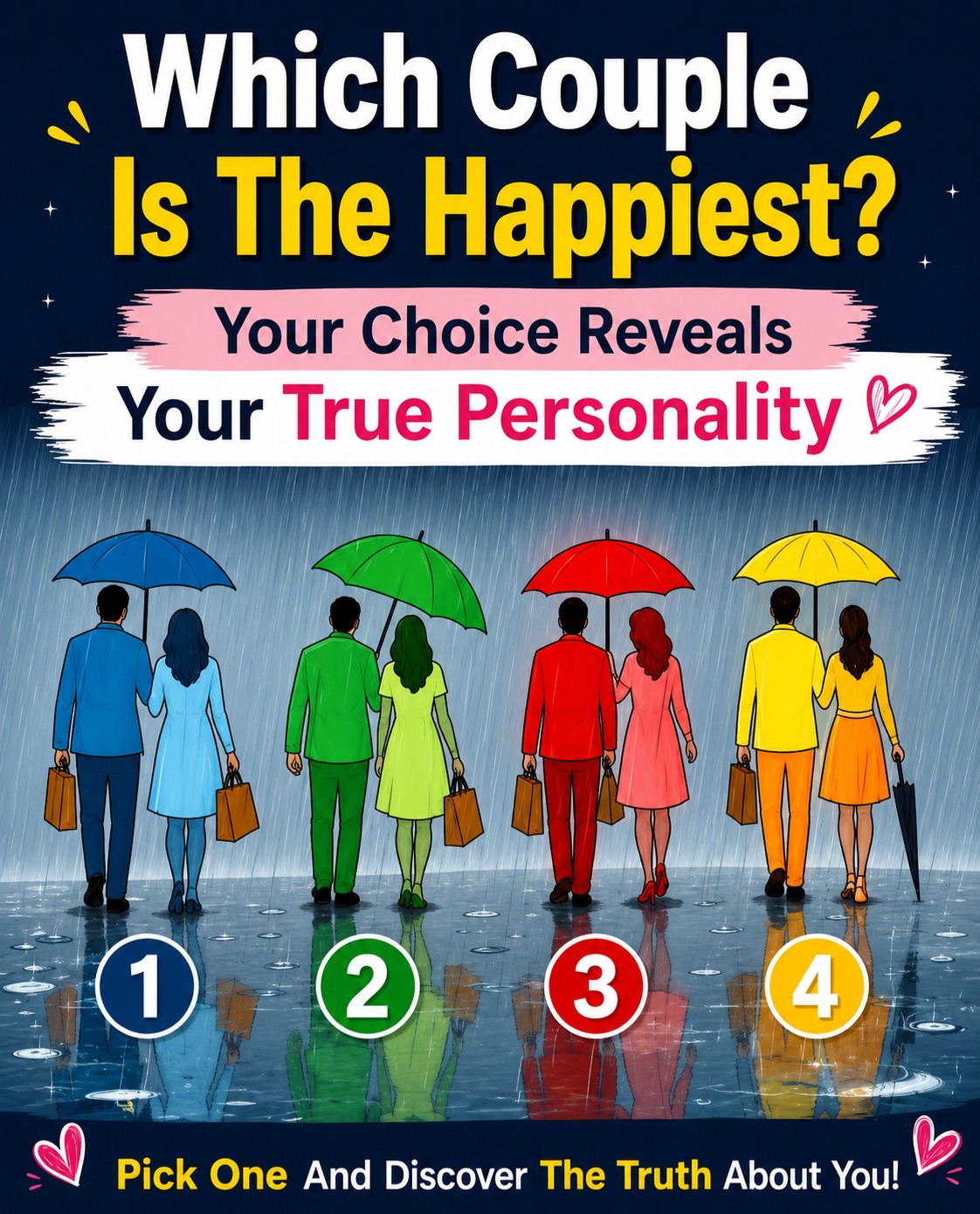
Even small decisions can sometimes reveal something meaningful about emotional preferences. A simple image showing several couples walking together in the rain may seem insignificant at first glance, but the choice people make often reflects deeper emotional instincts.
Rain creates discomfort, unpredictability, and vulnerability. In situations like that, people naturally focus on safety, connection, freedom, passion, or support. Without consciously analyzing body language or details, many individuals are immediately drawn toward the couple that emotionally feels most familiar to them.
The result is not a scientific diagnosis or a perfect personality test. Instead, it can serve as a reflection of the emotional dynamics that currently resonate most strongly with someone’s understanding of relationships.
Couple 1: The Stable and Reliable Partners
People who feel most connected to the first couple often value emotional stability above excitement or unpredictability. For them, love is less about dramatic emotional highs and more about consistency, trust, and long-term security.
These individuals usually prefer relationships where both partners feel calm and safe with one another. They are not interested in constant conflict, emotional games, or uncertainty. Instead, they are drawn to relationships built on reliability and mutual respect.
To them, genuine love is created gradually through daily actions rather than grand gestures. Small acts of dependability matter deeply. A partner who keeps promises, communicates honestly, and remains emotionally steady is often viewed as far more attractive than someone who creates excitement through instability.
People who identify with this type of relationship are often dependable themselves. Friends and family members may see them as trustworthy individuals who stay calm during stressful situations.
Rather than reacting impulsively when challenges arise, they tend to focus on solving problems carefully and rationally. They value emotional maturity and usually seek relationships where both people can comfortably be themselves without fear of judgment.
For them, the strongest relationships are often the quietest ones. Love does not need to be loud in order to feel meaningful.
Couple 2: The Independent Yet Connected Pair
Those who choose the second couple are often individuals who strongly value independence inside romantic relationships. They believe that love should support personal growth rather than erase individuality.
In their view, healthy relationships are not about losing oneself completely in another person. Instead, two independent individuals choose to move through life together while still maintaining their own identities, interests, and personal goals.
These people often need emotional breathing room. They appreciate partners who understand the importance of personal space and emotional freedom.
This preference does not necessarily mean they fear commitment or intimacy. In fact, many are deeply loyal and emotionally invested once they trust someone. However, they believe strong relationships should allow both people to continue developing as individuals.
Mutual respect plays a major role in how they approach love. Emotional balance, intellectual compatibility, and healthy boundaries are often more important to them than constant emotional intensity.
They usually dislike relationships that feel controlling, emotionally overwhelming, or dependent. Instead, they thrive when both partners feel supported without feeling trapped.
For these individuals, love works best when it exists alongside freedom rather than replacing it.

Couple 3: The Passionate and Emotionally Intense Connection
People drawn toward the third couple are often highly emotional and deeply passionate when it comes to relationships. They view love as something powerful, exciting, and transformative.
For them, emotional intensity is not something to avoid. It is something to embrace fully.
These individuals are rarely satisfied with shallow or emotionally distant relationships. They crave strong chemistry, meaningful conversations, emotional closeness, and a sense of excitement in their romantic lives.
They are usually expressive partners who communicate affection openly through words, humor, touch, and emotional vulnerability. When they care about someone, they tend to invest themselves completely.
Love, in their eyes, should feel alive. It should inspire, energize, and create unforgettable emotional experiences.
Because they value emotional depth so strongly, they may struggle with relationships that feel routine, emotionally disconnected, or predictable for too long.
At the same time, these individuals often bring warmth and enthusiasm into the lives of those around them. Their emotional openness can make relationships feel exciting and deeply personal.
They are typically willing to take emotional risks because they believe meaningful connection is worth the vulnerability that comes with it.
Couple 4: The Protective and Nurturing Bond
Those who feel most connected to the fourth couple are often naturally nurturing and emotionally protective people. Relationships occupy a central place in their emotional world.
For them, love is closely connected to caregiving, emotional support, and creating a sense of safety for others.
These individuals are often highly empathetic. They tend to notice emotional shifts quickly, even when others try to hide their feelings.
They may recognize sadness, stress, or emotional exhaustion before the other person fully acknowledges it themselves. Because of this sensitivity, many people feel emotionally safe around them.
Whether in friendships, family relationships, or romantic partnerships, they naturally take on supportive roles. Protecting loved ones and helping others feel secure often gives them a strong sense of purpose.
Their relationships are usually built around emotional closeness, loyalty, and deep compassion. They want the people they care about to feel understood and emotionally supported during difficult moments.
At times, they may prioritize the needs of others so strongly that they forget to focus on themselves. Still, their emotional generosity often becomes one of their greatest strengths.
To them, love is not simply about attraction or companionship. It is about creating a safe emotional space where both people feel accepted and protected.
Why These Choices Feel So Personal
Exercises like this often feel surprisingly accurate because they reflect emotional needs that already exist beneath the surface.
People are not simply analyzing an image when they choose one couple over another. They are often responding emotionally to relationship dynamics that feel familiar, comforting, or desirable at that moment in life.
Someone experiencing stress or uncertainty may naturally gravitate toward stability and security. Another person rebuilding independence may feel drawn toward relationships that emphasize freedom and personal space.
Individuals who feel emotionally disconnected may crave passion and intensity, while those carrying emotional burdens may seek nurturing and protection.
Relationship preferences are not fixed forever. Emotional needs can evolve over time as people grow, experience change, and move through different stages of life.
A person who once valued excitement above all else may later prioritize emotional stability. Someone who once needed independence may eventually long for deeper emotional closeness.
Because of this, the couple someone chooses today may reflect their current emotional state more than a permanent personality trait.
Love Does Not Follow One Formula
One of the most important truths about relationships is that there is no single correct way to love.
Some relationships thrive on calm consistency. Others depend on emotional excitement, independence, or nurturing support. Healthy partnerships can exist in many different forms depending on the personalities and emotional needs of the people involved.
What matters most is whether both individuals feel emotionally fulfilled, respected, and understood within the relationship they share.
Every relationship also changes over time. Couples adapt to stress, success, hardship, aging, personal growth, and unexpected life events.
The emotional qualities people seek in love often reflect what they currently need most from connection, companionship, and emotional support.
That is why small psychological exercises like this can sometimes feel surprisingly revealing. They encourage people to pause briefly and think about what truly matters to them in relationships beyond surface-level expectations.
The Emotional Reflection Hidden Inside the Choice
At first glance, selecting a couple walking together in the rain may seem like a meaningless preference. Yet the emotional reaction behind that decision can reveal subtle truths about personal desires, emotional habits, and relationship values.
Some people seek steadiness because life already feels chaotic. Others seek freedom because they feel emotionally confined. Some crave passion because routine has become emotionally exhausting, while others seek protection because they long for emotional safety.
None of these desires are inherently right or wrong.
Human relationships are dynamic, emotional, and deeply personal. Every individual carries different experiences, fears, hopes, and emotional needs into the way they love others.
What matters most is understanding whether the love someone gives and receives genuinely supports emotional well-being and personal fulfillment.
In the end, the couples in the rain are not simply images. They become reflections of the emotional connections people hope to build, protect, or discover within their own lives.
