Late-Night Social Media Posts From Donald Trump Renew Attention on Repeated Claims and Conspiracy Theories
Extended Posting Session Draws Widespread Attention
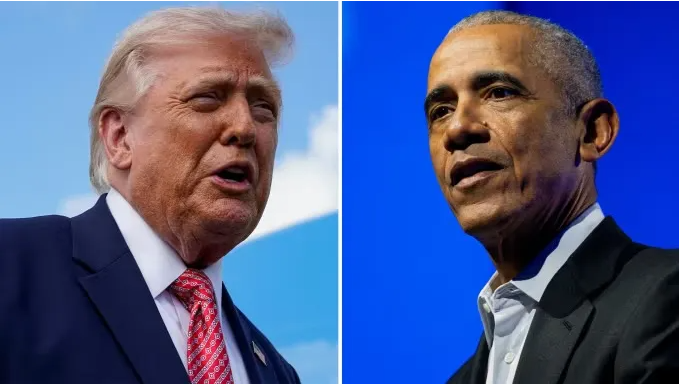
President Donald Trump spent several hours posting on social media during a late-night online activity session that stretched from Monday evening into Tuesday morning.
The series of posts focused heavily on former President Barack Obama, past elections, and a collection of claims that have circulated for years. Many of the messages repeated allegations and conspiracy theories that have previously faced extensive criticism and dispute.
As the posts accumulated throughout the night, they attracted attention from political observers and social media users who closely follow Trump’s online activity.
The posting spree reflected a familiar pattern in which Trump used his platform to comment on political opponents, media organizations, and issues related to previous elections.
Disputed Quote Attributed to Senator John Kennedy
One of the posts shared by Trump included a message from a supporter that featured a quote allegedly spoken by Republican Senator John Kennedy of Louisiana.
The statement portrayed Kennedy as criticizing Obama and demanding that he return $120 million that he supposedly earned from the Affordable Care Act.
However, the quote was not authentic. The statement originated from a satirical source that publishes fabricated stories designed to resemble legitimate news content.
Kennedy later stated that he never made the remarks attributed to him in the widely circulated post.
Renewed Focus on Barack Obama
Claims involving Obama appeared repeatedly throughout the social media activity. Several of the shared posts revisited allegations that have circulated for years despite a lack of supporting evidence.
Among them was a message presented as if it came from John F. Kennedy Jr., which accused Obama of authorizing surveillance of Trump Tower during the 2016 election cycle.
The post described the alleged action as more serious than the Watergate scandal, repeating a claim that has been debated for years.
The allegation has never been supported by evidence, and federal authorities previously stated that records supporting such claims did not exist.
Additional Allegations Shared Online
The posting session also included other controversial assertions involving political figures and past events.
Among the claims circulated were accusations involving Hillary Clinton, allegations of government cover-ups, and references to incidents involving law enforcement officers.
Trump also shared content connected to long-running claims about Obama’s birth certificate, an issue that has remained a recurring subject in certain political circles for many years.
These topics have frequently appeared in online discussions and have often generated significant public debate.
Election Claims Resurface
Past election controversies were another major theme throughout the social media activity.
Trump shared posts from former adviser Michael Flynn that repeated claims that the 2020 presidential election had been stolen.
Additional messages promoted allegations involving voting technology and election systems, including assertions that votes had been deleted or altered.
These claims have been widely discussed since the 2020 election and remain among the most frequently repeated election-related allegations online.
Criticism Directed at The New York Times
Trump also used the posting session to criticize The New York Times over coverage related to the cost of a project involving the Lincoln Memorial Reflecting Pool.
In responding to the newspaper’s reporting, he claimed that the publication was rapidly losing subscribers.
The statement became another point of discussion as observers compared the claim to publicly available information about the newspaper’s subscriber base.
The newspaper has reported continued subscriber growth and has stated that its total subscription numbers exceed 13 million.
A Familiar Pattern of Online Activity
The extended series of posts followed a pattern that has become familiar to many observers of Trump’s online presence.
His social media activity has often included criticism of political rivals, challenges to media reporting, and the sharing of controversial claims regarding past political events.
Supporters and critics alike closely monitor these posting sessions because they frequently generate significant public discussion and media coverage.
The latest burst of activity once again placed attention on claims that continue to circulate online despite ongoing debate over their accuracy and credibility.
Continuing Debate Over Online Information
The episode also highlighted broader concerns about how information spreads across social media platforms.
Posts containing dramatic allegations can quickly gain visibility, particularly when shared by prominent public figures with large audiences.
As a result, disputed claims often continue to attract attention long after questions have been raised regarding their validity.
The latest round of posts demonstrated how political narratives, conspiracy theories, and controversial statements can remain active topics of discussion years after they first emerged.

Ongoing Public Interest
Trump’s online activity continues to draw significant attention because of his influence in American politics and the size of his audience.
Every major posting session tends to generate reactions from supporters, opponents, journalists, and political analysts.
The latest messages involving Obama, election claims, and media criticism quickly became part of broader conversations taking place across social media and political news coverage.
As debate continued, the posting spree served as another example of how social media remains a central platform for political messaging, public reaction, and the rapid spread of controversial claims.
