
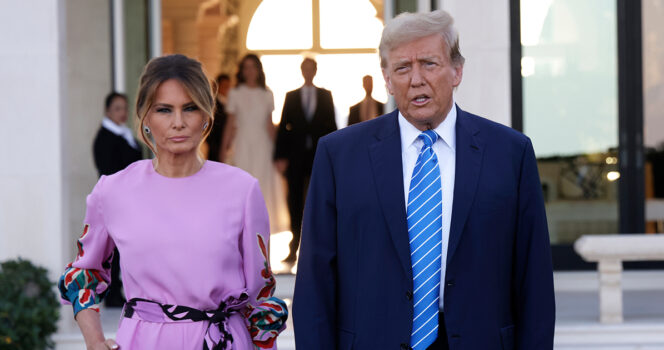
During a public address at the White House on April 28, Donald Trump welcomed King Charles III and Queen Camilla as part of their official visit to the United States. The event, attended by dignitaries and guests, was expected to focus on diplomatic relations and shared history between the two countries. However, portions of the speech moved beyond formal remarks and into more personal reflections.
While addressing the audience, Trump spoke about his family’s connection to the United Kingdom, particularly recalling his mother, Mary Anne MacLeod Trump. He described her admiration for the British royal family and her interest in royal ceremonies, noting that she closely followed such events after emigrating from Scotland to the United States in 1929.
According to his remarks, she often watched televised appearances involving Queen Elizabeth II and expressed appreciation for royal traditions. Trump also shared a personal anecdote, saying that his mother had once commented on a young King Charles, describing him as “cute,” which he presented as a lighthearted memory during the speech.
The president then shifted focus to his parents’ long marriage, speaking about his father, Fred Trump, and highlighting that his parents were married for more than six decades. He described their relationship as an example of lasting commitment, emphasizing the length of their time together.
At that point, Trump turned toward Melania Trump, who was seated behind him, and made a remark comparing their marriage to that of his parents. He suggested, in a joking tone, that their own marriage would not reach the same duration. The comment drew laughter from parts of the audience, and he briefly continued in a similar tone before moving on with his speech.
The moment was widely shared and discussed online, with viewers offering differing interpretations. Some considered the remark to be a lighthearted joke delivered in a casual style, while others viewed it as an unusual shift in tone during a formal diplomatic event. As with many public statements, reactions varied depending on perspective and context.
The speech took place during a period of increased public attention surrounding the president and first lady. In the days leading up to the event, commentary from late-night television had also generated discussion. Jimmy Kimmel referenced the couple in a monologue, making a joke that prompted a public response from Melania Trump. She described the remarks as inappropriate and criticized the tone of the commentary.
Following the reaction, Kimmel responded during his program, stating that the joke was intended as humor and not meant to be taken literally. The exchange added to the broader media discussion surrounding public figures, comedy, and political commentary.
Against this backdrop, Trump’s remarks during the White House event became part of a wider conversation about how public statements are interpreted, particularly when they blend formal diplomacy with personal anecdotes. Moments that deviate from expected protocol often attract additional attention, especially when they involve prominent figures on an international stage.
The visit by King Charles III and Queen Camilla itself remained focused on strengthening ties between the United States and the United Kingdom, with scheduled engagements centered on cooperation and shared interests. However, as is often the case with high-profile events, individual moments from speeches and appearances can quickly become focal points for public discussion.
Overall, the reaction to Trump’s comment illustrates how audiences interpret tone and intent differently, particularly in settings where formal expectations and personal expression intersect.

