
The hospital corridor was filled with the familiar atmosphere of waiting. People sat along the walls, some quietly speaking with relatives, others scrolling through their phones, and a few simply staring ahead, lost in thought. The air carried a mixture of antiseptic scents and tension, a reminder that every person there had come for a reason, often connected to concern or uncertainty about health.
Without warning, the entrance door opened abruptly, drawing attention from those nearby. An elderly man, likely in his seventies, stepped inside. His appearance immediately stood out. He wore a worn jacket, an old cap, and relied on a cane as he moved forward. His clothing looked aged and modest, and his presence quickly became the focus of quiet whispers among those waiting.
Despite his appearance, the man walked with a sense of purpose. He approached the reception desk with steady steps. Behind it, a young nurse was focused on her computer, typing without looking up.
In a calm voice, the man spoke. He asked where he could find the chief doctor, explaining that he had come specifically to see him.
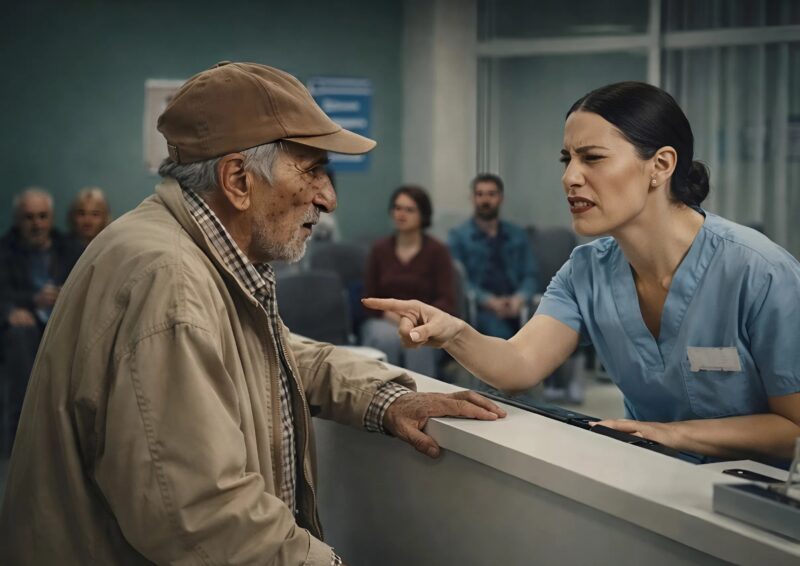
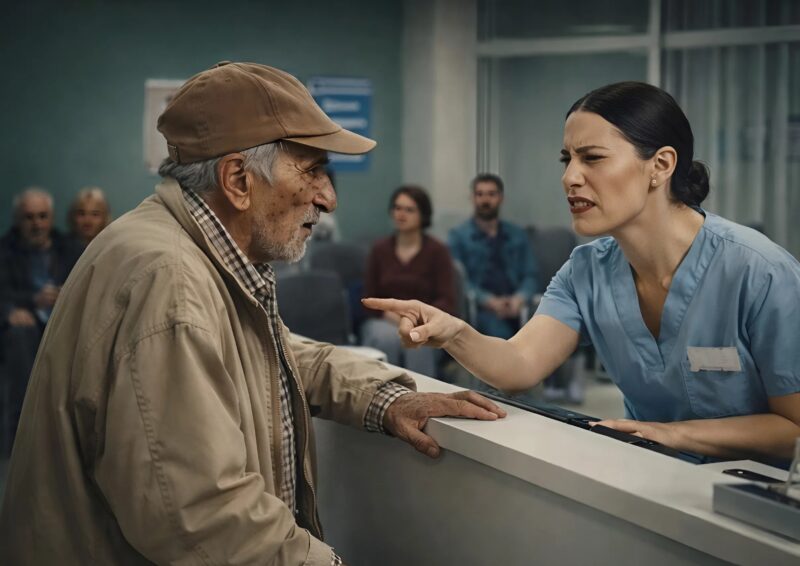
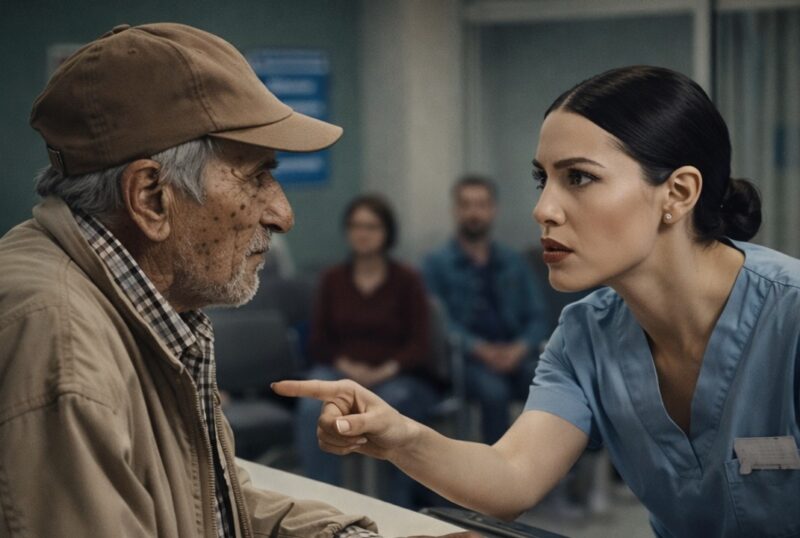
The nurse responded briefly, telling him to wait like everyone else. Her tone was dismissive, and she continued working without giving him much attention. After a moment, she finally looked up—and her reaction changed noticeably. Her expression shifted from indifference to discomfort.
She leaned back slightly and commented on his appearance, suggesting that he should leave. Her words grew firmer as she implied that he did not belong there. She even mentioned the possibility of calling security if he did not comply.
The atmosphere in the corridor shifted. Conversations quieted, and more people began watching the interaction. Some exchanged glances, while others whispered among themselves. A few made assumptions about the man based solely on his appearance, speaking quietly but audibly enough to contribute to the tension.
Throughout this, the elderly man remained composed. He did not raise his voice or react with anger. Instead, he stood still, leaning lightly on his cane, looking at the nurse with a calm and steady expression. There was no sign of agitation—only patience and a quiet sense of confidence.
The nurse reached for the phone, appearing ready to call security. At that exact moment, the door to the operating room opened.
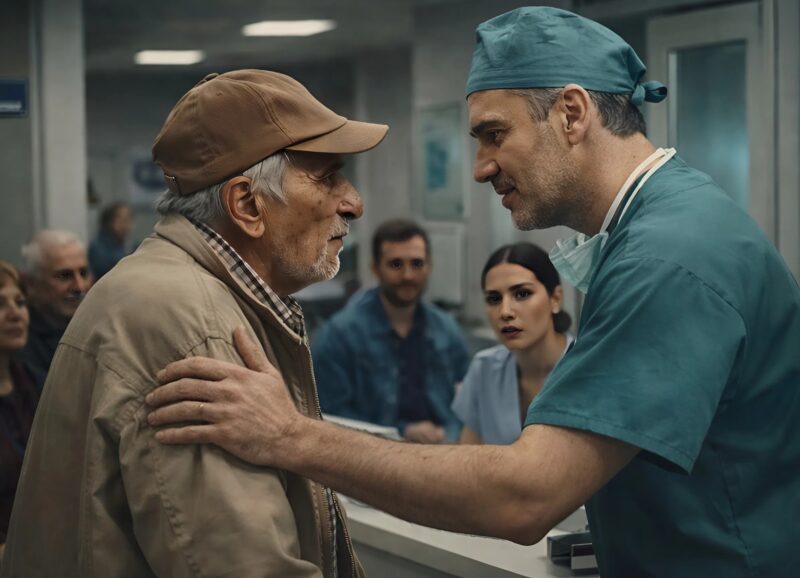
A doctor stepped out, still wearing surgical attire, removing his mask as he entered the corridor. His face showed signs of fatigue, as if he had just completed a demanding procedure. However, as soon as he noticed the situation at the reception desk, his attention shifted entirely.
He walked directly toward the elderly man.
The room fell silent as people observed what would happen next. The doctor’s expression softened as he approached, and when he spoke, his tone was completely different from the tension that had filled the corridor moments earlier.
He greeted the elderly man warmly, addressing him in a personal and familiar way. It quickly became clear that they shared a close relationship.
The nurse, taken aback, hesitated before asking if the man was related to him.
The doctor confirmed that the elderly man was his father. He explained that his father had once been a highly respected surgeon, someone who had contributed significantly to the field and had passed down invaluable knowledge through years of experience. He added that much of what he himself had learned came directly from his father’s guidance and example.
He spoke with clear respect, emphasizing that some skills and insights cannot be taught through textbooks or formal education alone, but are gained through decades of hands-on experience. He indicated that the current medical case required that kind of expertise.
The reaction in the corridor changed immediately. The earlier whispers faded, replaced by a sense of realization. People who had been quick to judge now looked at the elderly man differently. Their expressions reflected surprise and, in many cases, quiet regret.
The nurse lowered her gaze, visibly uncomfortable. She offered an apology, acknowledging that she had misjudged the situation. Her voice was softer now, lacking the earlier firmness.
The elderly man responded with a simple nod. He did not dwell on what had happened. His reaction suggested that he was more focused on the present moment than on any earlier misunderstanding.
The doctor then gently guided his father, inviting him to assist with the ongoing medical case. Together, they walked toward the operating room, leaving behind a corridor that had grown unusually quiet.
For some time after they left, no one spoke. The moment had left a strong impression on everyone present.
What had unfolded served as a reminder of how easily people can form conclusions based on outward appearances, and how those assumptions can be misleading. It highlighted the importance of treating others with respect and consideration, regardless of how they may initially seem.
The elderly man’s presence in the hospital was not what it had first appeared to be. His experience, knowledge, and past contributions were significant, even if they were not immediately visible. The situation demonstrated that value and dignity are not always reflected in clothing or external presentation.
In the end, the corridor returned to its usual rhythm, but the perspective of those who had witnessed the moment had quietly shifted.

