
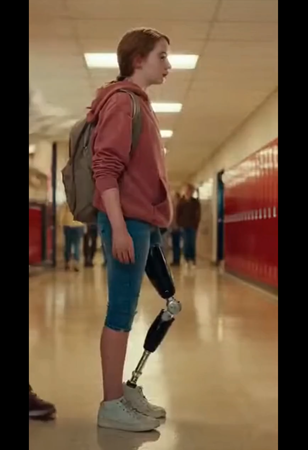
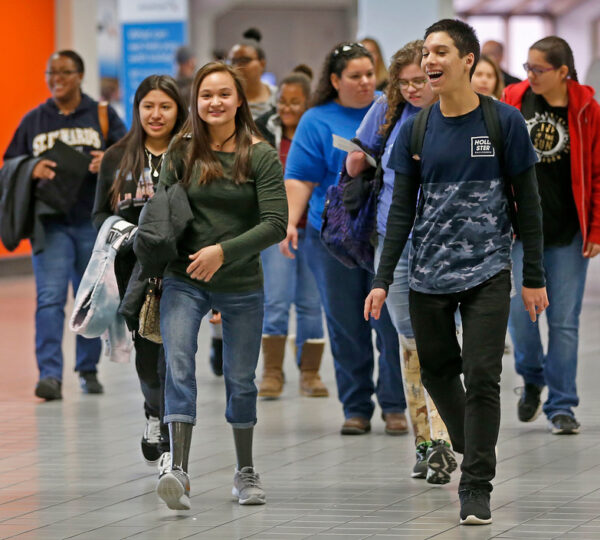
The atmosphere in a high school hallway can often feel overwhelming, especially for students who already feel out of place. For one teenager, navigating that environment required not only physical effort, but emotional strength as well. Each day was shaped by routines designed to avoid attention—walking carefully, keeping her eyes down, and hoping to pass through unnoticed.
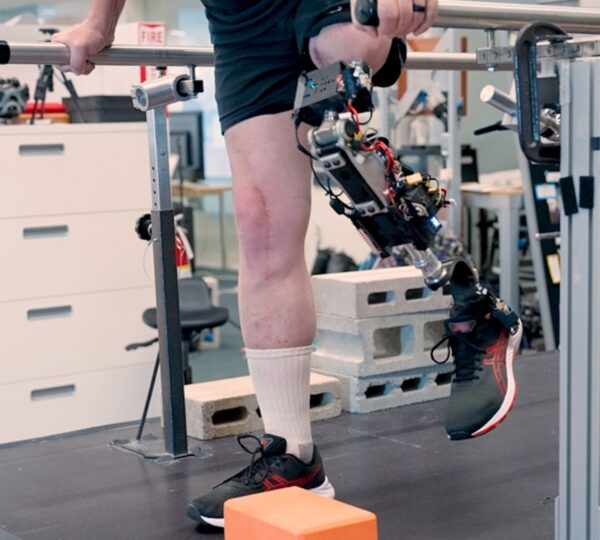
She relied on a custom prosthetic leg, a device her father had personally engineered with care and precision. While it represented innovation and resilience, it also made her stand out in ways she never wanted. The faint mechanical sounds it produced while she walked often drew attention, and not always the kind she hoped for.
Unfortunately, some of her classmates chose to focus on those differences. Among them was a group led by a popular athlete who often made her the subject of jokes. His comments, joined by laughter from others, created an environment where silence felt safer than response. Like many students facing similar situations, she learned to endure rather than engage.
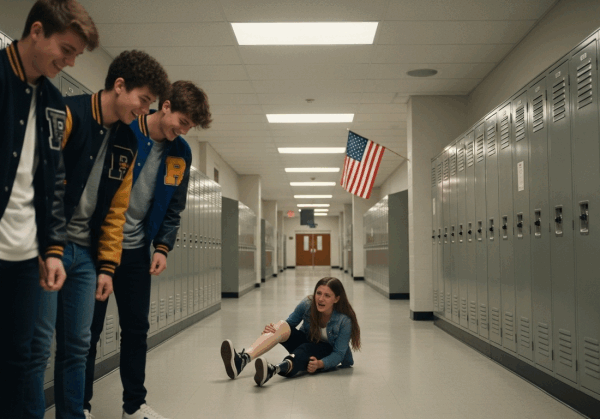
One day, as she made her way through the hallway, the situation escalated. A deliberate action caused her to lose balance, and she fell to the floor. In the process, her prosthetic leg was severely damaged. The moment was not just physically painful—it was deeply humiliating. Instead of concern, the reaction from those nearby included laughter and indifference, with some even recording the incident on their phones.
Despite the distress, she managed to make her way to the school nurse. The damage to the prosthetic was significant, making it difficult to move. Recognizing the seriousness of the situation, the nurse contacted her father.
When he arrived, his reaction was calm but focused. He examined the prosthetic carefully and quickly determined that the damage was not accidental. His professional knowledge allowed him to recognize the force required to cause such a break. Although his daughter initially hesitated, she eventually explained what had happened.
Rather than reacting with visible anger, he chose a measured approach. He took the damaged device home, repaired it overnight, and began addressing the situation through appropriate channels. His priority was not only fixing what had been broken, but also ensuring his daughter’s safety moving forward.
The next day, the situation at school changed noticeably. Meetings were held with school administrators and the students involved. Evidence was reviewed, including security footage, which clarified the events that had taken place. The seriousness of the incident became clear, and appropriate disciplinary actions followed.
The student responsible for the incident faced consequences that reflected the severity of his actions. While details remained private, it was evident that the school took the matter seriously. The outcome also served as a broader message about accountability and the importance of maintaining a safe environment for all students.
In the days that followed, the atmosphere at school shifted. The teasing and comments stopped. Students who had once ignored the situation now seemed more aware. While the change did not erase what had happened, it created space for a different experience—one where she could move through the halls without fear of being targeted.
This shift also highlighted an important reality: addressing harmful behavior often requires both courage and support. Her willingness to speak up, combined with her father’s decisive but appropriate response, played a key role in changing the situation.
Beyond the immediate events, the story reflects broader themes that resonate in many educational settings. Bullying, whether verbal or physical, can have lasting effects on individuals. It often thrives in environments where silence or inaction allows it to continue. Addressing it requires awareness, responsibility, and a commitment to fairness.
Her father’s role in the situation also illustrates the impact of advocacy. By focusing on facts, evidence, and proper procedures, he ensured that the issue was handled constructively. His actions were not about escalation, but about protection and accountability.
Over time, the student herself began to regain confidence. The repaired prosthetic functioned even better than before, reflecting the care and expertise that went into its design. More importantly, she no longer felt the same level of isolation within the school environment.
By the end of the school year, she reached an important milestone: graduation. Walking across the stage represented more than academic achievement. It symbolized resilience, growth, and the ability to move forward despite challenges.
Her journey serves as a reminder that strength is not always visible. It often exists in quiet perseverance, in the decision to keep going even when circumstances are difficult. It also shows that meaningful change can happen when individuals and communities take responsibility for their actions.
In many ways, the experience reshaped not only her own perspective, but also the behavior of those around her. It demonstrated that actions have consequences, and that respect and empathy are essential in shared environments like schools.
Ultimately, the story highlights the importance of support systems, accountability, and personal resilience. While the initial incident was painful, it led to a turning point—one that allowed her to move forward with greater confidence and a renewed sense of safety.
Her experience reflects a universal message: challenges, even difficult ones, can lead to growth when they are addressed with clarity, support, and determination.

