
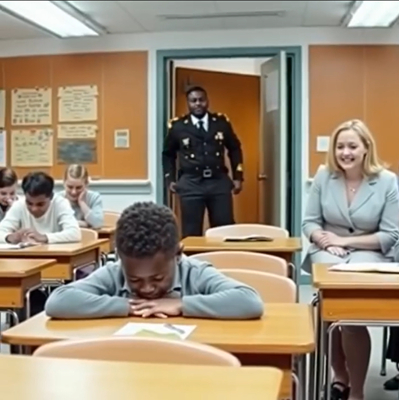
The classroom had been filled with restless energy since the morning bell rang.
Backpacks lay open across desks, pencils tapped against surfaces, and quiet conversations filled the air. The noise bounced off the walls, creating a constant hum that made the room feel unsettled. The teacher, standing near her desk, seemed somewhat distracted and only lightly attempted to bring order to the class.
Amid the general commotion, a boy named John sat silently at his desk. Unlike the others, he kept his gaze fixed on his textbook. His shoulders were slightly hunched, and he tried to make himself as small and unnoticed as possible.
Around him, a few students whispered and laughed. Some pointed in his direction. The remarks were unkind, and though not spoken loudly, they were clearly intended to be heard. John said nothing. He simply lowered his head further, trying to ignore the discomfort building inside him.
His breathing became uneven, and he gripped the edge of his desk tightly. The situation made him feel isolated, and he struggled to hold back tears.
Suddenly, the classroom door opened.
The interruption was quiet but firm. The shift in the atmosphere was immediate. Conversations stopped, movement paused, and the room grew silent. Even the teacher straightened, surprised by the interruption.
A man stood in the doorway. He was dressed simply, wearing a plain shirt and a well-used jacket. There was nothing flashy about his appearance, but he carried himself with calm confidence. His presence alone was enough to draw attention.
He stepped into the classroom with steady movements and looked around the room before focusing on John. A soft expression appeared on his face, and John immediately recognized him.
The man smiled gently at his son before addressing the class.
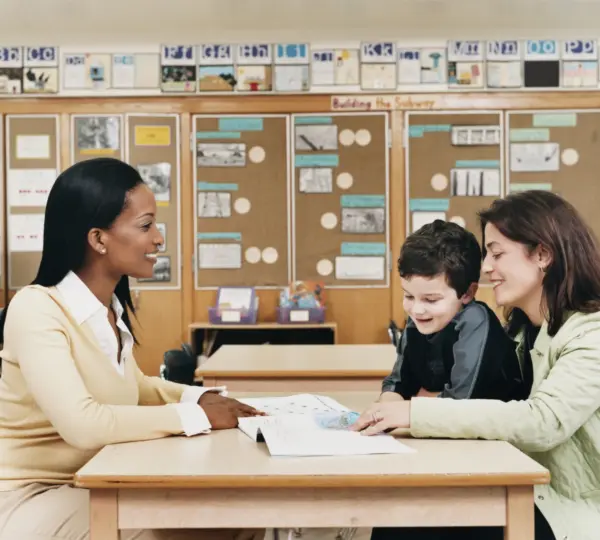
“Hello, everyone. My name is Mr. Thomson, and I am John’s father.”
A wave of surprise moved through the room. Students looked at one another, clearly not expecting this development. The teacher also appeared unsure of how to respond.
Mr. Thomson walked forward slowly, maintaining a calm and composed presence. There was no anger in his expression, only seriousness and purpose.
“I understand that my son has been placed in a difficult situation today,” he said.
His voice was steady but firm, carrying across the room without the need for raising it. The class remained silent, listening carefully.
He paused for a moment before continuing.
“I want to take a moment to share something important with all of you.”
The students sat still, paying close attention.
“I do not have a traditional profession,” he explained. “I am not a lawyer or a doctor. I do not work in an office or wear formal suits. Because of that, people sometimes make assumptions about me.”
He glanced briefly at his son, who was now watching him closely.
“I am an inventor,” he continued.
The room reacted with quiet murmurs. The word seemed to surprise many of the students.
Mr. Thomson allowed the reaction to settle before speaking again.
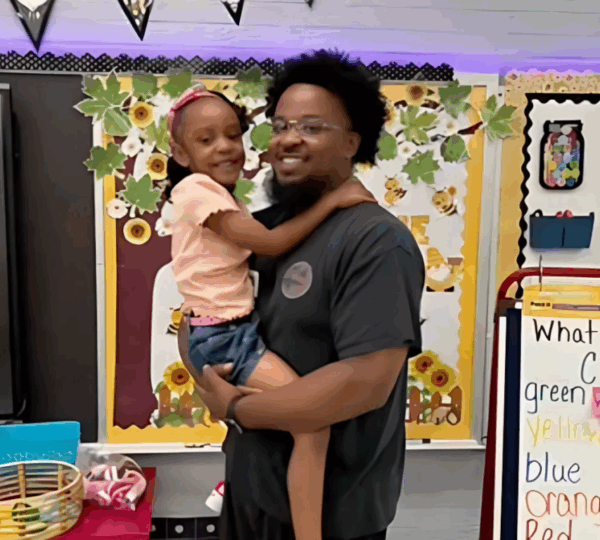
“I create ideas and build things that do not yet exist. My work involves experimentation, patience, and problem-solving. It is not always understood, but it is meaningful to me.”
He then placed a hand gently on John’s shoulder.
“And my son has been part of that journey. He has helped me for years. He is not just someone who observes my work. He participates in it. He is my partner.”
John’s posture changed slightly. He lifted his head a little, listening with growing confidence.
“We are currently working on something together,” his father continued. “A project designed to improve air quality by transforming polluted air into clean, breathable oxygen. It is still in development, but the goal is to create something that could benefit many people in the future.”
The classroom remained completely silent.
The teacher lowered her gaze, appearing reflective and somewhat uncomfortable.
Mr. Thomson’s tone remained calm but firm as he spoke again.
“Every person’s life is different. Every family has a different path. But no one should be treated poorly because others do not understand their circumstances.”
He looked across the room.

“Respect is something we owe to one another, regardless of background or assumptions.”
Then he turned back to his son.
“You should never feel less important because of what others think they know about you.”
John sat a little straighter, his expression changing from sadness to quiet pride.
After a brief pause, Mr. Thomson stepped back toward the door. Before leaving, he added one final thought.
“Kindness is not weakness,” he said. “And understanding others is always better than judging them.”
With that, he left the classroom.
For a few moments, no one spoke. The silence felt different now — heavier, more thoughtful.
Gradually, students began to look toward John again. But this time, their expressions had changed. There was no laughter, no whispering, and no teasing. Instead, there was curiosity and a new sense of respect.

The atmosphere in the classroom slowly shifted.
From that day onward, the way students treated one another began to change. The teasing faded, replaced by more thoughtful interactions. John no longer felt invisible or isolated in the same way.
He had been seen differently — not through ridicule, but through understanding.
And sometimes, a single moment is enough to change how an entire room sees one person, and how that person sees themselves.

