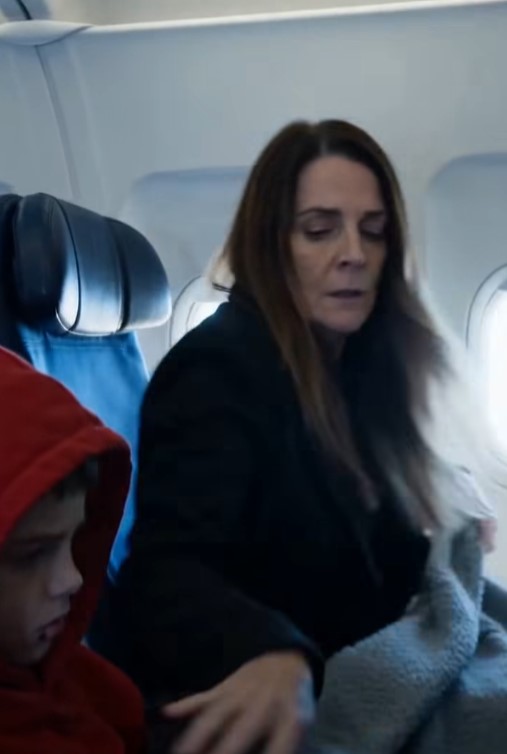
Boy’s Silent Distress Signal During Flight Leads to Intervention and Emotional Reunion
A Routine Journey Begins Like Any Other
Passengers boarding the commercial flight expected nothing unusual as they settled into their seats and prepared for departure.
The cabin was filled with familiar sights and sounds. Some travelers scrolled through their phones, others read books, and many simply relaxed as the aircraft prepared to leave the gate.
Everything appeared normal.
Among the travelers was a woman seated beside a young boy. At first glance, they seemed like any other adult and child traveling together.
However, as the flight progressed, several passengers began noticing details that felt increasingly concerning.
The child remained unusually quiet.
He avoided eye contact, rarely looked around the cabin, and appeared withdrawn from the moment he took his seat.
While many children display curiosity during air travel, this boy seemed focused only on remaining unnoticed.
His behavior immediately stood out to those seated nearby.
Signs That Sparked Concern
As passengers settled into the flight, more observations began raising questions.
The boy appeared nervous and uncomfortable throughout the journey.
He kept his head lowered and spoke very little.
Several people also noticed an injury on his face.
His lower lip appeared swollen and split, suggesting he may have been hurt recently.
Although injuries can happen for many reasons, the visible wound added to the growing concern among nearby travelers.
Attention soon shifted to the behavior of the woman accompanying him.
She appeared tense and constantly alert.
Even during quiet moments of the flight, she seemed focused on monitoring the child.
At times she maintained a firm grip on his wrist, limiting his movement.
When she released him, her attention never seemed to drift far from him.
The interaction felt unusual enough that several passengers quietly took notice.
While nobody wanted to assume the worst, many sensed that something about the situation did not seem right.
An Unspoken Message
The turning point came during a brief moment when the woman appeared distracted.
The boy carefully moved one of his hands into view of nearby passengers.
Without speaking, he performed a deliberate gesture.
He placed his thumb into his palm and folded his fingers over it.
Then he repeated the movement.
The action was subtle enough that many people might have missed it entirely.
However, a couple seated across the aisle immediately recognized the gesture.
They knew it as a silent signal used by individuals seeking help when speaking openly could place them at risk.
The realization transformed their understanding of everything they had observed during the flight.
The child appeared to be communicating that he was in distress.
His silence no longer seemed like simple shyness or nervousness.
Instead, it appeared to be a deliberate attempt to avoid drawing attention while still asking for help.
Passengers Take Action
The couple understood the importance of responding carefully.
Rather than confronting the woman directly or creating a disturbance inside the cabin, they chose a more discreet approach.
They quietly informed a flight attendant about what they had witnessed.
The crew member listened carefully and immediately began observing the situation.
Maintaining professionalism and discretion, the flight attendant monitored the interaction between the woman and the boy.
Before long, the same hand signal was observed again.
The crew member recognized that the concerns being raised deserved serious attention.
The information was shared with other members of the cabin crew.
From that point forward, airline personnel followed established procedures designed to manage potentially sensitive situations without alarming other passengers.
The goal was to protect the child while maintaining a calm and orderly environment onboard.
A Careful Response in the Air
Throughout the remainder of the flight, crew members continued monitoring the situation.
They remained attentive without drawing attention to the boy or the woman.
The cabin atmosphere stayed calm.
Most passengers remained unaware that anything unusual was unfolding.
Behind the scenes, however, important steps were being taken.
The flight crew communicated concerns to the appropriate authorities on the ground.
This allowed officials to prepare before the aircraft arrived at its destination.
Meanwhile, the boy remained quiet.
His behavior continued to reflect fear and caution.
He spoke very little and avoided attracting attention.
The woman appeared increasingly uneasy as the flight continued.
Several passengers noticed her frequently looking around the cabin and monitoring the people nearby.
The tension gradually increased as the aircraft drew closer to landing.
Concern Grows Before Arrival
As the destination approached, those who were aware of the situation found themselves increasingly worried.
The challenge of protecting a vulnerable child inside a busy airport weighed heavily on their minds.
Large terminals are crowded environments where thousands of travelers move through security checkpoints, baggage claim areas, and transportation hubs.
In such settings, individuals can quickly disappear into the flow of people.
The passengers who had noticed the warning signs hoped authorities would be ready immediately upon arrival.
Every minute would matter once the plane reached the gate.
The crew continued their quiet coordination while ensuring the flight proceeded normally.
To everyone else onboard, it appeared to be a routine landing.
Only a small number of people understood the seriousness of the situation unfolding behind the scenes.
Authorities Meet the Aircraft
When the aircraft finally arrived at its gate, preparations had already been made.
Law enforcement officers were positioned nearby and ready to respond.
Passengers began collecting luggage and preparing to leave the plane.
Most remained unaware that authorities were waiting just beyond the aircraft door.
The woman accompanying the boy appeared eager to move quickly through the airport.
However, before she could leave the area, officers intervened.
A tense encounter followed as authorities worked to assess the situation and ensure the child’s safety.
The process required careful coordination and professionalism.
Despite the stress of the moment, officers successfully separated the child from the woman.
The boy was immediately placed under protection while investigators continued their work.
The intervention marked a critical turning point in the events that had begun hours earlier inside the cabin.
Relief for a Frightened Child
Once the immediate situation was under control, medical personnel evaluated the child and addressed his visible injuries.
The young boy, identified as Leo, was finally in an environment where he no longer needed to remain silent or fearful.
For the first time during the journey, the tension visible on his face began to ease.
The anxiety that had defined much of the flight slowly faded.
Those involved in helping him were relieved to see signs that he felt safer.
What had started as a quiet and troubling situation onboard had ultimately resulted in meaningful intervention.
The actions of observant passengers and attentive crew members had helped ensure that concerns were not ignored.
An Emotional Reunion
The most powerful moment came later when Leo was reunited with his father.
After a period filled with uncertainty and worry, the reunion brought overwhelming emotion.
Father and son embraced tightly.
The moment reflected relief, gratitude, and the end of a frightening ordeal.
For Leo, it marked the beginning of a safer chapter.
For his father, it represented the return of someone deeply loved.
The emotional reunion resonated with everyone who learned about the events.
It served as a reminder of how quickly circumstances can change when people choose to pay attention and take responsible action.
A Small Gesture With Lasting Impact
One of the most remarkable aspects of the incident was the simplicity of the signal that set everything in motion.
The boy never raised his voice.
He never created a disturbance.
He did not attract attention through dramatic actions.
Instead, he relied on a small hand gesture that communicated more than words could safely express.
Equally important was the response from those around him.
The couple who noticed the signal trusted their instincts.
The flight crew responded professionally and discreetly.
Authorities prepared in advance and acted quickly after landing.
Each person played a role in helping protect a child who appeared unable to ask for help openly.
A Reminder About Awareness and Compassion
The events aboard the flight highlighted the importance of remaining aware of what is happening around us.
Many people travel every day without giving much thought to the strangers seated nearby.
In this case, however, attentiveness made a meaningful difference.
Passengers noticed behavior that seemed unusual.
They observed details that others might have overlooked.
Most importantly, they chose not to ignore their concerns.
The story serves as a powerful example of how awareness, empathy, and responsible action can intersect during critical moments.
For Leo, a silent gesture recognized by strangers became the first step toward safety.
For everyone involved, it demonstrated that even small actions can have extraordinary consequences.
What began as an ordinary flight ultimately became a reminder that paying attention can change lives.
Sometimes a single signal, noticed by the right person at the right moment, can make all the difference.
