
The Hidden Purpose Behind the Stripes on Bath Towels Finally Explained
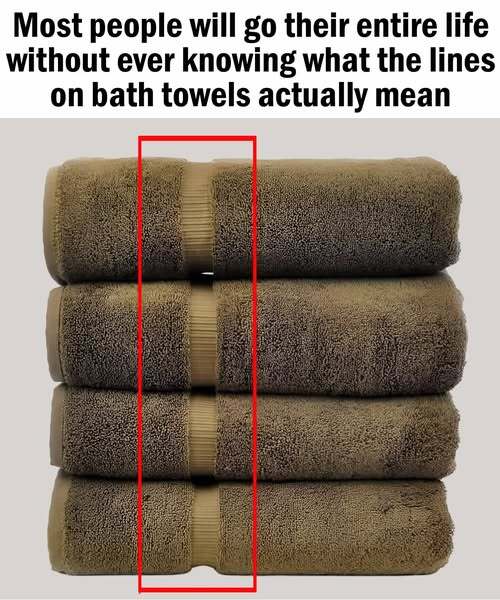
Many people have spent years using bath towels without giving much thought to the woven stripe commonly found near the ends. The detail often appears as a flat horizontal band that looks different from the soft terry cloth covering the rest of the towel.
For some, the stripe seemed purely decorative. Others assumed it was simply part of the manufacturing process without any meaningful purpose. Recently, curiosity surrounding the feature spread online as users began sharing humorous ideas about why towels include the unusual design.
Some joked that the stripe separated areas intended for different uses, while others compared it to decorative accents or “racing stripes” added for style. Despite the playful theories, the real explanation is tied closely to textile durability and towel performance.
The woven section is not a random design choice. It serves several important functions that help towels last longer, keep their shape, and remain visually appealing even after years of repeated use.
The Name Behind the Towel Stripe
The stripe found near the edges of many bath towels is known as a dobby border. This section is woven differently from the rest of the towel using a tighter and flatter construction.
Most towels are covered in terry cloth loops designed to absorb moisture efficiently. Those loops create the soft and plush texture people expect from bath towels. However, the fluffy surface alone is not strong enough to maintain the towel’s structure over long periods of heavy use.
The dobby border provides reinforcement in areas that experience significant stress. By using a denser weave, manufacturers strengthen the towel and reduce damage that commonly develops near seams and edges.
Without the border, towels would become misshapen and worn much more quickly. The reinforced band acts as a stabilizing feature that helps preserve the integrity of the fabric through constant washing and drying.
Why Towels Experience So Much Wear
Bath towels go through repeated strain during normal household use. Every day, they absorb water, rub against skin, twist during washing cycles, and endure high heat inside dryers.
Over time, these repeated conditions weaken fibers throughout the fabric. Edges and corners are especially vulnerable because they receive more pulling and friction than the center of the towel.
As towels age, common signs of deterioration begin to appear. Corners may curl upward, seams can weaken, and the overall shape may become uneven. In many cases, the edges begin fraying long before the middle of the towel shows serious wear.
The dobby border was designed specifically to combat these issues. The reinforced weave distributes stress more evenly throughout the fabric and protects the towel from premature damage.
This extra durability can significantly extend the useful lifespan of household towels. Instead of replacing towels frequently due to frayed edges or distorted shapes, consumers are able to keep them in good condition for longer periods.
How the Border Protects the Towel
The tightly woven border acts almost like a frame surrounding the towel. While the softer terry cloth remains flexible and absorbent, the denser border provides support that keeps the fabric stable.
One major benefit is protection against fraying. Loose threads and damaged seams commonly begin near towel edges because those areas experience repeated stress during handling and washing.
The reinforced band helps secure the fibers and reduce the likelihood of unraveling. This keeps towels looking cleaner and more intact over time.
The border also minimizes uneven shrinking. Repeated exposure to heat can cause certain parts of a towel to contract more than others, leading to warping and distorted shapes.
By stabilizing the structure, the dobby border helps maintain consistent tension across the fabric. This allows the towel to retain its original dimensions more effectively even after many laundry cycles.
Curling corners are another common problem reduced by reinforced borders. Towels without proper structural support may begin folding inward at the edges as fibers weaken. The stronger woven section helps keep the towel flatter and easier to manage.
Why High-Quality Towels Hold Their Shape Better
Luxury towels often maintain a crisp and uniform appearance despite heavy use. One reason is that higher-quality towels are engineered to resist differential shrinkage.
Differential shrinkage occurs when sections of fabric shrink at different rates during repeated drying cycles. This imbalance can cause towels to become stretched, warped, or unevenly shaped.
The dobby border helps prevent this by distributing tension throughout the towel more evenly. Instead of shrinking inconsistently, the fabric remains balanced and stable.
As a result, towels keep their rectangular form and continue looking neat for longer periods. This contributes not only to appearance but also to overall comfort and practicality.
Towels that maintain their shape are easier to fold and store neatly in closets or linen cabinets. They also wrap around the body more comfortably because the edges remain smooth instead of bulky or twisted.
Even small improvements in structure can make everyday household items feel more functional and refined. The reinforced border quietly supports these benefits without drawing much attention from users.
A Combination of Style and Function
Although the dobby border serves an important structural purpose, it also contributes to the towel’s visual design. The flatter weaving style allows manufacturers to include decorative patterns and textured details that would be difficult to create using terry cloth loops alone.
Because the border surface is smoother and more controlled, it provides an ideal area for woven accents and branding elements. Many premium towels include elegant geometric patterns or subtle decorative details within these sections.
The design feature allows manufacturers to combine appearance and durability in a single practical component. Rather than adding decoration separately, the woven border integrates style directly into the towel’s structure.
This balance between function and aesthetics is one reason the feature has remained common across many types of bath towels for years.
Why So Many People Recently Became Curious About It
The growing fascination with towel stripes reflects how often people overlook the design of everyday objects. Bath towels are such routine household items that most consumers rarely stop to examine why they are constructed a certain way.
Once people discovered that the woven stripe had a technical purpose, interest spread rapidly online. Many were surprised to learn that a seemingly decorative detail actually played a key role in durability and performance.
The discussion also highlighted how much hidden engineering exists in ordinary products. Countless household items contain carefully planned design elements intended to improve comfort, efficiency, and longevity without attracting attention.
Textiles are one example of this quiet engineering. Small adjustments in weave patterns, fabric density, and reinforcement methods can dramatically affect how products perform over time.
The dobby border demonstrates how a simple manufacturing decision can improve the user experience in subtle but meaningful ways.
The Role of Fabric Construction in Absorbency
One reason towels use multiple weaving styles is because different sections of the fabric serve different purposes. The terry cloth loops covering most of the towel are highly effective at trapping and absorbing moisture.
These loops increase the towel’s surface area, allowing it to pull water away from the skin efficiently. The softness of terry cloth also creates the plush feel people associate with comfortable bath towels.
However, terry cloth alone lacks the structural stability needed to withstand years of repeated stress. That is why the flatter woven border is added near the ends.
The border reinforces the towel without interfering significantly with absorbency. By separating functions within the fabric design, manufacturers are able to create towels that feel soft while remaining durable.
This combination helps explain why properly constructed towels can continue performing well even after extensive use and frequent laundering.
Simple Habits That Help Towels Last Longer
Proper towel care can extend the life of bath towels considerably. Even high-quality towels benefit from maintenance habits that reduce unnecessary wear.
One common recommendation is avoiding excessive fabric softener. While fabric softener may temporarily create a smoother feel, too much can coat towel fibers and reduce their ability to absorb moisture effectively.
Washing towels in warm water instead of extremely hot temperatures may also help preserve the fibers. Excessive heat can weaken cotton over time and contribute to faster deterioration.
Drying habits are equally important. Overdrying towels exposes the fabric to prolonged heat, which can increase wear and make fibers more brittle.
Shaking towels before placing them in the dryer can help fluff the fibers naturally. This simple step may reduce stiffness and improve softness after drying.
Rotating towels evenly throughout the household also helps reduce concentrated wear on favorite items. Using the same towel repeatedly while leaving others unused can shorten its lifespan unnecessarily.
Small maintenance choices can make a noticeable difference in preserving towel appearance, softness, and absorbency over time.
Why the Dobby Border Matters More Than People Realize
The woven stripe near the ends of bath towels may appear simple, but it plays a surprisingly important role in everyday functionality. The border strengthens vulnerable sections of the towel and helps prevent common forms of damage caused by repeated use.
By reducing fraying, minimizing warping, and helping towels maintain their shape, the reinforced section contributes directly to longer-lasting performance. This added durability can reduce the frequency of towel replacement and help households save money over time.
The feature also improves the towel’s appearance by keeping edges smoother and maintaining a cleaner rectangular shape after repeated laundering.
At the same time, the border provides space for decorative patterns and woven accents, allowing towels to combine practicality with style.
What many people once viewed as a meaningless stripe is actually an example of thoughtful textile engineering. The small detail quietly supports comfort, durability, and performance every day.
The next time a towel is pulled from the closet or wrapped around the body after a shower, the woven border may stand out differently. Beneath the decorative appearance is a carefully designed feature helping the towel remain soft, functional, and reliable through years of daily use.

