Mullein: The Fuzzy Wild Plant With a Long History in Herbal Traditions
A Wild Plant Often Overlooked
Many tall wild plants growing along roadsides, fields, fences, and empty lots are often dismissed as ordinary weeds. They are frequently passed by without a second thought, even though some have long histories of traditional use and cultural recognition.
One of these plants is mullein, scientifically known as Verbascum thapsus. While it may appear to be just another rough plant growing in dry or neglected soil, it has drawn attention for generations due to its distinctive structure and its place in folk traditions.
Mullein is commonly found in disturbed ground where many other plants struggle to survive. It can grow along roads, near construction sites, in pastures, and in unused land, often becoming noticeable only after its identity is learned.
How Mullein Is Identified in Nature
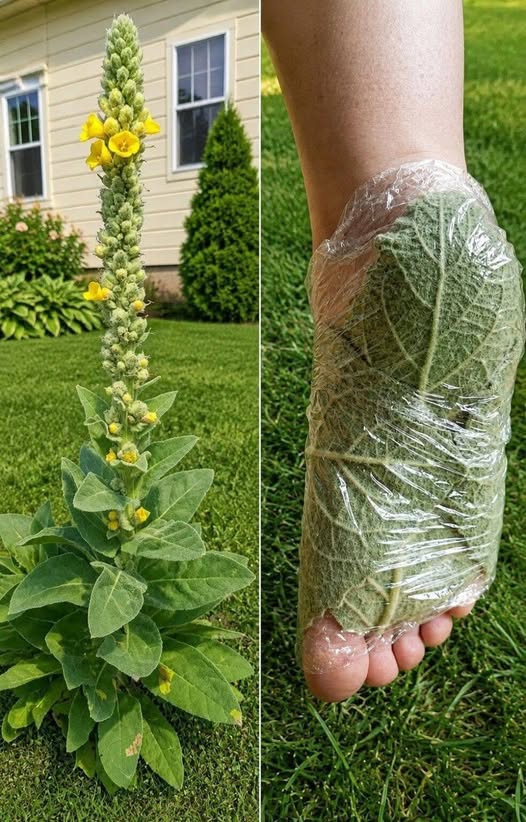
Mullein is most easily recognized by its soft, fuzzy leaves and tall flowering stalk. The leaves are thick, pale green, and covered in fine hairs that give them a velvety texture when touched.
During full growth, the plant can rise significantly above surrounding vegetation. Its upright central stalk produces clusters of small yellow flowers, forming a shape that is often compared to a natural torch.
As a biennial plant, mullein completes its life cycle over two years. In the first year, it grows as a low rosette of broad leaves close to the ground. This stage focuses on building energy for later development.
In its second year, the plant produces a tall flowering stalk from the center of the rosette. Yellow blossoms appear along the stem, attracting pollinators before the plant completes its life cycle after seed production.
Growth Habits and Natural Spread
Mullein originally comes from regions of Europe, Asia, and North Africa, but it has spread widely across many parts of the world. It is now commonly found in North America and other regions with suitable growing conditions.
Its ability to thrive in poor soil and disturbed environments contributes to its widespread presence. Unlike plants that require cultivated soil, mullein can establish itself in harsh and neglected areas.
Although often labeled as a weed, this classification depends largely on human perspective. A plant considered unwanted in one setting may be valued in another for its appearance, resilience, or traditional associations.
Traditional Herbal Associations
Mullein has been included in folk traditions for generations, particularly in herbal preparations passed down through older cultural practices. Different parts of the plant have been used in teas, oils, compresses, and infusions.
In traditional contexts, mullein has often been associated with soothing preparations and respiratory-related uses. However, these historical applications should not be confused with scientifically proven medical treatments.
The continued interest in mullein is closely tied to its place in cultural memory. In earlier times, people relied heavily on plants growing in their environment, and mullein became part of that long-standing relationship between people and nature.
Mullein Tea and Preparation Practices
One of the most recognized traditional uses of mullein involves herbal tea made from dried leaves. The leaves are steeped in hot water to produce a mild infusion used in folk practices.
Because mullein leaves are covered in fine hairs, careful preparation is necessary. The tea is typically strained through cloth or a fine filter to remove small particles that could cause irritation.
This preparation step highlights the importance of handling wild plants carefully, even when they are widely known in traditional settings. Proper identification and cleaning remain essential in any herbal use.
Flower Oils and External Applications
Mullein flowers have also been used in traditional oil infusions. The yellow blossoms are placed in oil and left to steep over time, creating preparations that have appeared in external folk applications.
Some traditional uses have included ear-related applications, although such practices belong to historical and folk contexts rather than modern medical recommendations.
Any ear discomfort, pain, or medical concern requires professional evaluation, as sensitive conditions should not be managed solely through home remedies or traditional preparations.
This distinction helps separate cultural history from modern medical guidance while still acknowledging the plant’s long-standing role in traditional practices.
Importance of Proper Identification
Correct identification is essential when observing or studying wild plants like mullein. Many species can appear similar to those unfamiliar with plant identification, increasing the risk of mistakes.
For this reason, reliable field guides and expert knowledge are important for anyone interested in foraging or using wild plants. Visual guessing alone is not considered safe or dependable.
Environmental location also matters, since plants growing near roads, polluted areas, or contaminated soil may carry unwanted substances. These factors are not always visible on the surface.
Social Media Trends and Misinformation
In recent years, mullein has appeared in social media wellness trends, including claims involving leaf wraps placed on the body with suggestions of detoxification effects.
These claims often spread quickly due to their simplicity and visual appeal, but there is no scientific evidence supporting the idea that mullein leaves remove toxins from the body in this way.
The human body already has natural systems responsible for processing and eliminating waste, including the liver, kidneys, lungs, and other biological processes.
External applications such as leaf wraps have not been shown to enhance or replace these functions, and such claims should be viewed with caution.
Separating Tradition From Claims
Mullein remains an interesting plant even without exaggerated interpretations. Its appearance, growth cycle, and historical uses contribute to its continued attention among plant enthusiasts and herbal observers.
A clear distinction is important between traditional use and scientifically verified treatment. Cultural practices reflect history, while modern evidence-based understanding determines medical validity.
Social media often accelerates the spread of simplified or incomplete information, making careful evaluation especially important when health-related claims are involved.
Natural origin does not automatically guarantee safety or effectiveness, and individual reactions can vary depending on health conditions and circumstances.
Observing Mullein in Nature
From a botanical perspective, mullein can be appreciated as a resilient wild plant with distinctive features. Its tall flowering stalk and soft leaves make it easily recognizable once identified.
It also plays a role in natural habitats by attracting pollinators and growing in disturbed soils where other plants may not thrive. These qualities make it an interesting subject for observation and study.
Different people may view mullein in different ways, seeing it as a weed, a wildflower, or a plant with historical significance. This variation in perception reflects its complex place in human experience.
A Balanced Understanding of Mullein
Mullein represents more than a common roadside plant. It reflects the relationship between nature, traditional knowledge, and modern interpretation.
Its fuzzy leaves, tall stalk, and yellow flowers make it visually distinctive, while its history in folk practices adds cultural depth to its identity.
At the same time, responsible understanding requires separating tradition from unverified claims and approaching health-related information with care and skepticism.
Learning to recognize mullein encourages closer attention to the natural world and highlights how much meaning can exist in plants often overlooked in everyday environments.
In this way, mullein serves as both a botanical subject and a reminder of the importance of careful observation, balanced interpretation, and respect for both nature and accurate information.
