
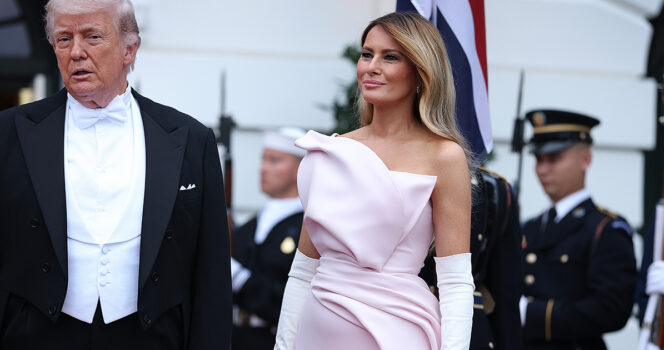
The latest White House state dinner has placed Melania Trump back in the spotlight, this time for a fashion choice that sparked widespread discussion about tradition, protocol, and personal style.
The formal event, held on April 28 in honor of King Charles III and Queen Camilla, followed the long-standing customs associated with high-level diplomatic gatherings. These occasions are typically guided by strict expectations, especially when it comes to attire, as they reflect both cultural tradition and ceremonial respect.
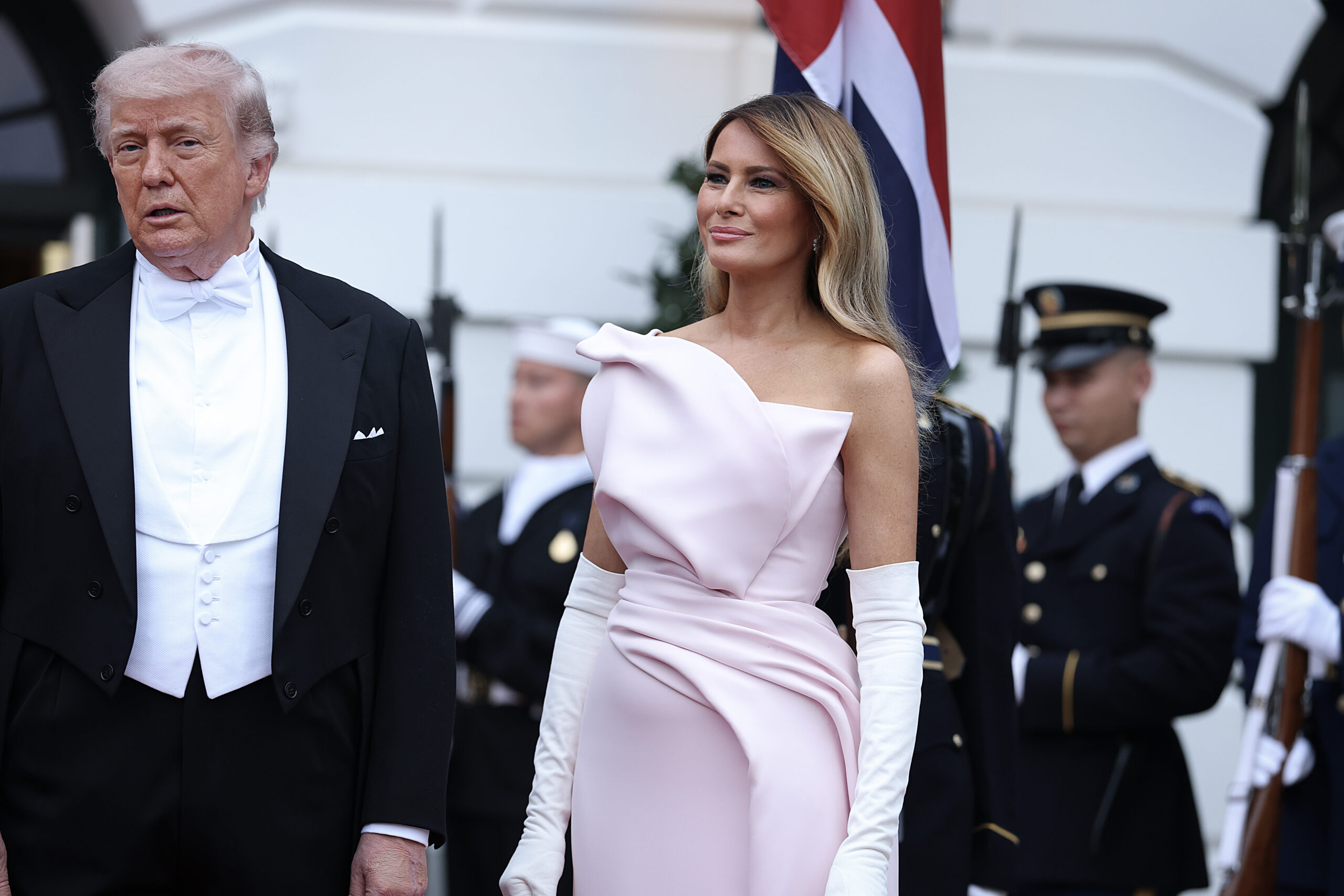
For the evening, Melania Trump wore a soft pink, strapless haute couture gown by Christian Dior. The dress, reportedly valued at around $80,000, featured a sculpted silhouette and a design that emphasized modern elegance. She completed the look with coordinating gloves and heels, presenting a polished and high-fashion appearance.
While many observers praised the gown for its craftsmanship and visual impact, others questioned whether it aligned with traditional white-tie expectations. State banquets, particularly those involving British royalty, are known for their highly formal dress codes. For men, this typically includes full evening dress with tailcoats and formal accessories. For women, the expectation generally leans toward floor-length gowns with a more conservative structure, often featuring covered shoulders and a classic silhouette.
Color also plays a role in these traditions. White has historically been a preferred choice at royal banquets, symbolizing formality and continuity. Previous high-profile attendees, including Michelle Obama, have opted for white gowns at similar events. Melania Trump herself had followed this convention during earlier occasions, including a state dinner at Buckingham Palace in 2019.
Against this backdrop, the choice of a pink, strapless gown stood out. For some, it represented a departure from established norms. Critics argued that the exposed shoulders and bold color leaned more toward contemporary fashion than traditional protocol. Others, however, viewed the decision as a reflection of evolving standards, suggesting that modern state events allow room for individual expression within formal guidelines.
The conversation extended beyond the gown itself. Social media reactions reflected a wide range of perspectives. Some users described the look as elegant, well-tailored, and visually striking. Others expressed uncertainty about the design, noting that it differed from what is typically expected at such events. A smaller number of comments focused on whether the overall styling was appropriate for a diplomatic setting of this level.
Interestingly, Queen Camilla also chose a pink gown for the evening. This detail added another layer to the discussion, as it suggested that color choices may not be as rigid as traditionally assumed. While white remains a classic option, the presence of similar tones among attendees indicated a degree of flexibility in modern interpretations of formal dress.
The event also drew attention to other aspects of protocol. Donald Trump faced some commentary regarding his interaction with the royal guests, with observers debating whether certain gestures aligned with customary etiquette. As with the fashion discussion, opinions varied, reflecting differing expectations about how tradition should be observed in contemporary settings.
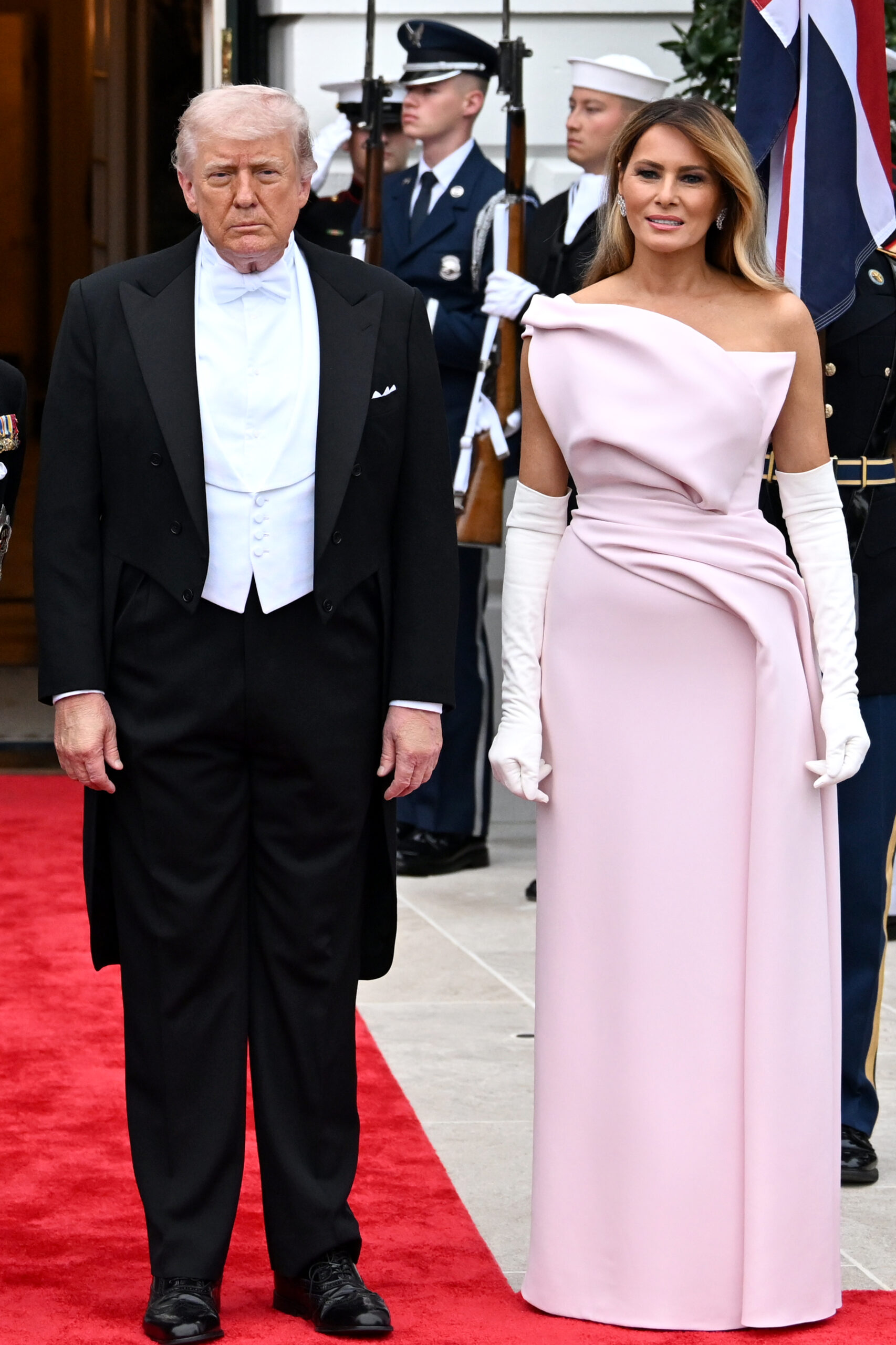
Despite the debate, the evening itself proceeded with full ceremony. The state dinner included formal greetings, a military color guard, and traditional photo opportunities, all of which reinforced the significance of the occasion. Events of this nature are designed not only to celebrate diplomatic relationships but also to showcase cultural and ceremonial traditions.
The broader conversation highlights an ongoing balance between tradition and modernity. While established protocols provide structure and continuity, public figures often bring their own interpretation to these guidelines. In doing so, they contribute to the gradual evolution of how such events are perceived.
Melania Trump’s appearance ultimately became a focal point not because it disrupted the event, but because it invited discussion. Her choice illustrated how even within highly formal environments, personal style can influence public perception and spark dialogue.
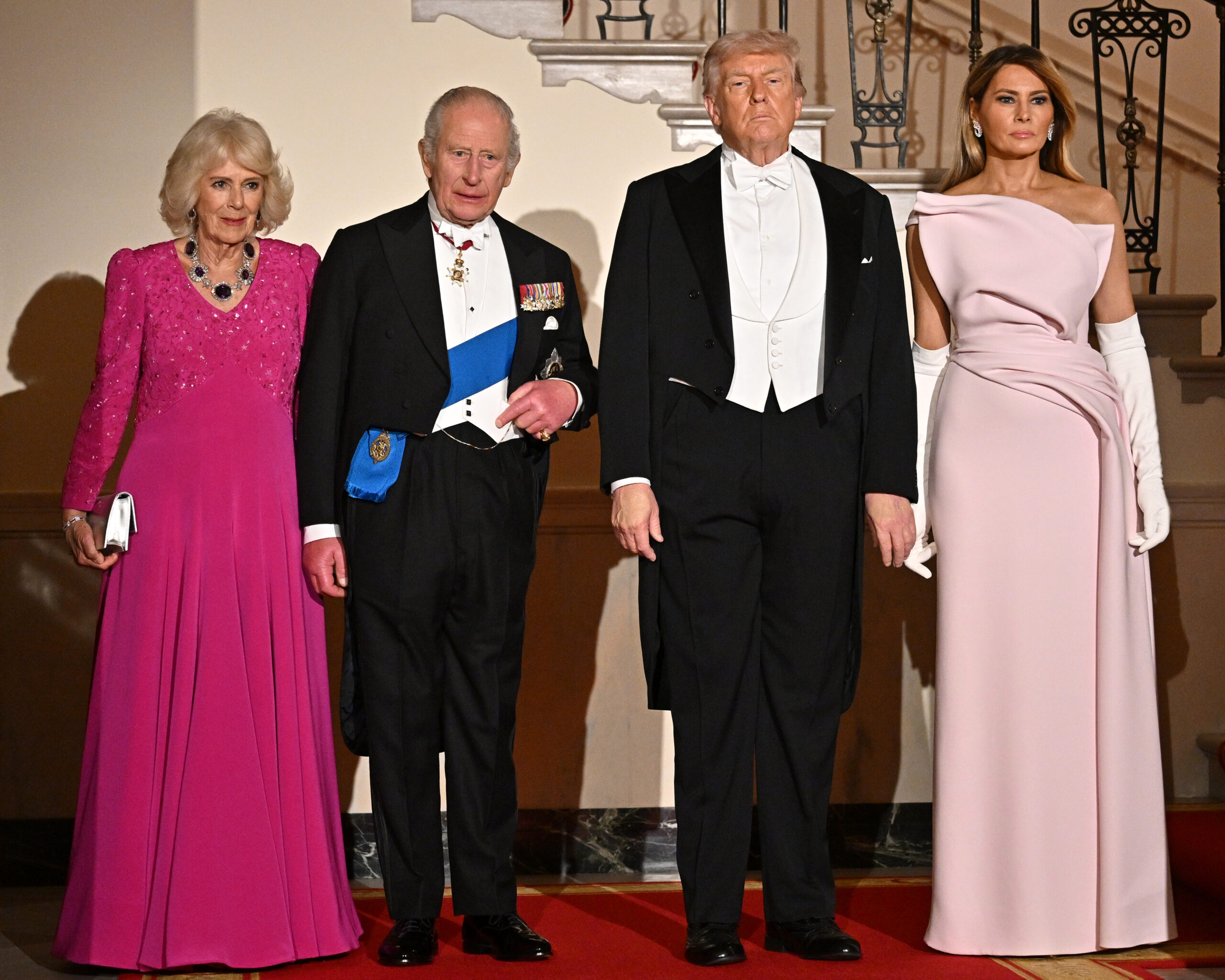
In the end, the reaction to the gown reflects a broader reality: expectations around tradition are not fixed. They are shaped by history, but also by changing cultural norms and individual expression. Whether viewed as a departure or a modern adaptation, the moment underscores how fashion continues to play a visible role in diplomacy and public life.

