Highway Overpass Emergency Leads to Multi-Agency Rescue and Investigation
Unexpected Highway Emergency on Route 9
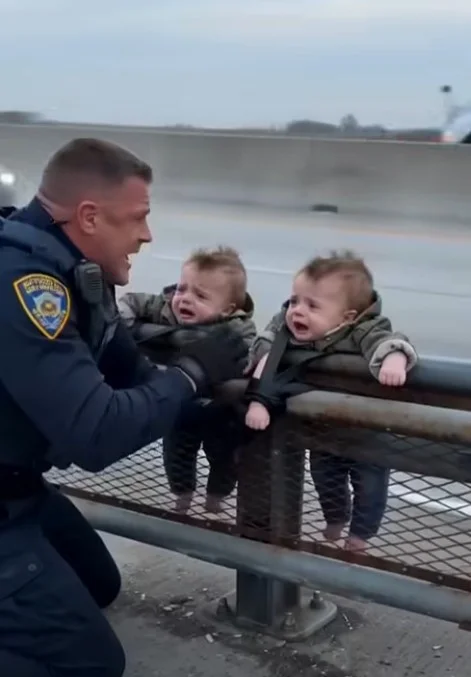
A routine afternoon patrol along a busy highway escalated into a serious emergency after multiple drivers traveling on Route 9 made urgent calls to dispatch centers. The reports described an alarming scene unfolding on an overpass, where two very young children were seen standing close to a roadside guardrail while heavy traffic moved rapidly below.
The unusual and dangerous nature of the situation quickly drew widespread concern from motorists who witnessed the incident. Several drivers independently contacted emergency services within a short time frame, each reporting similar details about the presence of toddlers in an exposed and unsafe position.
The combination of high-speed traffic beneath the overpass and the vulnerability of the children created an immediate sense of urgency. Dispatch operators rapidly escalated the incident, treating it as a priority response due to the potential for imminent danger.
The early moments of the situation were defined by uncertainty and concern, as responders worked to gather precise information while units were already being directed toward the location.
Rapid Response to a High-Risk Overpass Situation
A highway patrol officer was the first to arrive at the overpass following the initial reports. As the officer approached, the severity of the environment became immediately apparent. Vehicles continued to move below at high speed, highlighting the risks associated with any activity occurring at the edge of the bridge.
Upon reaching the top of the overpass, the officer identified the two toddlers positioned near the guardrail. The children appeared disoriented and were standing extremely close to one another, showing signs of confusion in an environment that was clearly overwhelming for their age.
The officer slowed his approach to avoid causing further distress. Maintaining a calm demeanor, he began speaking in a reassuring tone while carefully assessing how best to guide the children away from the edge. The immediate priority was to ensure they did not move closer to the traffic side of the structure.
At this early stage, the officer recognized that the situation required additional support. The children’s condition and behavior made it difficult to safely resolve the situation alone, prompting a request for backup and emergency medical assistance.
First Officer Arrival and Initial Rescue Efforts
As the officer cautiously engaged with the toddlers, their reactions indicated fear and uncertainty. The loud noise from passing vehicles and the unfamiliar surroundings appeared to contribute to their distress. They remained close together, showing limited responsiveness to direct communication attempts.
The officer continued to use calm verbal reassurance while gradually attempting to close the distance. Every movement was made with careful attention to avoid startling the children or prompting sudden actions near the guardrail.
Despite these efforts, it became evident that the complexity of the situation required a broader response. The combination of environmental danger and the children’s condition necessitated a coordinated approach involving multiple trained personnel.
Emergency medical support was requested to ensure immediate evaluation once the children could be safely removed from the roadside area. The focus remained on stabilization, safety, and controlled intervention.
Coordinated Multi-Agency Emergency Response
Within a short period, additional officers and emergency responders arrived at the scene. Their arrival allowed for the establishment of a controlled perimeter around the overpass, reducing the risk of further exposure to traffic hazards.
Access points to the area were restricted to ensure that both responders and civilians remained safe. The coordinated effort allowed teams to organize roles efficiently, balancing crowd control, traffic safety, and direct engagement with the children.
Medical personnel positioned themselves nearby, prepared to provide immediate care once the children were brought away from the roadside. Their presence ensured that any signs of injury, exhaustion, or distress could be addressed without delay.
The joint response demonstrated structured cooperation between emergency services, with each unit contributing to stabilizing the situation. Communication between teams remained continuous as conditions at the scene were managed in real time.
Expanding Investigation Beyond the Overpass
Once the immediate danger had been reduced and the children were safely removed from the guardrail area, attention shifted toward understanding how they arrived at the location. Officers began a systematic search of the surrounding environment for any clues that might explain the circumstances.
Items found in the vicinity were carefully documented and collected for further examination. While their significance was not immediately clear, they were preserved as part of the broader investigative process.
Witnesses who had contacted emergency services were also spoken to at the scene. Their descriptions of the events leading up to the arrival of officers helped establish a clearer picture of the timeline.
The investigation extended beyond the overpass itself as officers considered nearby areas that could potentially be connected to the situation. This broader approach was taken to ensure no relevant detail or location was overlooked.
Discovery Inside a Nearby Property
Attention eventually turned to a nearby structure that appeared abandoned from the outside. Due to its proximity to the overpass and its potential relevance to the unfolding case, officers decided to inspect the location more closely.
The property was approached cautiously, with officers aware that environments connected to vulnerable individuals can present unpredictable conditions. Careful entry procedures were followed as teams moved through the space.
Inside the property, signs suggested that people may have been present recently. Although the full context was not immediately understood, the findings were enough to prompt a more detailed search of the premises.
Rooms and surrounding areas were systematically examined, with officers documenting conditions as they proceeded. The focus remained on identifying any individuals who might require assistance or medical attention.
During this search, a teenage girl was located within the property. She appeared to be in need of immediate help and was quickly escorted from the location to receive medical evaluation and protective supervision.
Once removed from the property, she was transported to a safe environment where her condition could be properly assessed. Her presence became a key element in understanding the broader circumstances surrounding the incident.
Medical Care and Recovery of the Children
Following their removal from the overpass, the two toddlers were placed under medical supervision for evaluation. Their condition was carefully assessed to ensure there were no immediate or hidden health concerns resulting from exposure, stress, or exhaustion.
Medical staff observed steady improvement as the children were stabilized in a controlled and safe environment. Their physical recovery progressed under continuous monitoring, ensuring that any lingering effects could be addressed promptly.
Specialized child welfare professionals became involved to provide additional care and support. Their role focused on ensuring long-term safety and well-being, as well as coordinating appropriate protective arrangements.
The presence of both medical and welfare teams allowed for a comprehensive approach to recovery, addressing both physical needs and broader care requirements in a structured manner.
Family Reunification and Resolution
As the investigation progressed, authorities were eventually able to identify and locate family members connected to the children. After the completion of necessary verification procedures, steps were taken to facilitate reunification.
The toddlers were reunited with their relatives under carefully supervised conditions. This process was conducted with attention to safety and stability, ensuring that the transition took place in a controlled environment.
The reunification marked the resolution of a situation that had begun with urgent emergency calls from concerned drivers. The outcome reflected the coordinated efforts of multiple agencies working throughout the incident.
Officials described the reunion as a significant positive development following a sequence of events that had initially raised serious concern due to the children’s exposure to danger.
Reflections on the Incident and Public Safety
In the aftermath of the incident, law enforcement emphasized the importance of timely reporting from members of the public. The rapid response initiated by motorists who observed unusual activity played a crucial role in enabling swift intervention.
The operation highlighted the effectiveness of coordinated emergency response systems, where dispatchers, patrol officers, medical teams, and supporting units worked together to manage a complex and evolving situation.
For the first responding officer, the event served as a reminder of the unpredictable nature of highway patrol duties. A routine call transformed into a multi-stage rescue and investigation involving vulnerable individuals and multiple locations.
The incident concluded with two young children safely protected and placed under appropriate care, reflecting the combined efforts of all responders involved in addressing the emergency from start to finish.
