
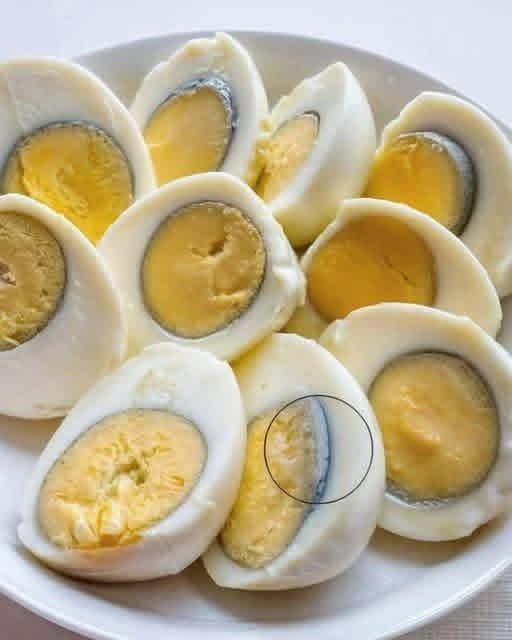
The Truth About the Green Ring Around Hard-Boiled Egg Yolks
Many people have experienced the same disappointing moment while preparing hard-boiled eggs. After peeling and slicing into what should have been a perfectly cooked egg, a green-gray ring appears around the yolk.
The unusual color can look unappetizing and may even cause concerns about freshness or food safety. Some people immediately assume the egg has spoiled or was cooked incorrectly beyond repair.
In reality, the green ring is usually harmless and extremely common. It forms because of a natural chemical reaction that occurs when eggs are exposed to excessive heat or cooked for too long.
Understanding why the discoloration happens can help home cooks avoid it entirely and consistently produce eggs with smooth whites and rich golden yolks.
The Science Behind the Green Ring
Eggs contain a surprisingly delicate balance of natural compounds that react to heat in different ways during cooking.
The egg white contains sulfur, while the yolk contains iron. Under normal cooking conditions, these components remain separate and stable.
However, when eggs are boiled at high temperatures for extended periods, sulfur released from the egg white reacts with the iron found in the yolk.
This chemical interaction creates iron sulfide, which appears as the familiar green-gray ring surrounding the yolk.
The discoloration tends to develop most noticeably along the outer edge where the yolk meets the white. Depending on cooking conditions, the ring may appear faint or very dark.
Although the color may look unpleasant, the egg itself is generally still safe to eat.
Why Overcooking Causes the Problem
Heat exposure plays the biggest role in the formation of the green ring. The longer eggs remain in boiling water or trapped in residual heat, the more likely the sulfur and iron reaction becomes.
Even a few extra minutes can make a noticeable difference in texture and appearance.
Overcooked eggs often develop firmer whites, drier yolks, and a stronger sulfur smell in addition to the discoloration.
The green ring is essentially a visible sign that the egg has spent too much time at high temperatures.
Many people accidentally overcook hard-boiled eggs because they assume longer boiling guarantees better results. In reality, excessive heat usually creates the opposite effect.
Perfectly cooked eggs rely more on controlled timing and temperature management than prolonged boiling.
The Green Ring Does Not Mean the Egg Is Bad
One of the most common misconceptions surrounding green-ringed eggs is that the discoloration indicates spoilage.
In most cases, that assumption is incorrect.
The ring forms from a natural chemical reaction caused by cooking conditions rather than bacterial contamination or age.
While overcooked eggs may develop a stronger smell and less pleasant texture, the color change alone is not typically a food safety issue.
Fresh eggs and older eggs alike can develop the same discoloration if exposed to excessive heat.
As long as the eggs were properly stored and handled safely before cooking, the green ring itself is usually harmless.
The main issue is quality rather than safety. Overcooked eggs often taste less creamy and can become dry or rubbery.
Texture Changes That Happen During Overcooking
Cooking time affects far more than appearance. The texture of both the yolk and the egg white changes significantly when eggs remain exposed to heat for too long.
Egg whites can become dense and rubbery instead of tender and smooth. Yolks may lose their creamy consistency and develop a chalky or crumbly texture.
The stronger sulfur smell associated with overcooked eggs also becomes more noticeable as the chemical reaction intensifies.
These texture and flavor changes are one reason many people prefer carefully timed cooking methods rather than aggressively boiling eggs.
The goal is to cook the egg fully while preserving a soft, pleasant texture and bright color.
How to Achieve Perfect Hard-Boiled Eggs
Preventing the green ring is usually simple once the cooking process is adjusted properly.
One of the most effective methods involves avoiding prolonged rolling boils and allowing eggs to cook more gently.
A common approach begins by placing eggs in a pot and covering them with water. The water is then heated until it reaches a boil.
Once boiling begins, the heat is reduced or turned off entirely, depending on the method used. The eggs continue cooking in the residual heat instead of remaining under aggressive boiling conditions.
This controlled process reduces the risk of overcooking while still allowing the eggs to cook through completely.
Timing is important because even small increases in heat exposure can affect the final result.
The Importance of Cooling Eggs Quickly
Rapid cooling is another key step in preventing the green ring from forming.
Even after eggs are removed from boiling water, residual heat inside the shell continues cooking the interior.
If eggs remain hot for too long, the sulfur and iron reaction can continue developing even after the cooking process appears finished.
Placing eggs into cold water or an ice bath immediately after cooking helps stop the internal cooking process quickly.
This rapid cooling method not only helps preserve the yolk’s bright yellow color but can also improve texture and make peeling easier.
Cooling eggs promptly is one of the simplest ways to improve overall results.
Why Some Eggs Peel More Easily Than Others
Peeling hard-boiled eggs cleanly is another challenge many home cooks face.
Fresh eggs are often more difficult to peel because the membrane beneath the shell clings tightly to the egg white.
Slightly older eggs usually peel more easily because changes inside the shell create a bit more separation between the membrane and the egg white.
Proper cooling also plays a role. Ice baths can help the egg contract slightly inside the shell, making peeling smoother and reducing damage to the surface.
Gentle cracking followed by rolling the egg lightly on a hard surface may also help loosen the shell more evenly.
When cooking conditions are managed properly, eggs are less likely to stick or tear during peeling.
Temperature Control Makes the Biggest Difference
Many cooking problems associated with hard-boiled eggs can be traced back to temperature control.
High heat applied for too long increases the likelihood of discoloration, unpleasant odor, and dry texture.
Lower, gentler cooking methods help preserve moisture and produce more consistent results.
The difference between perfectly cooked eggs and overcooked eggs often comes down to only a few minutes.
Carefully monitoring cooking time and cooling the eggs quickly afterward can dramatically improve both appearance and flavor.
Once people understand the chemistry involved, preventing the green ring becomes much easier.
Why Hard-Boiled Eggs Remain So Popular
Despite occasional cooking frustrations, hard-boiled eggs remain one of the most widely used and versatile foods.
They are commonly eaten for breakfast, added to salads, used in sandwiches, or enjoyed as convenient snacks.
Their simple preparation and high protein content make them a popular choice for quick meals and meal preparation.
Because hard-boiled eggs are so common, many people encounter the green-ring issue at some point.
Fortunately, the problem is usually easy to correct once the cooking process is adjusted slightly.
Small improvements in timing and cooling can produce dramatic differences in texture, appearance, and flavor.
The Key to Bright Yellow Yolks
The ideal hard-boiled egg typically features tender whites and a rich golden yolk without any gray or green discoloration.
Achieving that result depends largely on preventing excessive heat exposure during cooking.
Gentle cooking followed by immediate cooling helps preserve both the appearance and texture of the egg.
Instead of chalky yolks and rubbery whites, properly cooked eggs maintain a smoother and more pleasant consistency.
The bright yellow center many people expect from hard-boiled eggs is not difficult to achieve once overcooking is avoided.
Understanding the science behind the green ring removes much of the mystery and frustration surrounding the issue.
What may initially look alarming is usually just a harmless sign that the eggs spent slightly too long under high heat.
With a few small adjustments to cooking technique, hard-boiled eggs can consistently turn out tender, flavorful, and visually appealing every time.

