

Kelly Brook and the Evolving Conversation Around Beauty Standards and Body Image
A Modern Symbol in Changing Beauty Ideals
In a world where social expectations often push individuals toward narrow definitions of appearance, Kelly Brook has frequently been presented as a figure who represents a different perspective on beauty. Her public image is often described as confident, natural, and aligned with a more inclusive understanding of body shape and femininity.
Rather than fitting into restrictive categories, her physique has been highlighted as an example of how beauty can exist in many forms. The discussion surrounding her image often focuses less on celebrity culture alone and more on the broader cultural debate about body acceptance and evolving standards of attractiveness.
Her presence in media and fashion conversations has positioned her as a reference point in discussions that challenge long-standing ideals about what women are expected to look like.
The Traditional Idea of the “Ideal” Body
For many years, the concept of the “ideal” female body has been shaped by a preference for slender and petite figures. This standard has been widely promoted across media, advertising, and entertainment industries, influencing how beauty is perceived by society.
Such narrow expectations have often been criticized for not reflecting the diversity of real human bodies. Many individuals have felt pressure to conform to these ideals, even when they do not represent natural variation in body shape or size.
Over time, conversations around appearance have become more open, encouraging a broader understanding that beauty is not limited to a single physical form. This shift has contributed to movements that promote acceptance and recognition of different body types.
Shifting Perspectives on Beauty Through the Decades
Beauty standards have never been fixed, and they have changed repeatedly across different eras. At various points in history, different body shapes and styles have been celebrated as the ideal.
In earlier decades, figures such as Marilyn Monroe were widely admired for curvier silhouettes that were considered highly attractive at the time. Later, the 1990s brought a strong preference for extremely slim models, with figures like Kate Moss becoming closely associated with that era’s aesthetic values.
Other well-known personalities such as Elizabeth Taylor and Kim Kardashian have also been associated with hourglass shapes that reflected different interpretations of beauty in their respective periods.
These shifts demonstrate that beauty ideals are not permanent or universal. Instead, they evolve continuously based on cultural influence, media representation, and changing social attitudes.
The Role of Modern Cultural Movements
In recent years, movements focusing on body positivity and body neutrality have gained visibility. These movements encourage people to move away from strict judgments about appearance and instead recognize that beauty exists in many different forms.
The central idea behind these perspectives is that every body tells its own story and that no single standard should define worth or attractiveness. This approach has contributed to broader conversations about self-acceptance and confidence.
As these ideas continue to spread, they have influenced how public figures are discussed and how audiences interpret images of celebrities in media and entertainment.

Scientific Discussions on Body Proportions
In addition to cultural perspectives, some academic discussions have explored the idea of physical proportions associated with attractiveness. One line of discussion has suggested specific measurements, including a BMI of 18.85, a bust size of 93 cm, a waist of 61 cm, and hips measuring around 87 cm.
These discussions also reference a hip-to-waist ratio between 0.65 and 0.75 as part of a proposed ideal structure. Such measurements have been presented as part of attempts to define patterns in physical preference.
However, these concepts remain part of ongoing debate rather than universally accepted standards. Human attraction is influenced by a wide range of personal, cultural, and individual factors that cannot be fully captured by numerical values alone.
Despite this, these ideas are often referenced in media discussions about body image and are sometimes used to frame conversations about changing beauty expectations.
Kelly Brook Within Contemporary Beauty Discussions
Within these broader debates, Kelly Brook is often presented as aligning with certain modern interpretations of physical proportions. Her body shape has been referenced in discussions about how beauty standards are perceived in the present day.
Her public image has frequently been described as fitting into a more natural and balanced representation of femininity, especially when compared with earlier narrow ideals. This has contributed to her visibility in conversations about body diversity and acceptance.
Beyond physical appearance, she has also built a long-standing career in both the United Kingdom and the United States, establishing herself in modeling and entertainment from a young age. Her career began when she entered the modeling industry at the age of 18, and she has remained present in the public eye since then.
Over time, she has become known not only for her professional work but also for her openness in discussing aging, appearance, and the pressures of the entertainment industry.
Personal Reflections on Aging and Public Image
As public conversations around appearance continue to evolve, Kelly Brook has spoken about her own experience with aging and changes in how she is perceived within the entertainment industry.
She has acknowledged that physical change is a natural part of life and that attitudes within the industry have become more accepting over time compared to earlier periods.
She has stated, “I’m getting older, bigger. Everything changes, but I believe the industry is more compassionate these days. It’s no longer in vogue to judge women in the same manner.”
Her comments reflect a broader shift in how aging and body changes are discussed publicly, particularly for women in the entertainment world. Rather than focusing solely on maintaining a fixed image, there is increasing recognition of natural transformation over time.
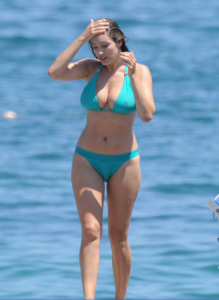
Public Attention and Social Media Reactions
Despite growing acceptance in some areas, public figures continue to face scrutiny regarding their appearance. Kelly Brook has experienced criticism and online commentary related to changes in her weight and body shape.
Such reactions highlight the ongoing tension between evolving ideals of body acceptance and persistent judgment within digital spaces. Social media has amplified both positive support and negative criticism, creating a complex environment for public figures.
At the same time, she has expressed that social media allows direct engagement and response. She has described it as “fantastic” for enabling communication with audiences and addressing misunderstandings more openly.
This ability to interact directly with the public has changed how celebrities navigate criticism and share their perspectives in real time.
Redefining Beauty Beyond Fixed Standards
The ongoing discussion about body image suggests that beauty is not defined by a single formula or measurement. Instead, it reflects a wide range of shapes, sizes, and personal expressions.
While some attempts have been made to define ideal proportions, such ideas do not fully account for the diversity of human appearance or the complexity of attraction.
The evolving cultural conversation emphasizes that confidence, self-acceptance, and individuality play a significant role in how beauty is perceived.
Kelly Brook is often positioned within this discussion as an example of how public perception can shift over time and how different body types can be appreciated in changing cultural contexts.

A Broader Cultural Shift Toward Acceptance
Modern discussions about beauty increasingly focus on inclusivity and personal comfort rather than rigid standards. This shift reflects a growing awareness that comparison and unrealistic expectations can negatively affect self-image.
Instead of aiming for a single ideal, the emphasis is moving toward recognizing authenticity and individuality. This change encourages people to view their bodies with more acceptance and less pressure to conform to external expectations.
Within this context, public figures like Kelly Brook are often referenced in conversations about how beauty standards evolve and how society continues to redefine what is considered attractive.
The broader message emerging from these discussions is that beauty is not a fixed concept. It is shaped by culture, time, and personal perception, and it continues to change as society develops new ways of understanding identity and appearance.
Conclusion: Beauty as a Changing and Personal Concept
The conversation surrounding Kelly Brook and modern beauty standards reflects a larger cultural shift. Over time, ideals have changed repeatedly, influenced by media, social attitudes, and evolving perspectives on individuality.
While scientific and cultural discussions have attempted to define physical ideals, human beauty remains deeply subjective and varied. No single measurement or standard can fully represent it.
As public awareness continues to grow, the focus increasingly moves toward acceptance, diversity, and personal confidence. In this context, beauty becomes less about conformity and more about authenticity, self-expression, and comfort in one’s own identity.

