
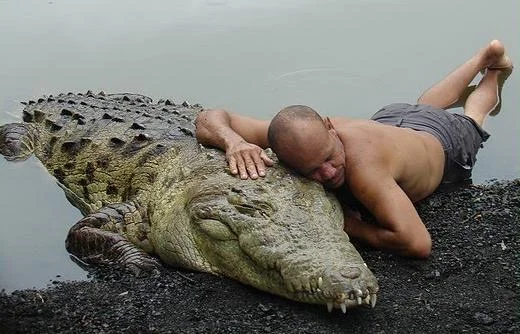
Keeping exotic animals as pets is not unheard of, but forming a deep, trusting bond with a wild predator—especially one as dangerous as a crocodile—is almost unimaginable. Yet that is exactly what happened in the remarkable story of Gilberto “Chito” Shedden and his crocodile companion, Pocho. Their relationship challenged long-held assumptions about animal behavior and became one of the most unusual human-animal connections ever documented.
A Chance Encounter in the Wild
Before his life took an extraordinary turn, Chito lived a simple life as a fisherman in rural Costa Rica. One day, while fishing along the Reventazón River near his hometown of Siquirres, he noticed something unusual on the riverbank.
Lying there was a crocodile in critical condition. As Chito approached, it became clear that the animal had been severely injured. He later learned that a local farmer had shot the crocodile in the eye while trying to protect livestock. The wound left the animal weak, malnourished, and close to death.
Most people would have kept their distance from such a dangerous creature, but Chito made a different choice. Driven by empathy and his deep connection to nature, he decided to help.
Nursing a Predator Back to Life
Chito returned to town and gathered a group of friends to help transport the crocodile back to his property. At around 150 pounds, the animal was dangerously underweight for its age, estimated to be about 30 years old.
The recovery process was slow and difficult. At first, the crocodile refused to eat, which made its survival even more uncertain. Determined not to give up, Chito found creative ways to feed it—sometimes even chewing food himself to make it easier for the animal to consume.
Over time, he fed the crocodile a steady diet of fish and chicken, along with medication to prevent infection from the gunshot wound. Gradually, the animal began to regain strength.
But Chito believed that physical care was only part of the healing process. He spent hours talking to the crocodile, using a calm and reassuring tone. While the animal could not understand words, it responded to his presence and consistency. According to Chito, this emotional connection played a key role in the crocodile’s recovery.
Eventually, he gave the animal a name: Pocho.
Building Trust Against All Odds
As Pocho recovered, concerns began to grow among neighbors. Understandably, many were uncomfortable with the idea of a large crocodile living nearby. Authorities became involved, warning Chito that he needed proper permits to keep such an animal.
To avoid losing Pocho, Chito temporarily moved him to a secluded pond near his home. It was there that their bond deepened.
Chito spent increasing amounts of time with the crocodile, sometimes staying for days or even weeks. He slept in a nearby tree and returned home only occasionally. What began as an act of compassion gradually turned into a unique partnership.
Over the years, Pocho grew significantly, eventually reaching about 16 feet in length and nearly 1,000 pounds. At one point, Chito attempted to release him back into the wild, believing it was the right thing to do.
However, Pocho repeatedly returned. On one occasion, Chito woke up to find the crocodile outside his home. After several similar attempts, it became clear that Pocho was choosing to stay.
Accepting this reality, Chito committed himself fully to caring for the animal.
A Relationship That Captured the World
Once Chito obtained the necessary permits, Pocho was allowed to live with him permanently. Over time, their unusual relationship began attracting attention. Local stories spread, eventually reaching national and international media.
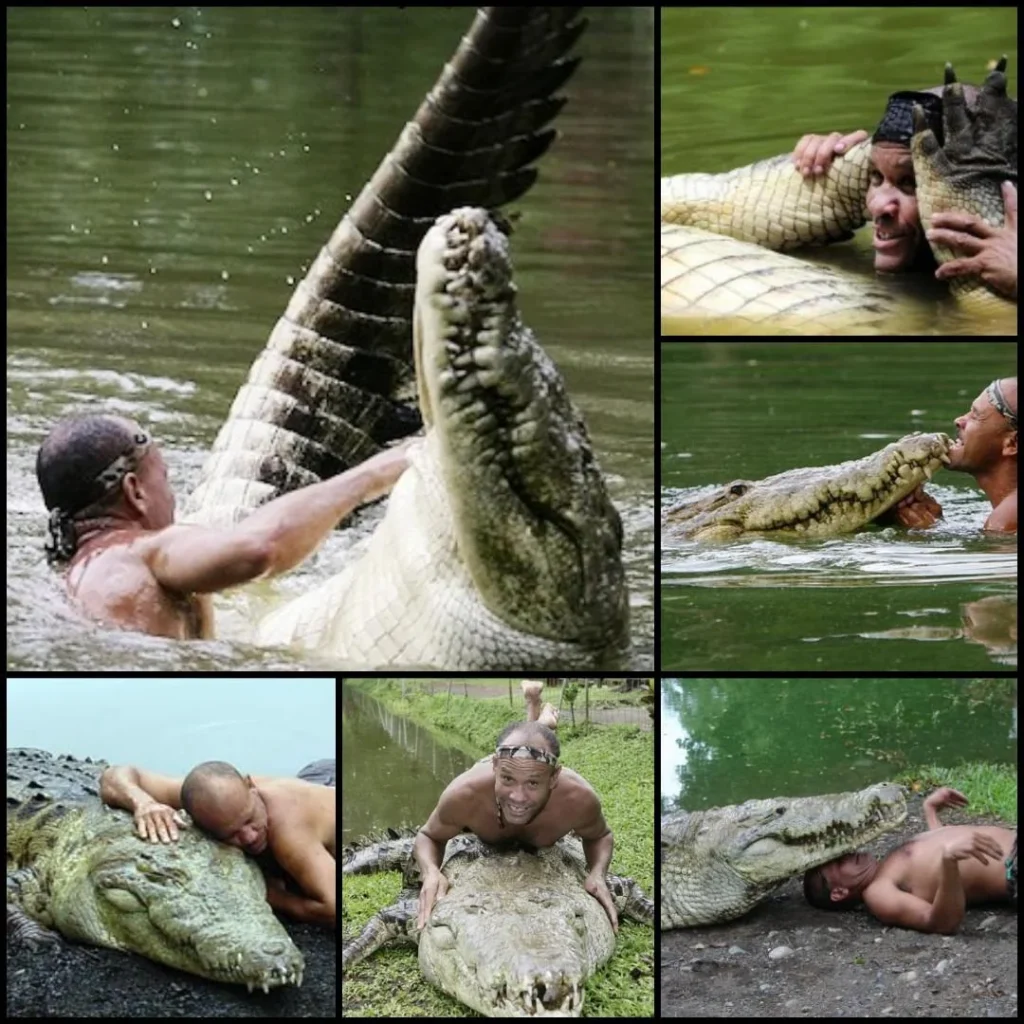
When filmmakers and journalists visited, they witnessed something extraordinary. Chito appeared to communicate with Pocho using a combination of voice, gestures, and touch. He could call the crocodile by tapping the water, and Pocho would respond by swimming toward him.
Their interactions often resembled a carefully choreographed routine. In the water, Chito would play with Pocho, guiding him through movements that looked almost like a dance. The crocodile would open its mouth or move in response to cues, but never harmed him.
Chito explained that their communication relied on subtle signals. The crocodile’s eyes, body language, and reactions helped him understand its mood. If Pocho showed signs of agitation, Chito would stop immediately.
This mutual respect was essential. Chito never forced the animal to do anything, fully aware of the risks involved. Instead, their bond was built on patience and trust developed over many years.
Sharing Their Story
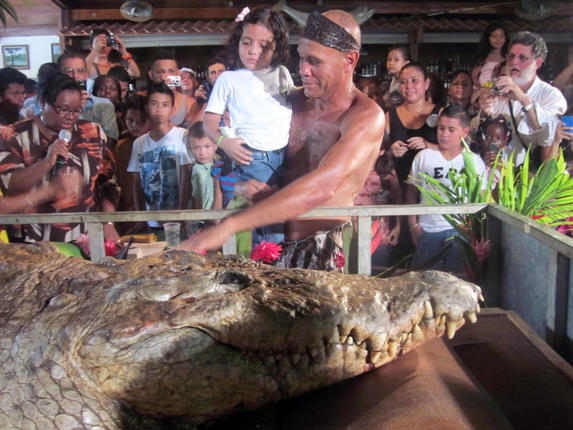
As their story spread, Chito and Pocho began performing weekly demonstrations for visitors. These shows, held every Sunday, attracted tourists from around the world.
The performances showcased their unique connection and helped support Chito financially. While the idea of interacting with a crocodile might seem dangerous, Chito approached every demonstration with caution and respect for the animal.
Despite the attention and success, his life remained centered around caring for Pocho. Their relationship was not a spectacle for him—it was a genuine connection.
The End of an Extraordinary Bond
After nearly 23 years together, Pocho passed away on October 12, 2011, from natural causes. His death marked the end of a relationship that had defied expectations and captured global attention.
The loss deeply affected Chito and the local community. In Siquirres, residents held a large funeral in Pocho’s honor. The crocodile’s remains were preserved and placed in a local museum as a tribute to the remarkable story.
Chito later attempted to care for another crocodile, sometimes referred to as Pocho II. However, the connection was not the same. The original bond had been shaped by unique circumstances—rescue, recovery, and years of shared experience.
A Story That Stands Alone
The relationship between Gilberto “Chito” Shedden and Pocho remains one of the most unusual examples of human-animal interaction. It challenged assumptions about instinct, trust, and the limits of connection between species.
While some have speculated about why Pocho behaved differently—perhaps due to his injury or long-term human care—the full explanation may never be known.
What is clear, however, is that this story cannot easily be repeated. It required a rare combination of timing, dedication, and mutual adaptation.
In the end, it serves as a reminder that even in the most unlikely circumstances, unexpected bonds can form—though they often remain one of a kind.

