
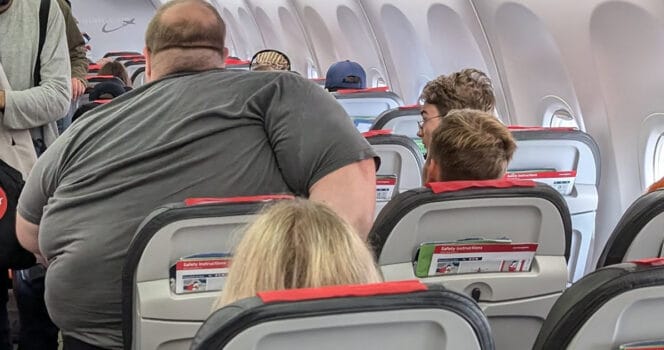
Debate Erupts After Viral Photo Shows Plus-Sized Passenger Struggling in Airline Seat
Photo From European Flight Triggers Widespread Online Discussion
A viral image showing a plus-sized airline passenger attempting to fit into a standard airplane seat has sparked a major online debate about airline seating policies, passenger comfort, and accessibility.
The photo was reportedly taken during a flight traveling from Helsinki to Copenhagen and later shared online by consumer advocate Christopher Elliott from Washington, D.C.
The image quickly gained attention after it was reposted in September 2024 by the Miami-based hip-hop group Pretty Ricky, widely known for their 2000s hit “Grind with Me.”
The group used the photo to raise questions about whether airlines should reconsider current seating arrangements for larger passengers.
Pretty Ricky Calls for Changes in Airline Seating
Alongside the image, Pretty Ricky shared a message highlighting the difficulties faced by plus-sized travelers as well as the discomfort that can affect nearby passengers.
They wrote: “Airlines will have to have something in place for plus-sized passengers. This image was taken recently on a flight showing how difficult it is for people who are bigger than one seat.
”It’s also difficult for those sitting next to them. It’s a difficult situation because the airline will need to think of a happy medium.”
The post immediately drew widespread attention across social media platforms and generated thousands of comments from users with sharply divided opinions.

Arguments Over Whether Extra Seats Should Be Required
Many commenters argued that passengers who cannot comfortably fit within a single seat should be required to purchase an additional seat.
One commenter stated: “If you’re using two seats, you should be paying for two.”
Others compared airline seating width to other seating upgrades already offered by airlines.
“Tall passengers pay extra for legroom, so why should width be treated any differently?” another person wrote.
Some users proposed specific solutions, suggesting that airlines create larger seating sections for passengers who need additional space.
One commenter said: “Easily solved, if you are this large, you need to buy two seats OR they should make oversized seats for people like this and charge them extra for the larger seat. Plain and simple.”
The discussion also became more personal and emotional as some users criticized obesity directly.
One person wrote: “The reason the majority of large people are large is not a medical reason, it’s personal choices. And those personal choices have ramifications…”
Another added: “People who buy one seat shouldn’t have to give half of it to someone spilling into their seat. If anything, they should pay half.”
A separate commenter remarked: “As someone who is currently down 90lbs, being largely overweight is a choice 99 percent of the time.”
Others Point to Shrinking Airline Seat Sizes
While many commenters focused on passenger responsibility, others argued that airlines themselves are contributing to the problem through increasingly smaller seating configurations.
Several users pointed out that airplane seats have gradually become more compact over the years as airlines attempt to maximize passenger capacity on flights.
One commenter noted: “Airlines have been downsizing seat sizes for years to cram more passengers onboard. The lack of comfort isn’t just affecting plus-sized people — it’s affecting everyone.”
That perspective shifted part of the debate away from individual passengers and toward the broader airline industry.
Some social media users argued that modern airline cabins already feel cramped for average-sized travelers, making comfort an issue affecting many passengers regardless of body type.
Others suggested that the conversation highlights larger concerns about how airlines balance profitability, passenger comfort, and accessibility.
Travel Influencer Jaelynn Chaney Responds
The online debate intensified further after plus-size travel influencer Jaelynn Chaney joined the conversation publicly.
Chaney, who is known online for advocating for what she describes as “fat liberation,” addressed criticism directed at larger passengers during a TikTok video.
The 28-year-old influencer argued that the issue should not be framed as individuals needing to change their bodies to fit existing airline seating standards.
“Why should I have to shrink myself to fit into spaces never designed for me?” she asked.
“The issue isn’t me — it’s the system.”
Chaney has previously advocated for airlines to provide free additional seating accommodations for larger travelers.
She also responded to suggestions that passengers needing more room should simply purchase first-class tickets.
“First-class seats still don’t accommodate me,” she said.
“Flying isn’t a luxury—it’s a necessity.”
Broader Questions About Accessibility and Fairness
The viral discussion quickly evolved into a broader debate about accessibility, fairness, and the responsibilities of both airlines and passengers.
Some social media users argued that air travel should adapt to accommodate a wider range of body types without placing financial penalties on passengers.
Others insisted that requiring additional seating purchases is a practical solution that protects the comfort of neighboring travelers.
The debate also exposed growing frustration over the overall state of commercial air travel, with many passengers expressing dissatisfaction over limited personal space on flights.
Airline seating has long been a source of complaints among travelers, particularly on economy flights where seat width and legroom have steadily decreased over time.
For many observers, the viral image became symbolic of larger concerns about how modern airlines prioritize capacity and profits.

Calls for Policy Changes Continue to Grow
As the online discussion expanded, some people began advocating for formal policy reforms related to airline seating accommodations.
Suggestions ranged from redesigned seating layouts to specific legal protections for larger passengers.
Some supporters even discussed the possibility of federal legislation aimed at ensuring equal access and comfort for passengers of different body types.
One proposal mentioned during the debate involved the creation of a “Fat Equality Bill of Rights.”
Supporters of such measures argue that commercial air travel is an essential service and that seating policies should better reflect the diversity of passengers using airlines every day.
Critics, however, questioned how airlines could realistically balance accessibility concerns with aircraft space limitations and operational costs.
Controversial Suggestions Spark Additional Backlash
Among the more controversial ideas discussed online was the suggestion that airlines weigh passengers before boarding flights, similar to how luggage is weighed.
Supporters of the proposal argued that it could help airlines manage seating arrangements and aircraft balance more efficiently.
However, the idea faced immediate criticism from many social media users, who described it as humiliating and discriminatory.
Numerous commenters referred to the suggestion as “inhumane” and argued that it would likely create embarrassment and privacy concerns for passengers.
The strong reaction demonstrated how emotionally charged the issue has become.
For many people, the debate is no longer simply about airline seats but about dignity, treatment, and inclusion in public spaces.
Passenger Comfort Remains a Growing Concern
The viral image has reignited ongoing conversations about comfort standards across the airline industry.
Many travelers, regardless of size, have expressed frustration with increasingly compact seating arrangements on commercial flights.
Long flights, limited legroom, narrow seat widths, and reduced personal space have become common complaints among passengers worldwide.
As airlines continue maximizing seat capacity, debates over comfort and accessibility are likely to remain highly visible.
Some observers believe future aircraft designs may eventually need to include more flexible seating arrangements to accommodate different passenger needs.
Others argue that any major changes would likely increase ticket prices, creating additional economic concerns for airlines and travelers alike.
Social Media Continues Driving the Discussion
The widespread reaction to the photo highlights the growing influence of social media in shaping public discussions around transportation, accessibility, and social policy.
What began as a single image shared online quickly evolved into a global conversation involving passengers, influencers, advocacy groups, and everyday travelers.
Thousands of people participated in the discussion, offering opinions shaped by personal experiences, frustrations, and differing views about fairness and responsibility.
Some expressed sympathy for plus-sized passengers who struggle with current seating limitations.
Others focused primarily on the rights and comfort of neighboring passengers who may also feel physically restricted during flights.
The intense reaction demonstrated how deeply divided public opinion remains on the issue.
An Ongoing Debate With No Simple Solution
The discussion surrounding airline seating and plus-sized passengers continues to generate strong opinions on all sides.
For some people, the issue centers on personal accountability and purchasing enough space to avoid affecting others.
For others, it reflects larger concerns about accessibility, inclusion, and the shrinking dimensions of modern airline seating.
The viral image from the Helsinki-to-Copenhagen flight has become one of the latest examples of how travel-related frustrations can quickly develop into major public debates online.
As airlines face increasing scrutiny over passenger comfort, questions surrounding seating policies are likely to remain part of broader conversations about the future of commercial air travel.
Whether airlines eventually redesign seating arrangements, adjust policies, or maintain the current system, the discussion sparked by the viral photo shows no signs of fading anytime soon.

