
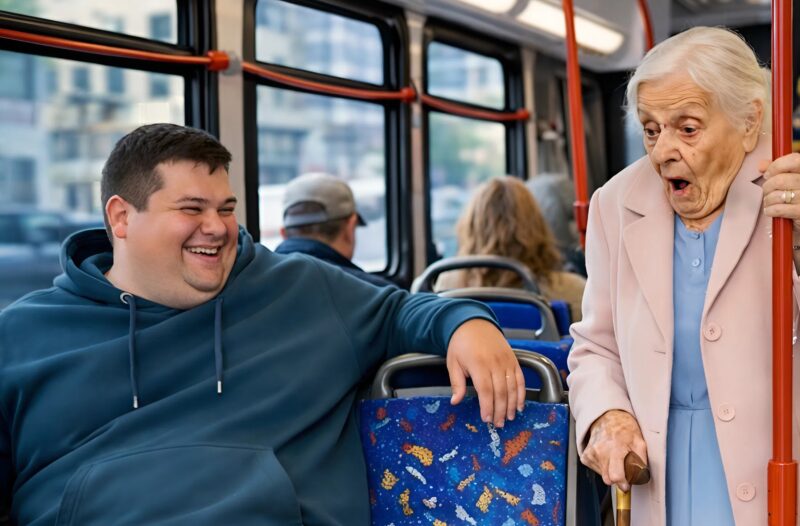
A crowded city bus rattled through traffic that day, packed so tightly that passengers swayed with every turn. Conversations overlapped with the sound of the engine, phone notifications, and the occasional complaint about the lack of space. People stood shoulder to shoulder, holding onto rails, trying to balance as the bus lurched forward through the busy streets.
At one stop, an elderly woman boarded the bus slowly. She used a cane and moved with visible effort, carefully stepping up and scanning the aisle for a place to sit. Her expression was calm but tired, the kind of fatigue that comes from age and physical strain rather than haste.
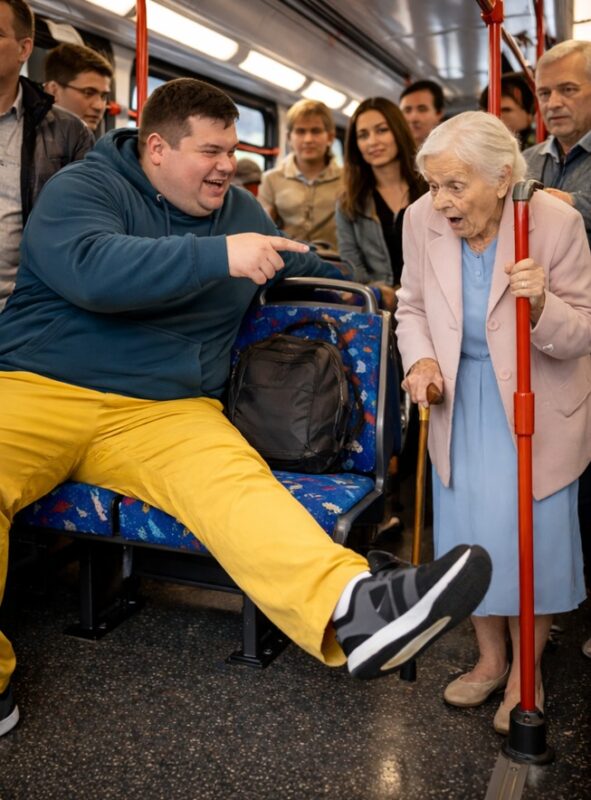
Most seats were taken, but she noticed one that appeared partially free. A young man was sitting there, sprawled comfortably across his space. Next to him, a backpack occupied the adjacent seat, and his leg was stretched out into the aisle, forcing others to squeeze past. He appeared completely unconcerned with the discomfort of those around him.
The elderly woman approached politely and asked if she could sit down, explaining that she was having difficulty standing. Her tone was soft and respectful, carrying no sense of entitlement—only necessity.
The young man did not respond immediately. He remained still, pretending not to hear her. After a moment, the woman carefully reached toward the backpack, intending to move it aside so she could sit.
That was when his attitude changed sharply. He suddenly reacted, raising his voice and accusing her of touching his belongings without permission. The sudden outburst drew attention from nearby passengers. Conversations faded as people began to observe the situation.
Confused, the woman explained again that she only wanted to sit and that the seat appeared to be free. The young man responded dismissively, insisting that the seat was taken. When she asked who it was reserved for, he leaned back slightly and answered with a smug tone that it was “taken by his leg.”
To emphasize his point, he deliberately placed his leg more firmly onto the seat, making it clear that he had no intention of moving. His posture, expression, and tone all conveyed disregard not only for the woman but for basic courtesy.
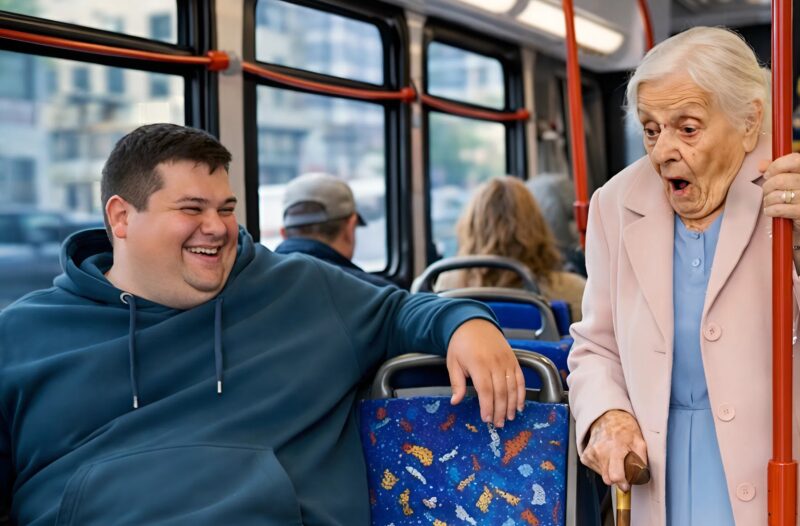
A tense silence settled over the bus. Several passengers looked uncomfortable, but no one immediately intervened. The atmosphere felt heavy, as if everyone was waiting for someone else to act.
The elderly woman stepped back slightly, still standing in front of the seat, unsure how to proceed. She seemed more embarrassed than angry, as if trying to avoid causing a scene.
Then a voice broke through the silence.
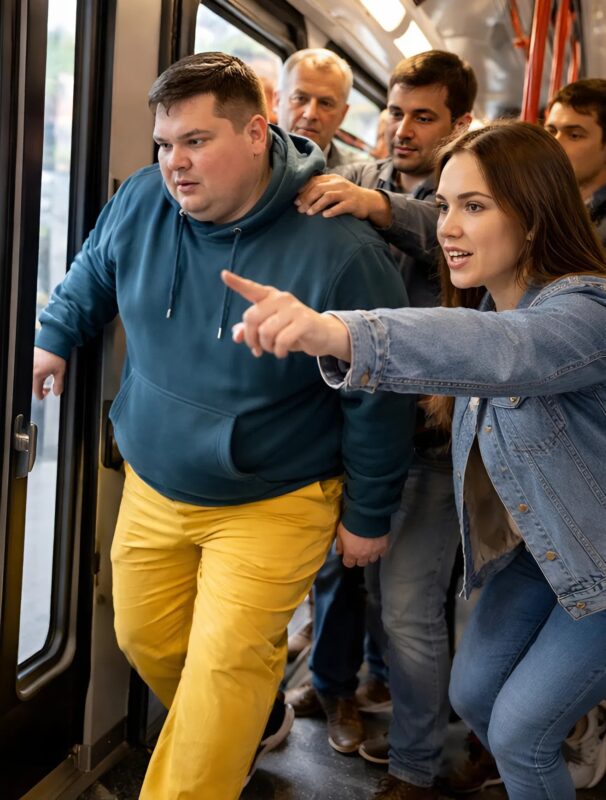
A young woman standing near the window spoke firmly, addressing the man directly. She questioned his behavior, pointing out how inappropriate and disrespectful he was being. Her tone was steady, not emotional, but clear enough that every passenger could hear her.
She reminded him that the seat was clearly designated for those who needed it most, including elderly passengers and those with mobility difficulties. She pointed out that his behavior was not only inconsiderate but openly disrespectful in a shared public space.
Her words shifted the atmosphere inside the bus. A few passengers began to react—first with murmurs, then with quiet agreement. Heads nodded. The tension that had kept everyone silent began to break.
Encouraged by the response, others started speaking up. One person called out that the woman should be allowed to sit immediately. Another questioned whether there was any reason for such behavior in a crowded bus where everyone was already uncomfortable.
The young man, now realizing that the attention had turned against him, tried to respond, but his confidence had clearly faded. His earlier arrogance no longer held the same effect in the face of collective disapproval.
At that moment, the driver noticed the growing disturbance and brought the bus to a stop. The doors opened, and the situation paused in an uncomfortable stillness.
The young man hesitated. For a brief moment, he sat as if trying to hold onto his pride, but the surrounding attention made the situation increasingly difficult to maintain. The passengers were no longer passive observers. The collective pressure had shifted completely.
Eventually, he stood up without speaking further. He grabbed his belongings and stepped off the bus. The doors closed behind him, and the vehicle resumed its route.
A sense of release followed. The tension that had filled the space moments earlier disappeared almost immediately, replaced by a quieter, more natural rhythm of conversation and movement.
The young woman who had spoken earlier gently moved the backpack and made space for the elderly woman. She guided her carefully into the seat, ensuring she was comfortable.
The elderly woman expressed her gratitude softly, still appearing slightly shaken by the interaction but relieved to be seated. The young woman simply smiled and reassured her that it was no trouble.
As the bus continued forward, the atmosphere inside had subtly changed. Passengers were more aware of one another again. Small gestures followed—someone offering support to a standing passenger, another adjusting to make more space.
What had begun as a moment of disregard had ended in a quiet reminder of shared responsibility in public spaces, where even small acts of respect can change the experience for everyone present.

