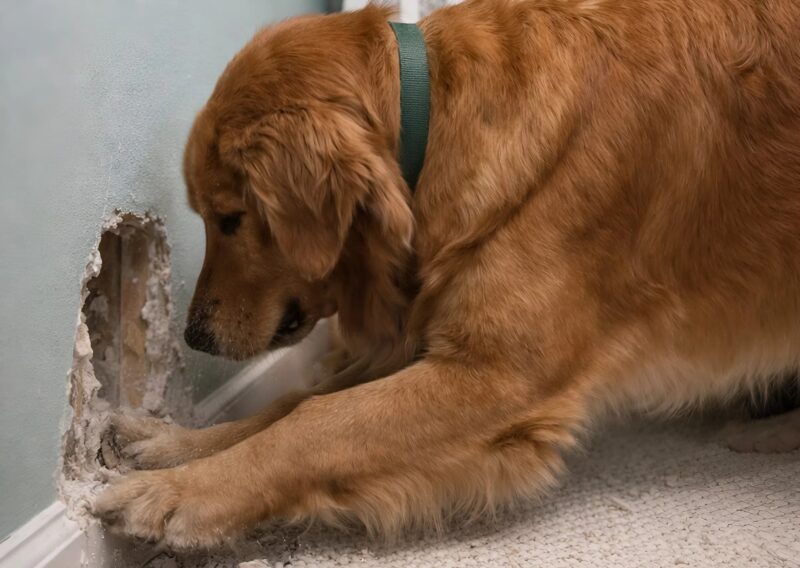
Dog Scratches Wall Behind Baby’s Crib, Leading to a Shocking Discovery Hidden Inside
A Baby’s Mysterious Illness That Wouldn’t Go Away
An ordinary family routine turned into weeks of growing concern when an eight-month-old baby began developing persistent breathing problems that refused to improve. What initially seemed like a common cold quickly escalated into something far more troubling.
The infant developed a dry, rattling cough that worsened during the night. The sound was unusual and unsettling, described as if something was moving or clattering inside her chest. At times, her breathing became so shallow that her parents would wake up repeatedly just to confirm she was still breathing normally.
Multiple visits to the pediatrician followed. After listening to the baby’s lungs and reviewing symptoms, the doctor suggested the possibility of infant asthma. Medication and an inhaler were prescribed in an effort to manage the condition.
Despite strict adherence to medical advice, the baby’s condition did not improve. Instead, she appeared increasingly weak, eating less and waking frequently during the night while struggling to breathe.
A Dog Begins Acting in a Disturbing Way
While the family focused on the baby’s health, their golden retriever, Daisy, began behaving in a completely unexpected manner. Known as a calm and gentle presence in the home, she had always stayed peacefully near the crib and shown no signs of distress.
That behavior changed suddenly. Without warning, Daisy began targeting one specific area of the nursery: the wall directly behind the baby’s crib.
Each time she was left alone in the room, scratching noises would begin. The dog clawed repeatedly at the drywall, tearing at wallpaper and digging into the surface with unusual intensity. The behavior was not random. It was focused entirely on the same location.
At first, the behavior was dismissed as boredom or jealousy. The dog was removed from the room and even restricted with a baby gate. However, Daisy managed to force her way back inside repeatedly, returning each time to the same spot and continuing her frantic scratching.
Escalating Behavior That Could Not Be Ignored
As days passed, the situation became increasingly alarming. The dog’s determination did not fade, even as her actions began to physically harm her. Small wounds appeared on her paws as she continued to scrape against the wall surface.
Sleep deprivation and concern for the baby’s worsening condition added to the tension in the household. The dog’s behavior began to feel confusing and distressing rather than simply unusual.
Despite attempts to stop her, Daisy repeatedly returned to the same section of the wall, as though driven by something the family could not perceive. Eventually, the scratching became so intense that visible damage began to form in the drywall.
The Moment the Wall Finally Broke Open
One night, the situation reached a breaking point. The dog managed to create a large opening in the wall behind the crib. Pieces of broken drywall and plaster fell onto the floor as she continued trying to widen the hole.
At that moment, frustration and exhaustion took over. The dog was pulled away from the wall and scolded as attention shifted to the damage she had caused. But what came next changed everything.
When the opening in the wall was examined more closely, a strong, unpleasant odor emerged. The smell was heavy and musty, immediately signaling that something was wrong behind the surface.
A phone flashlight was used to look inside the damaged wall cavity. What appeared inside was far more serious than anyone expected.
A Hidden Problem Inside the Walls
The space behind the crib was covered with thick, dark patches spreading across the wood and insulation. The discoloration was extensive and clearly abnormal, indicating a long-standing issue hidden within the structure.
Further inspection revealed the source of the problem. A pipe running from a nearby bathroom had been leaking slowly over time. The moisture had accumulated inside the wall for an extended period, creating conditions for significant growth and contamination.
The affected area contained widespread black mold, spreading through the internal structure of the wall directly behind the baby’s crib.
A Dangerous Exposure Finally Understood
The discovery immediately changed the understanding of the baby’s ongoing health issues. What had been assumed to be asthma-like symptoms now appeared to be linked to prolonged exposure to contaminated air within the room.
For weeks, the baby had been sleeping and breathing in an environment affected by mold spores that were not visible from the outside. The condition of the wall explained the persistent respiratory symptoms and the lack of improvement despite medication.
The realization brought immediate shock and concern, as the location of the mold placed it directly behind the infant’s sleeping area.
The Dog’s Behavior Takes on New Meaning
In hindsight, Daisy’s unusual behavior began to make sense. The dog had been repeatedly drawn to the same hidden area inside the wall, reacting to a problem that had gone unnoticed by the family.
Her scratching, persistence, and refusal to stop were later understood as responses to the strong odor and disturbance coming from within the wall. Even injuries to her paws did not deter her from trying to reach the source.
What initially appeared as destructive behavior was later recognized as a reaction to an environmental hazard hidden from human senses.
A Home Situation That Changed Everything
The discovery inside the wall revealed a long-developing issue that had gone unnoticed for years. A slow leak had allowed moisture to accumulate, creating conditions that were not visible until the structure was physically opened.
The placement of the crib against that wall meant the baby had been directly exposed to the affected area, explaining the ongoing respiratory difficulties.
Once identified, the situation required immediate attention to address both the structural damage and the environmental safety of the room.
A Final Reflection on What Was Missed
The experience left the family shaken as they realized how subtle and hidden household problems can develop over time without obvious warning signs. What began as a health concern and unusual pet behavior ultimately revealed a serious issue concealed within the home’s structure.
The dog’s actions, once misunderstood, became a key part of uncovering the source of the problem. Her persistent attempts to reach the wall led to the discovery of a condition that had remained hidden behind everyday appearances.
In the end, the situation served as a reminder that not all dangers are immediately visible, and that sometimes even the most confusing behavior can point toward something important beneath the surface.
