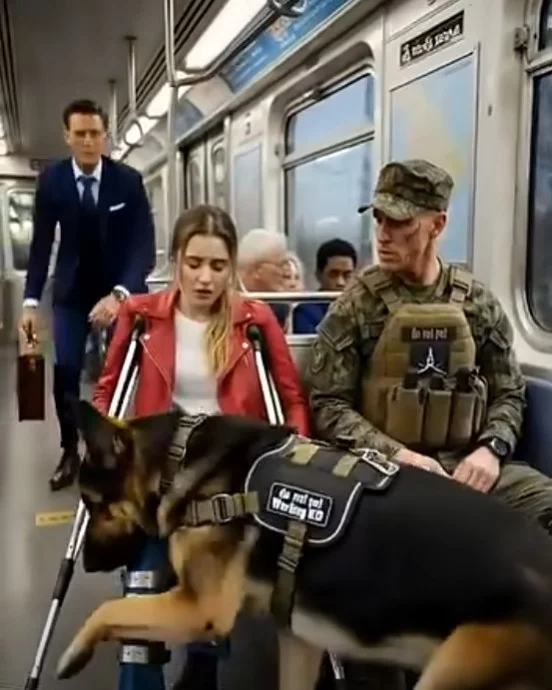
An Unexpected Moment of Connection on a Crowded Train Journey
An Ordinary Commute Filled With Movement and Noise
A crowded train journey often begins like many others, shaped by repetition, routine, and the quiet focus of passengers absorbed in their own schedules. The sound of doors opening and closing, the steady rhythm of wheels on the tracks, and the soft announcements marking each stop create a familiar backdrop that blends into daily life. People board with purpose, many carrying the weight of long workdays, errands, or personal responsibilities.
Inside the carriage, space becomes limited quickly. Seats fill, aisles narrow, and standing passengers adjust themselves carefully to maintain balance as the train moves forward. In such an environment, interaction is usually minimal. Most travelers remain focused inward, avoiding unnecessary movement or conversation unless required. The journey feels predictable, even when the train is full of strangers sharing the same enclosed space.
Yet even within this ordinary rhythm, small changes in circumstance can shift the tone of a journey. A single interaction, a moment of kindness, or an unexpected presence can quietly transform the experience into something more meaningful than simply travel from one place to another.
Navigating a Crowded Space With Physical Challenges
In this particular journey, a woman boards the train while managing physical challenges that make movement and standing more difficult than for other passengers. Navigating a crowded carriage requires careful attention, patience, and steady effort as she moves through narrow gaps between seated and standing commuters.
The challenge is not only the physical space but also the pace of the environment. The train is busy, filled with people returning from work, heading home, or transitioning between daily responsibilities. Every step requires awareness of surroundings, as passengers shift slightly or adjust their positions to maintain comfort during travel.
Finding a seat becomes a priority rather than a convenience. In a full carriage, available spaces are rare, and each one represents a brief opportunity for rest. For someone managing mobility limitations, that moment of finding a seat carries added significance, offering relief from strain and the chance to settle into a more stable position for the remainder of the journey.
Finding a Seat Beside a Service Animal
After carefully scanning the carriage, the woman eventually locates the last available seat. It is positioned beside a passenger accompanied by a trained service dog. The seat offers immediate relief, allowing her to sit down after standing and moving through a crowded environment.
The presence of the service dog adds a unique element to the setting. Calm and composed, the animal remains close to its handler, showing the quiet discipline expected from a trained assistance companion. While the dog’s primary focus is its handler, its awareness of the surrounding environment is steady and controlled.
For the woman, the seat is not only a place to rest but also an introduction to an unexpected travel companion. The proximity to the service dog creates a calm and reassuring atmosphere, softening the tension often associated with crowded public transport. The moment feels like a pause in the middle of movement, offering stability in an otherwise busy space.
The Calm Presence of a Trained Service Dog
Service dogs are known for their ability to remain composed in environments filled with noise, motion, and unpredictability. In a crowded train, this calmness becomes especially noticeable. The animal sits quietly, attentive but not distracted, maintaining a steady presence beside its handler.
Even as passengers shift in their seats, speak softly, or adjust bags and belongings, the service dog remains focused and relaxed. Its behavior reflects training built around discipline, awareness, and responsiveness to its handler’s needs. This calm presence contributes to the overall atmosphere of the carriage, subtly influencing the emotional tone around it.
For nearby passengers, including the woman who has just taken her seat, the dog’s steadiness adds a sense of reassurance. In a confined and often noisy environment, such calm behavior can create a feeling of stability that contrasts with the surrounding movement and uncertainty of travel.
A Natural Conversation Begins
As the train continues its journey, a natural conversation gradually begins between the passengers. Introductions are exchanged politely, without pressure or formality. The presence of the service dog becomes an organic point of connection, gently opening the door to communication.
The handler explains the role of the service dog in daily life, offering insight into how assistance animals support individuals in managing everyday challenges. The conversation remains light and respectful, shaped by mutual understanding and the shared environment of the train carriage.
The woman also shares aspects of her own experiences, particularly the difficulties associated with mobility challenges and the importance of maintaining independence while navigating public spaces. This exchange does not feel forced or intrusive. Instead, it unfolds naturally, guided by empathy and shared awareness of personal circumstances.
Within the crowded train, where many passengers remain silent or absorbed in their own thoughts, this brief interaction creates a quiet sense of connection. It stands out not because it is extraordinary, but because it is simple, respectful, and human.
Unexpected Delay and Growing Uncertainty
During the journey, the train comes to an unexpected stop between stations. An announcement informs passengers of a temporary delay due to operational reasons, without providing detailed explanation. The carriage, once moving steadily forward, is suddenly filled with stillness.
Reactions vary among passengers. Some reach for their phones, checking messages or updates, while others remain seated in silence, waiting for movement to resume. A few express mild frustration, though most simply accept the interruption as part of the unpredictability of public transportation.
For passengers managing physical discomfort or fatigue, such delays can feel more intense. The absence of movement may increase awareness of pain or exhaustion, making the wait more noticeable. The confined environment of the train amplifies these sensations, as there is little opportunity to change position or move freely.
In moments like this, the atmosphere of a carriage can shift from routine calm to subtle tension, even without any major disruption. Time feels slower, and attention turns inward as passengers wait for progress to resume.
Stability in a Moment of Pause
Amid the uncertainty of the delay, the presence of the service dog remains a stabilizing element. The animal continues to sit calmly beside its handler, unaffected by the interruption in travel. Its steady behavior contrasts with the subtle restlessness that can develop among passengers during unexpected pauses.
This calm presence becomes more noticeable as time passes. While the environment remains static, the service dog’s composure offers a quiet sense of normalcy. It does not react to announcements or shifting energy in the carriage, instead maintaining its trained focus and relaxed posture.
For those nearby, including the woman seated beside it, this steadiness contributes to a more manageable experience of the delay. Even without words or action, the animal’s presence helps maintain a sense of balance in an otherwise uncertain moment.
The Journey Resumes
Eventually, the train begins moving again. The announcement confirming the continuation of the journey brings a subtle wave of relief throughout the carriage. Passengers adjust their posture, settle back into their seats, and return their attention to the passing environment outside the windows.
The rhythm of travel resumes as stations pass, announcements return, and the familiar motion of the train restores a sense of routine. The interruption becomes part of the journey’s timeline, fading gradually into the background as forward movement continues.
The remainder of the trip unfolds without further incident. The earlier delay, once a source of uncertainty, becomes just another brief pause in an otherwise continuous journey.
A Quietly Meaningful Experience
As the destination approaches, passengers begin preparing to disembark. Bags are gathered, positions shift, and attention turns toward arrival. The brief interactions that occurred during the journey remain present in memory, though not in an intrusive or overwhelming way.
The conversation, the shared space, and the calm presence of the service dog all contribute to a subtle impression that lingers beyond the train ride itself. Nothing dramatic has occurred, yet something meaningful has taken place within the ordinary flow of travel.
Such experiences often remain with people precisely because they are unexpected. In a setting where most individuals remain strangers, moments of understanding or quiet connection stand out even if they are brief and simple.
The Lasting Impact of Small Human Connections
After leaving the train, the memory of the journey continues to surface in reflection. Small interactions, particularly those involving kindness or calm presence during stressful moments, often leave a lasting emotional imprint. They do not need to be significant in scale to be meaningful in effect.
Public spaces like trains bring together individuals from different walks of life, each carrying their own experiences, challenges, and routines. Within this shared environment, even brief communication can create a sense of connection that extends beyond the moment itself.
Service animals, in particular, contribute to this dynamic by offering stability and calmness that can influence the atmosphere around them. Their presence often supports not only their handlers but also those who find reassurance in their quiet discipline.
Conclusion: Finding Meaning in Everyday Moments
This train journey illustrates how ordinary situations can contain unexpected depth. A crowded carriage, a chance seating arrangement, and a simple conversation became the foundation for a quietly meaningful experience.
What began as a routine commute evolved into a moment shaped by patience, understanding, and shared presence. Even with an unexpected delay, the experience remained grounded in calm interaction and subtle human connection.
Ultimately, the journey reflects how everyday environments can hold moments of comfort and connection, even among strangers. In shared spaces, small gestures and quiet presence can transform routine travel into something that lingers gently in memory long after the journey has ended.
