
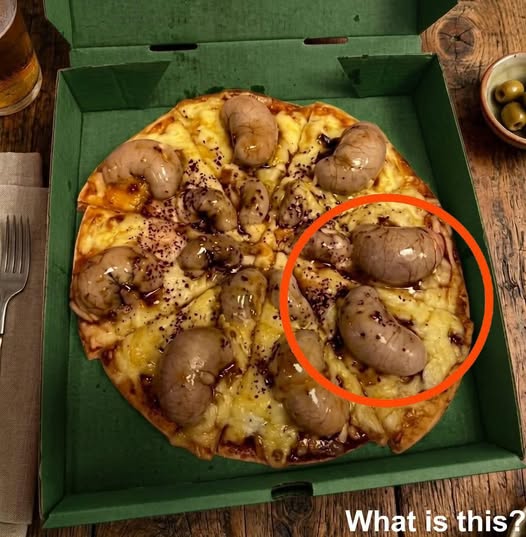
At first glance, the pizza’s appearance was unusual enough to cause immediate hesitation. Instead of the familiar, evenly melted layer of cheese and neatly distributed toppings, parts of the surface looked raised, uneven, and slightly puffed. This unexpected texture made the pizza seem unfamiliar and, for a brief moment, questionable. Since people generally expect baked foods like pizza to have a consistent look, any visible deviation can quickly stand out and create doubt.
That initial reaction is quite natural. Visual cues play a major role in how we judge food. When something looks different from what we’re used to, even in small ways, it can feel off or concerning. In this case, the irregular surface—small bulges and uneven patches—gave the impression that something might have gone wrong during preparation or baking. Without context, it was hard to tell whether this was a mistake, a quality issue, or simply a harmless variation.
Because of that uncertainty, the next logical step was to look for an explanation. When food appears unusual, people often compare it with other examples or search for information to better understand what they’re seeing. After reviewing similar cases and reading about how pizza behaves in the oven, the situation became much clearer.
The raised areas and uneven texture were not signs of contamination or poor preparation. Instead, they were the result of completely normal baking processes. When pizza dough is exposed to high heat, several things happen at once. The dough contains yeast, which creates tiny air pockets during fermentation. Once the dough is placed in a hot oven, those air pockets expand rapidly due to heat. This expansion can cause sections of the dough to rise unevenly, forming bubbles or slightly inflated areas on the surface.
Moisture inside the dough also plays a role. As the temperature increases, water turns into steam, adding pressure from within. This further contributes to the formation of raised spots or irregular textures. These effects are common in many baked goods, especially those made with yeast-based dough.
Cheese adds another layer to this process. As it heats up, it melts and softens, sometimes trapping small pockets of air or steam underneath. This can create visible bubbles or uneven patches on the surface. Depending on how the cheese is distributed and how the heat circulates in the oven, these bubbles can vary in size and shape, making each pizza look slightly different.
Several factors influence how pronounced these effects become. Oven temperature, baking time, dough thickness, and even how the ingredients are spread across the surface can all affect the final appearance. A hotter oven, for example, can cause faster expansion, leading to more noticeable bubbling. Thicker dough may trap more air, while uneven topping distribution can create areas where heat affects the surface differently.
Once these factors are understood, the unusual appearance no longer seems concerning. Instead, it becomes clear that what initially looked strange is actually a natural outcome of baking physics and food chemistry. The pizza hasn’t been damaged or improperly made—it’s simply reacting to heat in the way many baked foods do.
This experience highlights how strongly perception influences judgment. People often rely on appearance to quickly decide whether something is safe or normal. However, cooking involves many natural processes that can produce visual variations. Not every pizza will look perfectly smooth, and slight irregularities are often a sign of real, active ingredients rather than a flaw.
In fact, similar textures can be seen in other baked goods like bread, flatbreads, and pastries. The same principles apply: trapped air expands, moisture turns to steam, and ingredients shift under heat. These changes give baked foods their characteristic structure and texture, even if they sometimes look unexpected.
After understanding the cause, the initial concern fades quickly. The pizza can be seen for what it truly is—perfectly normal food, shaped by the natural behavior of its ingredients in the oven. The uneven surface is not a warning sign but simply part of the baking process.
In the end, what started as a moment of doubt turns into a simple lesson in how food works. A brief pause, a bit of curiosity, and some basic research are often enough to replace uncertainty with clarity. The pizza remains safe, unchanged in quality, and entirely typical once the science behind its appearance is understood.

