
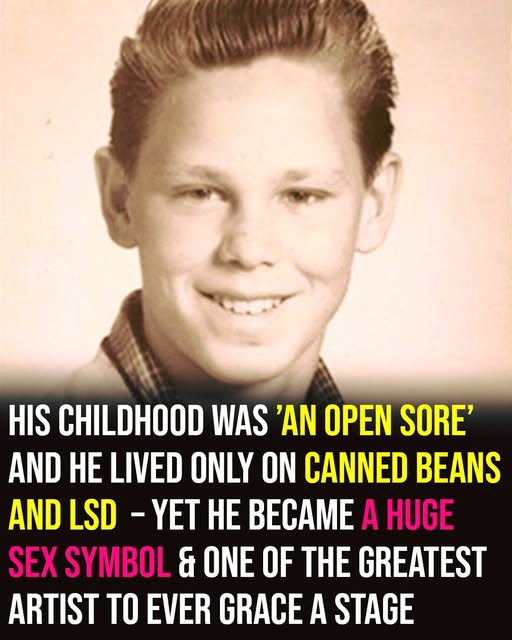
Few figures in rock history have left a cultural imprint as enduring as Jim Morrison, the lead vocalist of The Doors. Known for his deep, resonant voice, poetic lyricism, and unpredictable stage presence, Morrison became one of the most distinctive frontmen of the 1960s. His performances often blurred the line between music and spoken-word poetry, creating a style that set him apart from many of his contemporaries and helped redefine what a rock performance could be.
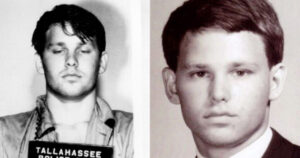
Born on December 8, 1943, in Melbourne, Florida, Morrison grew up in a military family. His father, George Stephen Morrison, served as a rear admiral in the U.S. Navy and later became associated with events surrounding the Gulf of Tonkin incident. Due to his father’s career, Morrison’s early life involved frequent relocations across the United States, exposing him to a variety of environments but also contributing to a sense of instability. He attended multiple schools during his youth, an experience that shaped his perspective and later influenced his artistic outlook.
Morrison eventually enrolled at the University of California, Los Angeles, where he studied film. During his time there, he developed a strong interest in poetry, philosophy, and experimental forms of artistic expression. These influences would later become central to his songwriting, setting his work apart from more conventional rock lyrics of the era. His fascination with symbolism, literature, and existential themes became defining characteristics of his creative voice.
One of the most frequently referenced moments from Morrison’s early life involved a childhood road trip during which his family reportedly came across a serious car accident in the American Southwest. Morrison later described this event in highly symbolic and poetic terms, often portraying it as a transformative experience. However, members of his family later suggested that while the incident did occur, Morrison’s later retellings likely expanded on the reality, reflecting his tendency to reinterpret events through a creative lens.

After leaving UCLA, Morrison moved to Venice Beach in California, where he lived a bohemian lifestyle focused on writing and artistic exploration. It was there that he reconnected with fellow UCLA student Ray Manzarek. Their collaboration became the foundation for what would soon evolve into The Doors, later joined by guitarist Robby Krieger and drummer John Densmore.
The band’s name, The Doors, was inspired by The Doors of Perception by Aldous Huxley, which itself referenced a quote by William Blake. This literary connection reflected the intellectual and philosophical influences that would shape the band’s identity. Their music combined elements of rock, blues, and psychedelia, while Morrison’s lyrics explored themes such as freedom, mortality, consciousness, and the boundaries of human experience.
By 1967, The Doors achieved major commercial success with the release of their debut album, which included the hit song “Light My Fire.” The track reached number one on the Billboard Hot 100, establishing the band as a major force in the music industry. Their early success coincided with the broader counterculture movement of the 1960s, and Morrison quickly became a symbol of artistic rebellion and nonconformity.
Morrison’s stage presence played a significant role in shaping his public image. His performances were often intense, emotional, and unpredictable, sometimes involving improvisation or spontaneous spoken-word segments. While this approach captivated audiences, it also led to controversy. His behavior on stage occasionally crossed boundaries, contributing to a reputation that was both compelling and polarizing.
As The Doors continued to release successful albums, including Strange Days, Waiting for the Sun, The Soft Parade, Morrison Hotel, and L.A. Woman, Morrison’s personal struggles became more visible. He developed a pattern of heavy alcohol consumption, which began to affect his reliability and performance. Bandmates and collaborators later described difficulties during recording sessions, including inconsistent attendance and challenges maintaining focus.

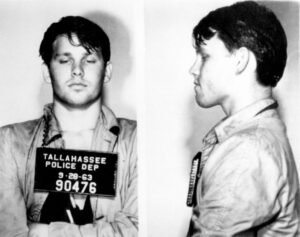
In addition to personal struggles, Morrison faced legal issues that further complicated his career. One of the most widely publicized incidents occurred during a 1969 concert in Miami, Florida, where he was later charged and convicted of indecent exposure and disorderly conduct. Morrison denied aspects of the allegations, and the case remained controversial, contributing to his already complex public image.
His personal relationships were also marked by intensity. His long-term partner, Pamela Courson, played a central role in his life. Their relationship was characterized by deep emotional connection but also instability, reflecting the broader turbulence that often surrounded Morrison during his career.
By the early 1970s, Morrison began to distance himself from the music industry. Seeking a quieter environment, he moved to Paris in 1971, where he focused on writing poetry and living away from the public spotlight. During this period, he largely withdrew from active involvement with The Doors, choosing instead to pursue more introspective creative work.
On July 3, 1971, Morrison was found dead in his apartment in Paris at the age of 27. The official cause of death was recorded as heart failure, and no autopsy was conducted, as it was not required under French law at the time. The lack of detailed medical documentation led to ongoing speculation and various theories about the circumstances of his death.
Morrison’s passing placed him among the group often referred to as the “27 Club,” which includes artists such as Jimi Hendrix, Janis Joplin, and later Kurt Cobain and Amy Winehouse. This association has contributed to the enduring mystique surrounding his life and legacy.
Today, Jim Morrison is remembered not only as a rock singer but also as a poet and cultural figure whose work helped define an era. Through The Doors, he left behind a body of music that continues to influence artists across genres. His fusion of poetry, performance, and music remains a powerful example of artistic experimentation, ensuring his place as one of the most iconic figures in rock history.

