Abandoned Dressing Table Restored Into a Stunning Piece of Art Deco Craftsmanship
A Roadside Find That Most People Ignored
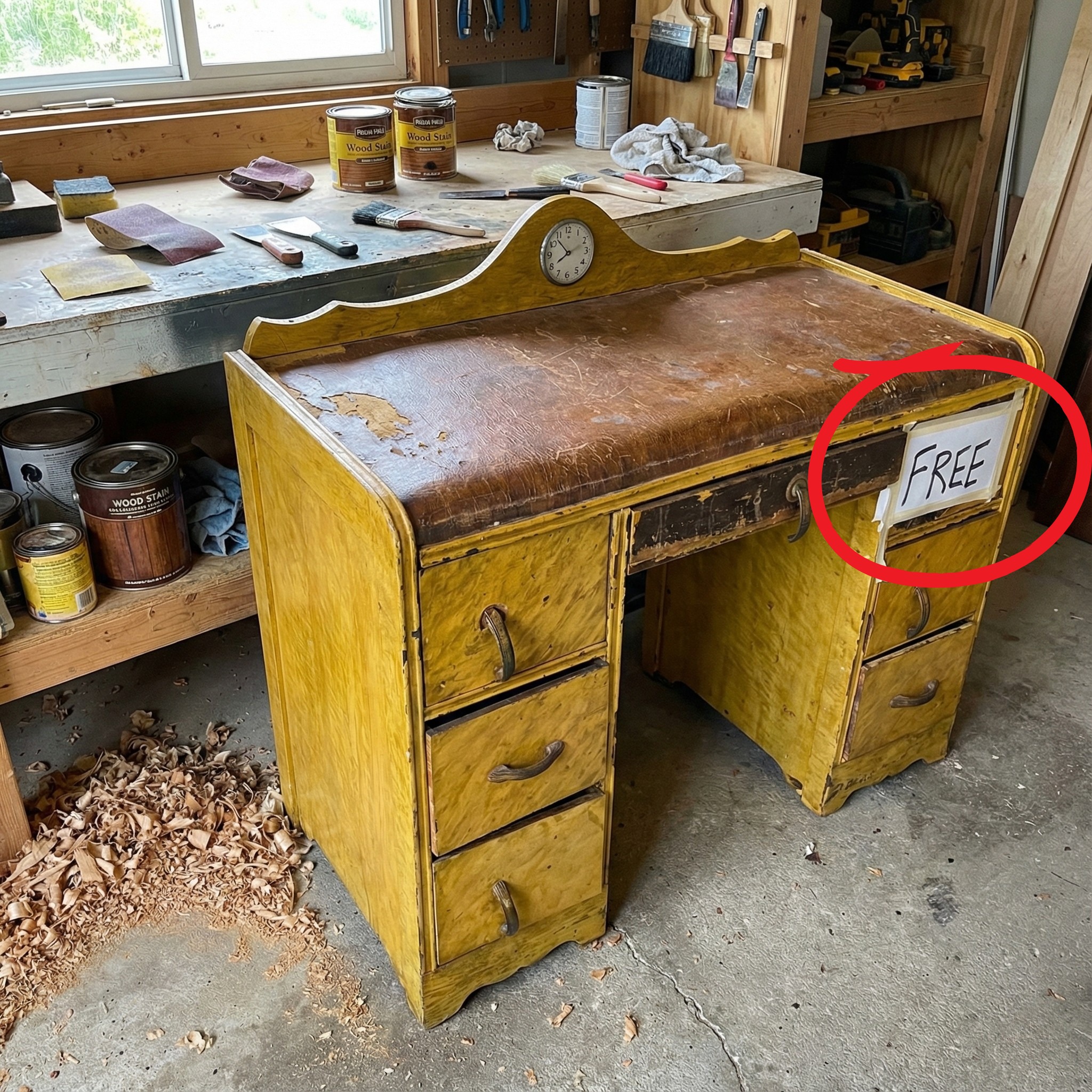
Left beside the road with a simple “Free” sign attached, the dressing table appeared destined for disposal. Its surface was covered in thick yellow paint, its drawers showed signs of damage, and several components were missing altogether.
Passersby barely noticed it. To most observers, the piece looked worn out, neglected, and beyond practical repair. The assumption seemed straightforward: the table had reached the end of its useful life.
Yet one person viewed the situation differently. When Ross Taylor came across the discarded furniture, he saw more than its flaws. Instead of focusing on the damage, he recognized the possibility hidden beneath years of neglect.
Rather than leaving it behind, he decided to bring the dressing table home and give it another chance.
Looking Beyond the Surface
At first glance, there was little to suggest that the furniture held any particular value. Layers of hastily applied paint concealed much of its original appearance, making it difficult to appreciate the quality beneath.
The yellow coating was uneven and rough, obscuring details that might once have distinguished the piece. Damaged drawers and missing sections added to the impression that the table was little more than unwanted furniture.
Many people in the same situation might have removed a few usable parts before discarding the rest. Others may have viewed restoration as more trouble than it was worth.
Taylor chose a different path. He approached the project with patience and a willingness to invest time in understanding what the table might become.
Instead of searching for quick fixes, he focused on careful restoration and preservation.
A Process Built on Patience
The work began with the slow task of removing the layers that had accumulated over time. Stripping away old paint required attention and consistency rather than speed.
As each layer came off, more of the original material began to emerge. The process revealed details that had been hidden beneath the thick coating for years.
Repairing the table required more than surface improvements. Damaged sections needed attention, and missing elements had to be recreated or rebuilt.
Every stage demanded patience. Rather than rushing toward the final result, Taylor concentrated on ensuring that each repair respected the character of the original piece.
The project became an exercise in restoration rather than replacement. The goal was not to create something entirely new but to uncover and preserve what had always been there.
The Discovery Beneath the Paint
As the restoration progressed, the dressing table gradually revealed its true identity.
Hidden beneath the worn exterior was carefully crafted woodwork that reflected thoughtful design and skilled construction. Features that had been invisible under the paint began to stand out.
The proportions of the furniture showed a sense of balance and refinement. Details that once appeared lost started to reemerge as the original craftsmanship became visible again.
What had seemed like an ordinary discarded object turned out to be a piece with distinctive Art Deco influences.
The style was characterized by understated elegance rather than excessive decoration. Its appeal came from proportion, craftsmanship, and subtle design choices that had survived despite years of neglect.
Each new discovery reinforced the value hidden beneath the damaged surface.
Respecting the History of the Piece
Throughout the restoration, Taylor approached the project with a sense of respect for the furniture’s past.
Although little attention had been given to the table before it was abandoned, he treated it as something worthy of care and consideration.
Rather than imposing dramatic alterations, he focused on preserving the qualities that made the piece unique.
This approach allowed the original craftsmanship to remain at the center of the restoration. The table’s history was not erased or overshadowed.
Instead, the work highlighted the strengths that had been concealed for years.
The process reflected an appreciation for traditional craftsmanship and the enduring value of well-made furniture.
The Transformation Takes Shape
As repairs were completed and the original materials became visible, the table underwent a remarkable transformation.
The restoration did not rely on dramatic embellishments or excessive decoration. Its success came from revealing the beauty that had already existed beneath the surface.
A rich walnut frame emerged as one of the most striking features of the finished piece. The wood displayed depth and character that had been completely hidden by the paint.
The drawers, finished in warm mahogany tones, complemented the frame and added further visual interest.
Together, these elements created a balanced and sophisticated appearance.
The finished table no longer appeared neglected or forgotten. It possessed a presence that naturally attracted attention.
Its appeal came not from extravagance but from authenticity and craftsmanship.
A Finished Piece That Spoke for Itself
One of the most notable aspects of the completed restoration was its restraint.
The table did not rely on flashy details or modern trends to make an impression. Instead, it reflected the qualities that had been present from the beginning.
Once the layers of damage and neglect were removed, the furniture was able to express its original design more clearly.
The result felt both fresh and timeless.
Rather than appearing transformed into something entirely different, the table seemed to have returned to the version it was always meant to be.
This distinction helped make the restoration particularly compelling.
The project demonstrated that successful restoration often involves revealing rather than reinventing.
Sharing the Journey Online
After completing the restoration, Taylor shared the project online.
What happened next exceeded expectations. The restoration quickly attracted widespread attention and was viewed by millions of people.
Viewers were drawn not only to the dramatic difference between the abandoned table and the finished piece but also to the process itself.
The restoration unfolded gradually, allowing people to witness each stage of the transformation.
Rather than focusing solely on the final reveal, many viewers appreciated the patience and dedication required to achieve the result.
The project offered a clear example of how persistence and careful craftsmanship can produce meaningful outcomes.
Why the Story Resonated With So Many People
The popularity of the restoration extended beyond an interest in furniture.
Many people connected with the broader message reflected in the project. The dressing table became a symbol of overlooked value and hidden potential.
At first, the furniture appeared damaged, unwanted, and beyond saving. Yet beneath that appearance existed qualities that simply needed the opportunity to be seen again.
This idea resonated with viewers because it reflected a familiar human experience.
People often encounter situations where value is obscured by neglect, misunderstanding, or difficult circumstances.
The restoration served as a reminder that first impressions do not always reveal the full story.
Sometimes what appears broken or unimportant may still possess significant worth.
The Importance of Patience
Another reason the project attracted attention was its emphasis on patience.
Modern culture often celebrates immediate results and rapid transformation. In contrast, this restoration unfolded through consistent effort over time.
Every stage required careful attention. Progress was achieved through many small steps rather than a single dramatic change.
The project illustrated that meaningful renewal rarely happens instantly.
Instead, improvement often emerges through persistence, dedication, and a willingness to invest effort over an extended period.
Viewers responded to this message because it reflected a reality that extends beyond furniture restoration.
Many worthwhile achievements require patience and steady commitment before results become visible.
A Lesson in Seeing Potential
The dressing table’s journey from roadside discard to restored centerpiece highlights the value of looking beyond appearances.
What most people dismissed as junk ultimately revealed craftsmanship, beauty, and historical character.
The transformation was not created through dramatic reinvention. It emerged through careful observation, thoughtful work, and respect for the original design.
By choosing to see possibility where others saw waste, Taylor uncovered qualities that had been hidden for years.
The project demonstrated that potential often exists beneath layers of damage, neglect, or misunderstanding.
Recognizing that potential requires patience and the willingness to look more closely.
A Restoration That Offered More Than a Beautiful Result
In the end, the restored dressing table stood as more than a successful furniture project.
It became an example of how thoughtful craftsmanship can preserve history while giving new life to forgotten objects.
The rich walnut frame and warm mahogany drawers reflected the quality that had been concealed beneath years of paint and damage.
The finished piece attracted attention not because it had been dramatically altered, but because its original character had finally been allowed to shine through.
The story captured the imagination of millions because it offered something deeper than a visual transformation.
It illustrated the value of patience, the importance of careful work, and the power of recognizing worth where others may see none.
Through steady effort and respect for the piece’s history, an abandoned dressing table found a second life.
Its restoration serves as a reminder that true value is not always immediately visible and that sometimes the most rewarding discoveries come from taking a second look at something the world has already overlooked.
