

During a long flight, the atmosphere inside the cabin gradually became tense as a persistent sound filled the air—a child crying without pause. It was the kind of crying that carries distress rather than simple discomfort, and as the minutes stretched into more than an hour, it began to wear on nearly everyone onboard.
Passengers reacted in different ways. Some attempted to ignore the noise by putting on headphones or focusing on their in-flight entertainment. Others shifted restlessly in their seats, clearly struggling to remain patient. A few exchanged quiet glances that conveyed frustration, while others sighed audibly, unable to hide their irritation. The constant crying created a shared unease that spread throughout the cabin, affecting even those who tried their best to remain understanding.
At the center of it all was the child’s mother. She appeared exhausted, both physically and emotionally. Her hair was slightly disheveled, and her face showed clear signs of distress. Dark circles under her eyes suggested that this journey had already been difficult before boarding the plane. She held her baby close, gently rocking him and whispering softly in an attempt to calm him. Despite her efforts, nothing seemed to work.
From time to time, she looked up at the passengers around her, offering quiet apologies. Her voice was soft and unsteady as she tried to explain.
“I’m sorry… it’s his first flight… he’s scared… please forgive me,” she said, barely above a whisper.
Her words carried a sense of vulnerability that made some passengers pause. Yet the crying continued, loud and persistent, filling the confined space of the aircraft.
At one point, the emotional strain became too much for her. Tears began to roll down her cheeks as she held her child even closer. It was clear that she was not only trying to soothe her baby but also struggling to maintain her own composure. In a moment of honesty, she revealed more about her situation.
“We’re flying to my parents… after his father passed away…” she said quietly.
Those words shifted the atmosphere slightly. Some passengers who had been visibly annoyed grew quieter, perhaps reconsidering their reactions. The situation was no longer just about inconvenience; it carried a deeper emotional weight.
Still, the child’s crying did not stop.
Seated nearby, by the window, was a man dressed in traditional white attire. He appeared calm and composed, though his expression suggested that he, like everyone else, had been affected by the ongoing disturbance. Throughout the flight, he had remained silent, observing the situation without interfering. His posture was upright, and his demeanor reserved, giving the impression of someone accustomed to discipline and control.
For a long time, he simply watched.
Then, after another stretch of uninterrupted crying, he leaned slightly forward and spoke in a calm, respectful tone.
“May I?” he asked.
The mother looked at him, momentarily confused. It was not immediately clear what he was offering. Then she realized he was asking to hold the child.
There was a brief hesitation. Handing her baby to a stranger was not an easy decision. However, exhaustion and desperation seemed to outweigh her uncertainty. After a short pause, she carefully placed the child in his arms.
At that moment, the surrounding passengers grew noticeably quieter. Some turned in their seats to watch, curious about what would happen next.
The man held the baby with confidence and care. His movements were gentle, deliberate, and steady. He adjusted the child slightly in his arms and began to rock him slowly. Then, in a low and soothing voice, he started to sing.
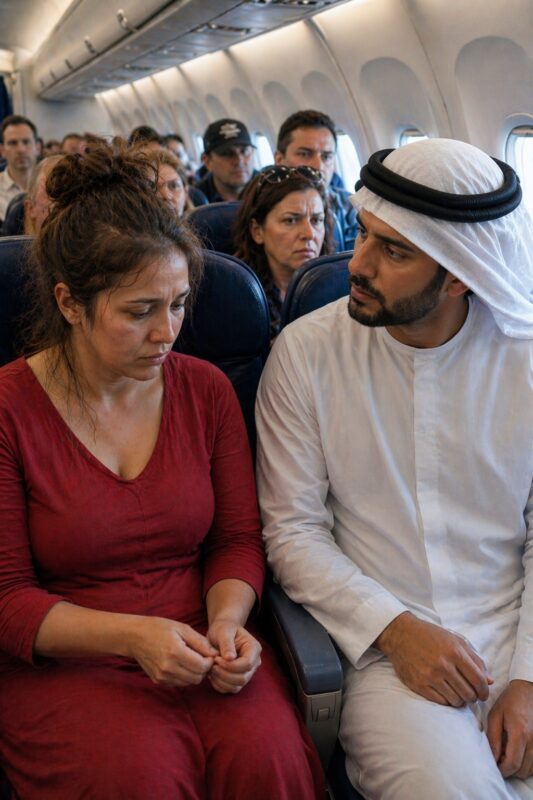
The melody was soft and rhythmic. Though the language was unfamiliar to many in the cabin, the tone carried a universal sense of calm. It resembled a lullaby—simple, repetitive, and comforting.
At first, the baby continued to cry, though the intensity seemed to lessen slightly. The man did not change his approach. He maintained the same steady rhythm, the same quiet voice, and the same gentle rocking motion.
Gradually, the child’s crying began to subside.
Within a few moments, the sobbing turned into softer whimpers. The baby looked up at the man, as if drawn to the unfamiliar yet comforting sound. His breathing slowed, and his small body began to relax.
Then, quite suddenly, the crying stopped.
A silence fell over the cabin—one that felt almost unexpected after so much noise. It was not just the absence of crying but a shared pause, as if everyone present had collectively taken a breath.
The man continued singing softly, not rushing the moment. The baby’s eyes grew heavier, blinking slowly before closing. Within minutes, the child had fallen asleep.
The mother watched in disbelief. Her expression shifted from exhaustion to quiet astonishment. She struggled to find words.
“How… how did you do that?” she asked softly.
The man offered a small, gentle smile.
“My mother used to sing this to us when we were children,” he replied. “It always helped us feel calm.”
He continued to hold the baby, maintaining the same careful posture. Then he looked at the mother again and spoke in a reassuring tone.
“I’ll hold him a little longer,” he said. “You should try to rest.”
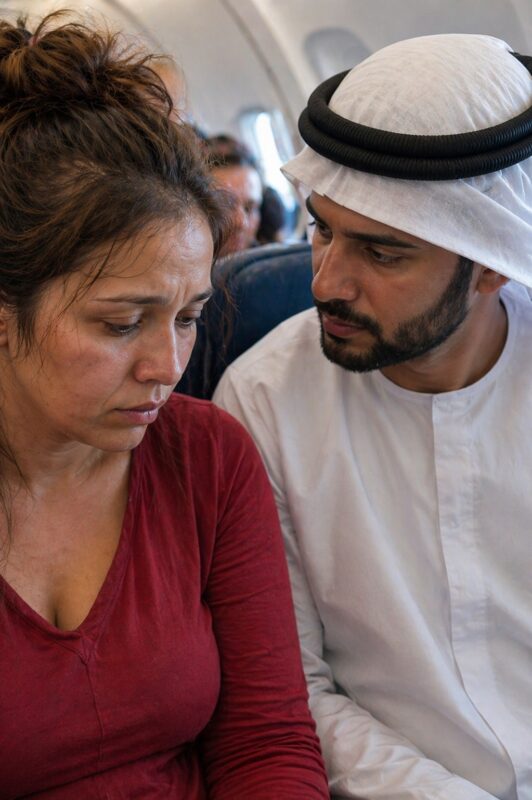
At those words, the mother’s eyes filled with tears once more. This time, however, they were not driven by stress or frustration. There was a sense of relief in her expression, along with gratitude that she did not need to put into words.
She leaned back in her seat, still watching for a moment before allowing herself to close her eyes.
Around them, the mood in the cabin had changed. The earlier tension had faded, replaced by a quieter, more reflective atmosphere. No one complained anymore. Some passengers returned to their activities, while others simply sat in silence, perhaps thinking about what they had just witnessed.
The moment did not involve grand gestures or dramatic actions. It was simple, quiet, and human—a reminder of how understanding and patience can alter a difficult situation.
In a confined space where frustration had been building, a small act of kindness brought relief not only to a distressed mother and her child but also to everyone around them.

