
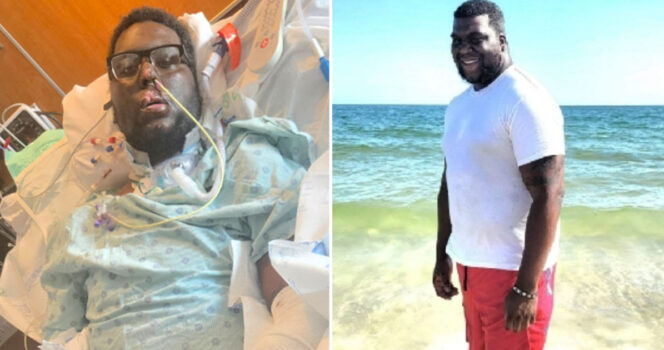
A routine dental visit turned into a life-altering medical emergency for 34-year-old Davon Vanterpool, whose experience highlights how quickly a serious infection can develop and escalate.
Vanterpool attended a dental appointment on December 29 for what was expected to be a standard examination. During the visit, he was informed that his gums were severely inflamed and bleeding. While gum inflammation is not uncommon and is often associated with conditions such as gingivitis, the situation did not initially appear to signal a major health threat.
However, later that same evening, his condition began to change rapidly. He started experiencing symptoms similar to those of the flu, including chills, nausea, and general discomfort. As the hours passed, these symptoms intensified rather than improving.
His partner, Alicia Wilder, quickly became concerned. She described noticing a dramatic shift in his condition when she returned to him. He was shaking uncontrollably, unable to regulate his body temperature, and repeatedly expressed that he felt extremely cold. In addition to the chills, he began vomiting and experiencing diarrhea, further indicating that something serious was happening.
Recognizing that these symptoms were not typical of a mild illness, he was taken to the hospital for evaluation. Medical professionals soon determined that he was experiencing septic shock, a severe and potentially fatal condition that occurs when an infection triggers a widespread inflammatory response throughout the body.
Septic shock represents the most critical stage of sepsis, a condition in which the body’s response to infection causes damage to its own tissues and organs. In this stage, blood pressure drops to dangerously low levels, and vital organs such as the kidneys, heart, and lungs can begin to fail.
In Vanterpool’s case, doctors confirmed that his organs were starting to shut down. Due to the severity of his condition, he was placed into a medically induced coma to stabilize his body and allow for intensive treatment.
As his condition progressed, he developed a rare but serious complication known as purpura fulminans. This condition affects blood clotting and can lead to tissue damage due to reduced blood flow. When blood supply is compromised, tissue can begin to die, sometimes making amputation necessary to prevent further spread and protect the patient’s life.
Despite medical intervention, the damage caused by the infection and its complications was extensive. Doctors ultimately had to perform multiple amputations. Vanterpool lost his right hand, his left arm up to the forearm, his right leg, and his left leg below the knee.
According to Wilder, the sequence of events may have been linked to the condition of his gums at the time of the dental visit. She explained that his gums were already significantly inflamed, and the examination process may have caused additional irritation and bleeding.
The human mouth naturally contains a wide range of bacteria, most of which are harmless under normal circumstances. However, when there are openings in the gum tissue, such as those caused by inflammation or injury, bacteria can enter the bloodstream. Once in the bloodstream, these bacteria can spread rapidly and trigger a systemic infection.
Wilder suggested that the combination of inflamed gums and the dental procedure may have created pathways for bacteria to enter his system. She noted that prior to the appointment, he had not shown any signs of illness and appeared to be in normal health.
While it is not uncommon for dental procedures to involve minor bleeding, serious complications like this are extremely rare. Nevertheless, this case underscores the importance of monitoring symptoms closely after any medical or dental procedure, especially when there is pre-existing inflammation or infection.
Following the initial emergency and surgeries, Vanterpool began a long and challenging recovery process. Wilder created a fundraising campaign to help manage the significant medical expenses associated with his treatment and rehabilitation.
In a recent update, she shared that he has made meaningful progress, although his recovery remains ongoing. His speech and voice are gradually improving, and he is working with a breathing device to strengthen his lungs. This type of respiratory support is often used after prolonged hospitalization, particularly when patients have been on ventilators or have experienced severe illness affecting lung function.
He has also shown improvement in swallowing ability, as indicated by a recent test, although he still requires a feeding tube at this stage. His kidney function has improved as well, and he no longer needs dialysis, which had previously been required when his kidneys were not functioning properly.
One of the most encouraging signs of recovery has been the return of his personality and emotional expression. Wilder described a moment when he laughed deeply, an experience she found especially meaningful. For her, it was a sign that he was not only recovering physically but also regaining his sense of self.
She expressed that seeing these small but significant milestones has brought a sense of relief and hope. While acknowledging that there is still a long journey ahead, she emphasized how important these moments are in measuring progress.
Recovery from severe sepsis and multiple amputations involves not only physical healing but also emotional and psychological adjustment. Patients often require extensive rehabilitation, including physical therapy, occupational therapy, and long-term medical support.
Vanterpool’s case illustrates how rapidly a localized issue can escalate into a systemic and life-threatening condition. It also highlights the importance of early recognition and treatment of infection symptoms.
Sepsis can develop from infections in various parts of the body, including the skin, lungs, urinary tract, and, in rare cases, the mouth. Early symptoms may resemble common illnesses, such as fever, chills, rapid breathing, or confusion, making it critical to seek medical attention when symptoms worsen or do not improve.
Although severe outcomes like septic shock are uncommon, they carry significant risks and require immediate medical intervention. Prompt treatment with antibiotics, fluids, and supportive care can improve survival rates and reduce complications.
Today, Vanterpool continues his recovery with the support of his partner, medical professionals, and the broader community. His progress reflects both the challenges of such a serious medical event and the resilience required to move forward after it.
His story serves as a reminder of the importance of paying attention to changes in health, seeking timely medical care, and understanding that even routine situations can sometimes carry unexpected risks.

