
Viral Claims About Toilet Paper Marks in Public Restrooms Spark Online Debate
A Routine Habit Suddenly Under Scrutiny
Most people enter public restrooms without giving it a second thought, especially when urgency takes over. It’s a daily routine so familiar that small details inside these spaces are often ignored entirely.
Recently, however, a wave of viral social media posts has encouraged people to look more closely at something many would never consider suspicious: the toilet paper roll itself.
The discussion has gained traction online, fueled by videos and personal accounts suggesting that unusual marks on toilet paper may indicate potential health or safety risks.
The Social Media Post That Sparked Concern
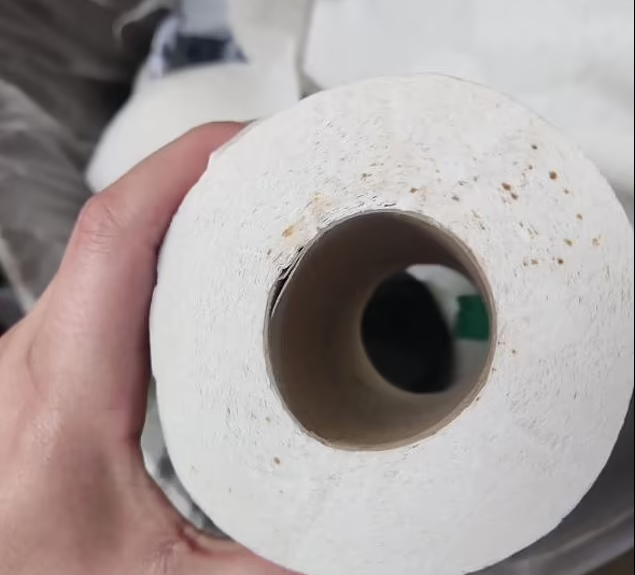
The conversation began circulating widely after a TikTok user known as technicolor94 shared a warning about small marks or discoloration sometimes found on toilet paper rolls in public restrooms.
The post suggested that these markings could, in rare cases, be linked to drug users cleaning used needles in restroom stalls, potentially leaving behind traces of blood.
According to the claim, indents or rust-colored marks should be treated with caution, and some users were advised to avoid using affected toilet paper entirely.
The video quickly gained attention, with viewers reacting strongly and sharing their own concerns and interpretations of the warning.
Online Reactions and Growing Anxiety
As the video spread, users across social media platforms expressed shock and concern. Some described heightened anxiety after viewing the claims, while others said they would now be more cautious in public restrooms.
The discussion led to widespread sharing of personal habits, with some individuals stating they inspect toilet paper rolls before use or avoid using public restroom supplies altogether.
The viral nature of the post contributed to a broader sense of unease, as users debated the likelihood and seriousness of such scenarios.
What Health Experts Say About the Risk
Health professionals have acknowledged that while blood-borne viruses such as hepatitis B, hepatitis C, and HIV can be transmitted through contact with infected blood, the likelihood of transmission through toilet paper in public restrooms is extremely low.
Medical experts emphasize that everyday exposure risks in public restroom settings are considered highly unlikely under normal circumstances.
Some professionals have noted that while theoretical transmission routes exist, real-world cases involving toilet paper contamination are not commonly documented in typical public environments.
The overall medical consensus highlights that the situation described in viral posts is rare rather than representative of everyday risk.
Additional Reports Fuel Online Discussion
Despite expert reassurance, similar concerns have been amplified by personal accounts shared online from different locations around the world.
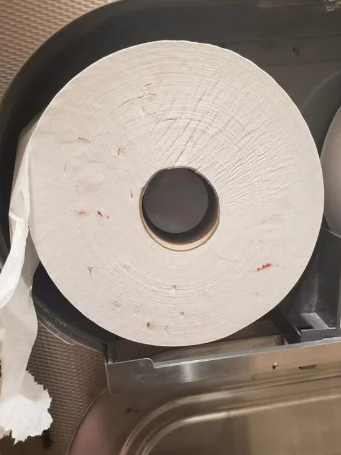
In one case, a woman reported encountering unusual puncture marks in a public restroom toilet paper roll along with what she believed were traces resembling blood. She later speculated that the damage may have been caused by needles, based on claims she had previously seen online.
She documented the incident and shared it publicly, prompting responses from viewers who expressed concern and said they would become more cautious when using shared facilities.
The local authorities were reportedly notified, and the dispenser was later replaced following the report.
Further Viral Warnings From Other Users
Additional posts have surfaced online from individuals claiming to notice similar issues in different public restrooms. In some cases, users shared videos showing small holes or irregular marks in industrial toilet paper rolls.
These posts often included warnings aimed at parents and individuals using public facilities, encouraging them to inspect restroom supplies before use.
Reactions to these videos have ranged from alarm to skepticism, with many users expressing surprise that such scenarios were even being discussed.
Public Response and Mixed Reactions
As these stories continued to circulate, public reaction became increasingly divided. Some users reported feeling newly cautious in public restrooms, while others dismissed the claims as exaggerated or unlikely.
Many comments reflected heightened awareness rather than confirmed incidents, with individuals sharing their own habits regarding hygiene and public facility use.
Some commenters even noted that they had never previously considered inspecting toilet paper rolls, while others said they had always been cautious in shared spaces.
The Role of Awareness Versus Fear
While the viral discussion has generated concern, it has also highlighted how quickly information can spread and influence behavior online.
Experts generally emphasize that maintaining basic hygiene practices and general awareness is sufficient for public restroom use in most situations.
The difference between rare theoretical risks and everyday practical safety has become a key point of discussion among viewers and commenters.
Rather than encouraging panic, many public health perspectives focus on balanced awareness and common-sense precautions when using shared facilities.
A Reminder About Hygiene in Shared Spaces
Public restrooms, like any shared environment, can naturally raise concerns about cleanliness and safety. However, most everyday risks remain low when standard hygiene practices are followed.
Simple actions such as handwashing and general awareness are widely considered effective measures for maintaining personal hygiene in public spaces.
The viral claims surrounding toilet paper marks have ultimately become part of a broader conversation about how online content shapes perception of risk.
Conclusion
The discussion surrounding toilet paper marks in public restrooms reflects a mix of viral influence, personal experience, and public concern. While social media has amplified anxiety around the issue, health professionals continue to emphasize that real-world risks in typical settings are extremely unlikely.
Ultimately, the conversation highlights how quickly everyday habits can come under scrutiny in the digital age, and how important it is to balance awareness with perspective when evaluating viral claims.
