
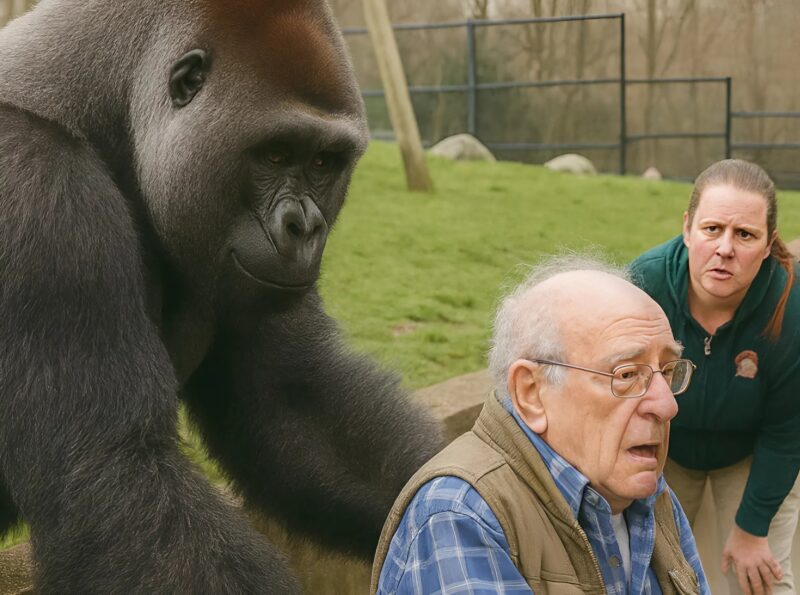
At a local zoo, an unexpected and emotional moment unfolded when a gorilla made sudden contact with a visitor in a wheelchair, creating initial panic before the situation took a surprising turn.
The man involved was a familiar presence at the zoo. Years earlier, before an accident limited his mobility, he had worked there as a caretaker. During that time, he developed strong bonds with many of the animals, spending long hours feeding, observing, and caring for them. Even after retiring, he continued to visit regularly, often returning to the same enclosures where he had once worked.
On the day of the incident, he positioned himself near the primate area, quietly watching the gorillas. Visitors and staff nearby described the atmosphere as calm and routine. There were no signs that anything unusual was about to occur.
Without warning, one of the gorillas—a female—approached the barrier separating the enclosure from the viewing area. She focused her attention on the man and moved closer than usual. Within moments, she reached through the accessible area near the enclosure and grabbed hold of the handles of his wheelchair.
The sudden action caused immediate alarm.
Nearby staff and visitors reacted quickly, attempting to pull the wheelchair back and calling for assistance. Voices rose, and security protocols were initiated. However, due to the gorilla’s strength, efforts to immediately separate her from the chair proved ineffective.
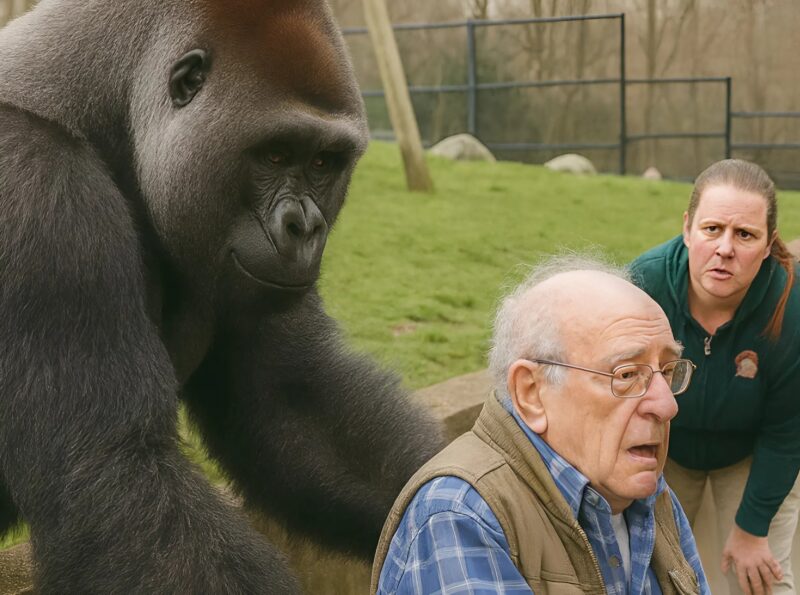
In a matter of seconds, she pulled the wheelchair closer and maneuvered it toward the interior side of the enclosure barrier. The situation escalated rapidly, with staff preparing emergency responses and considering the use of tranquilizers.
Observers described the moment as tense and uncertain. The man remained still, likely aware of the risks associated with close proximity to large primates. Gorillas are powerful animals, and direct contact can be dangerous, especially in confined or unfamiliar conditions.
However, what followed was entirely unexpected.
Instead of displaying aggression, the gorilla’s behavior shifted. She approached the man slowly and appeared to handle him with care. Witnesses noted that her movements were controlled and deliberate rather than forceful. She came close, made physical contact, and gently held him.
The atmosphere changed almost instantly.
The urgency in the crowd gave way to silence as people watched closely. Staff paused, reassessing the situation as it became clear that the interaction was not aggressive. The gorilla remained near the man, maintaining a calm presence.
After a short period, she guided the wheelchair back toward the edge of the enclosure area. Staff members, who had remained ready to intervene, quickly moved in and safely retrieved the man once he was within reach.
No injuries were reported.
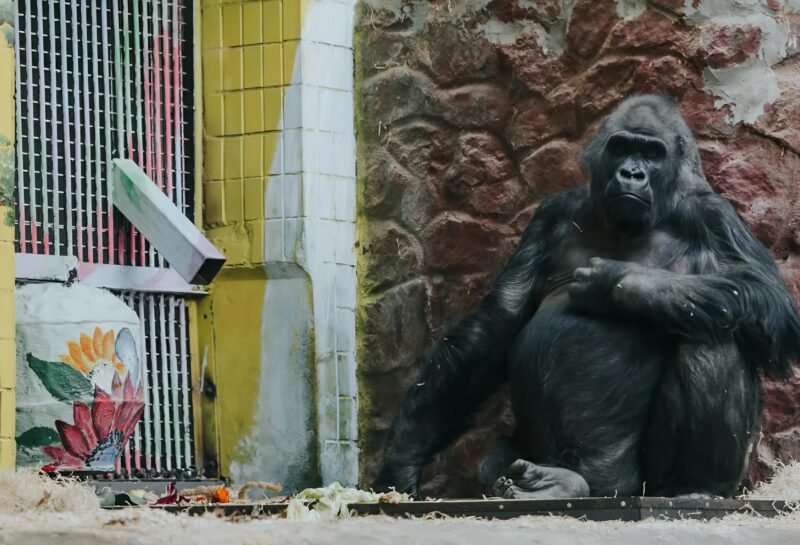
Following the incident, the man was evaluated as a precaution, while zoo personnel reviewed the circumstances that allowed the interaction to occur. Safety procedures and enclosure boundaries are typically designed to prevent any direct contact between visitors and animals, and such incidents are taken seriously by zoological institutions.
According to those familiar with the man’s history at the zoo, it is possible that the gorilla had been present during the time he worked there years earlier. While it is difficult to confirm animal memory in specific terms, primates are known for their cognitive abilities and capacity to recognize familiar individuals under certain conditions.
Zoo officials emphasized that, despite the calm outcome in this case, close contact with wild animals always carries risk. They reiterated the importance of maintaining strict safety measures to protect both visitors and animals.
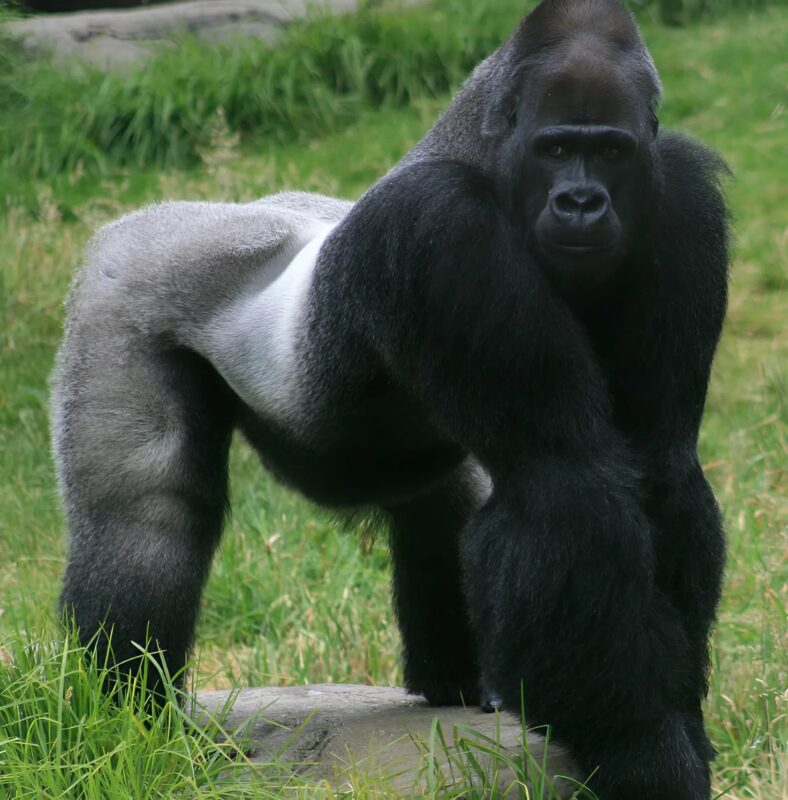
The event has since drawn attention not because of harm, but because of the unusual nature of the interaction. For those who witnessed it, the moment stood out as a rare and unexpected encounter that unfolded very differently from what initial reactions had feared.
While the exact reasons behind the gorilla’s behavior cannot be definitively explained, the incident highlights both the intelligence of primates and the importance of responsible wildlife management in controlled environments.

