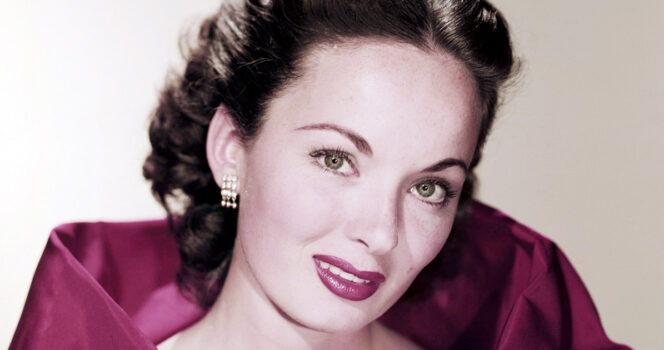
Ann Blyth, Beloved Star of Hollywood’s Golden Age and Oscar-Nominated Actress, Dies at 98
A Farewell to a Lasting Hollywood Icon
Hollywood has lost one of its most enduring stars with the passing of Ann Blyth, the acclaimed actress whose career spanned decades across film, television, radio, and stage performances.
Blyth died at the age of 98, leaving behind a legacy that continues to resonate with generations of movie lovers who remember her remarkable contributions to classic American cinema.
Her death occurred on Thursday, June 25, from “natural causes,” only weeks before what would have been her 99th birthday.
The news prompted an outpouring of reflection from admirers who regarded her as one of the final representatives of a celebrated era in Hollywood history.
From New York Beginnings to National Recognition
Born on August 16, 1928, in Mount Kisco, New York, Ann Blyth displayed artistic talent from an early age.
Her journey into entertainment began while she was still a child, working in radio and appearing on stage before eventually making the transition into motion pictures.
Those early opportunities helped shape the foundation of a career that would soon place her among the most recognizable young performers of her generation.
As Hollywood studios searched for fresh talent during the 1940s, Blyth quickly distinguished herself through a combination of acting ability, poise, and musical talent.
Her natural screen presence attracted attention almost immediately and opened the door to a series of prominent roles.
The Breakthrough That Defined a Career
Although she would go on to appear in many successful productions, one performance became particularly significant in establishing her place in film history.
At just sixteen years old, Blyth portrayed Veda Pierce in the 1945 classic Mildred Pierce.
The role required her to play the cold and manipulative daughter of Joan Crawford’s title character.
Her portrayal stood out for its emotional intensity and maturity, especially given her young age at the time.
Audiences and critics alike took notice of the performance, which quickly became one of the most discussed aspects of the film.
The success of Mildred Pierce elevated Blyth into the spotlight and transformed her into one of Hollywood’s most promising young stars.
Her work in the film earned her an Academy Award nomination for Best Actress in a Supporting Role, a remarkable achievement for a performer still in her teenage years.
The recognition solidified her reputation and ensured that her name would remain associated with one of the most respected films of the decade.
A Career Built on Versatility
Following the success of Mildred Pierce, Blyth continued building an impressive body of work throughout the 1940s and 1950s.
Her career expanded across multiple genres, allowing her to demonstrate both dramatic and musical abilities.
She became known not only as a talented actress but also as a gifted singer capable of bringing additional depth to her performances.
Among her notable film appearances were roles in The Great Caruso, Brute Force, and Rose Marie.
Each project showcased a different aspect of her talent and reinforced her reputation as a versatile performer.
Rather than becoming associated with a single type of character, Blyth successfully navigated a variety of roles during a period when Hollywood studios often placed actors into narrowly defined categories.
Her ability to adapt helped her remain a valued presence within the industry.
As audiences continued to embrace her performances, she established herself as one of the prominent actresses of her era.
Life During Hollywood’s Golden Era
Blyth’s career unfolded during a period frequently described as Hollywood’s Golden Age.
This was a time when major studios dominated the entertainment industry and film stars held an enormous influence on popular culture.
Movie premieres attracted widespread attention, and performers often became household names across the country.
Within that environment, Blyth carved out a successful career while maintaining a reputation for professionalism and dedication.
Her performances reflected the elegance and craftsmanship that defined many productions of the era.
As the entertainment landscape evolved over the decades, her work remained an important part of the period’s cinematic legacy.
For many classic film enthusiasts, her name became synonymous with the style and sophistication associated with mid-century Hollywood.
Continuing Her Work Beyond Film
Although her greatest fame came through motion pictures, Blyth’s career was not limited to the silver screen.
She continued to perform in television productions and theatrical projects after stepping back from leading film roles.
Her television appearances introduced her to new audiences and demonstrated her continued commitment to acting.
Among the programs she appeared in were The Twilight Zone and Murder, She Wrote.
These roles allowed her to remain active in entertainment while adapting to the changing nature of the industry.
Even as newer generations of performers emerged, Blyth continued to be respected for the body of work she had already established.
Her final screen appearance came during the 1980s, bringing an end to a career that had spanned several decades.
A Life Centered on Family
Beyond her professional accomplishments, Blyth was known for her devotion to family life.
She shared a long and enduring marriage with her husband, Dr. James McNulty.
Together they built a large family that became a central part of her life away from the spotlight.
The couple was blessed with five children, ten grandchildren, and five great-grandchildren.
Family members described a woman who valued personal connections and treasured time spent with loved ones.
While millions recognized her from films and television, those closest to her knew her as a devoted wife, mother, grandmother, and great-grandmother.
Her commitment to family remained one of the defining aspects of her life long after her busiest years in Hollywood had passed.
Creative Passions Beyond Acting
Blyth’s interests extended well beyond the entertainment industry.
She enjoyed a variety of creative pursuits that brought her fulfillment throughout her life.
Gardening was one of her favorite activities, providing a peaceful contrast to the demands of a public career.
She also spent time knitting and creating oil paintings.
Rather than keeping many of these creations for herself, she often shared them with friends and family.
Those personal gifts reflected her generosity and her desire to bring joy to others through her creativity.
These hobbies remained important to her and highlighted the artistic spirit that continued to shape her life outside of acting.
A Personal Connection With Admirers
Throughout her career and retirement, Blyth maintained a special appreciation for the people who supported her work.
She understood the importance of her audience and never took that support for granted.
One detail frequently remembered by those who knew her was her dedication to responding personally to fan mail.
Rather than delegating those interactions, she took the time to acknowledge the people who reached out to her.
That gesture reflected her gratitude and helped strengthen the connection she shared with admirers over the years.
Many fans remembered not only the performances she delivered on screen but also the kindness she showed away from it.
A Permanent Place in Hollywood History
Blyth’s contributions to the entertainment industry were recognized in lasting ways.
Among the honors associated with her career was a star on the Hollywood Walk of Fame.
The recognition served as a public reminder of her impact on film and popular culture.
Her body of work continues to introduce new audiences to the artistry of Hollywood’s classic era.
The films she helped create remain part of cinema history and continue to be appreciated decades after their original release.
For many viewers, her performances captured a unique period in filmmaking that continues to inspire admiration.
Remembering an Enduring Legacy
The passing of Ann Blyth marks the loss of one of the final major figures connected to Hollywood’s Golden Age.
Her career began when she was still a child and developed into a remarkable journey filled with memorable performances and lasting achievements.
From her Academy Award-nominated role in Mildred Pierce to her appearances in films such as The Great Caruso, Brute Force, and Rose Marie, she built a legacy that remains firmly established in entertainment history.
Her work on television, her dedication to family, and her lifelong creative pursuits added further depth to a life already rich with accomplishment.
She was admired not only for her talent but also for her warmth, generosity, and appreciation for those who followed her career.
As Hollywood reflects on her contributions, audiences continue to remember the actress whose performances helped define an era.
Ann Blyth leaves behind a lasting legacy through her films, her family, and the countless people who were touched by her work over nearly a century of life.
Her place in cinematic history remains secure, and her influence will continue to be remembered by generations of film lovers for years to come.
