
Officer’s Quick Response Helps Protect Child and Family in Sensitive Welfare Case
What began as a routine dispatch quickly turned into a situation requiring urgency, empathy, and careful coordination when Officer José López arrived at a modest home on Maple Street.
According to initial information provided by a concerned individual named Vanessa, there were signs that a young child inside the residence might need immediate assistance. Recognizing the seriousness of the call, Officer López approached the situation with both professional caution and emotional awareness.
A Quiet Scene Raises Concern
Upon arrival, the neighborhood appeared calm, with no obvious signs of distress. The house itself showed signs of age and long-term use, blending into the quiet surroundings. However, as Officer López approached the front door, subtle details suggested that something might not be right.
Faint sounds of a television could be heard from inside, but the overall atmosphere felt unusually still. Trusting his instincts, he knocked gently and introduced himself in a calm and reassuring tone, identifying his purpose clearly.
After a brief pause, the door slowly opened.
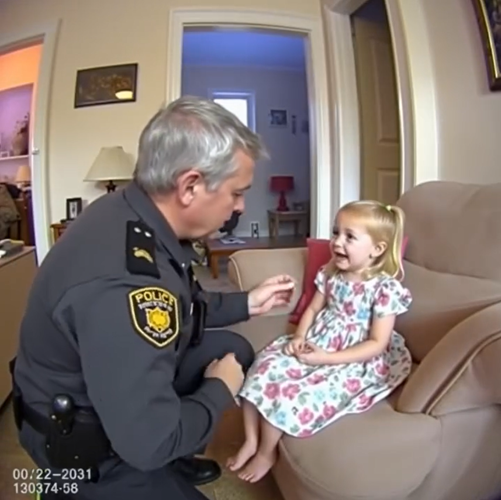
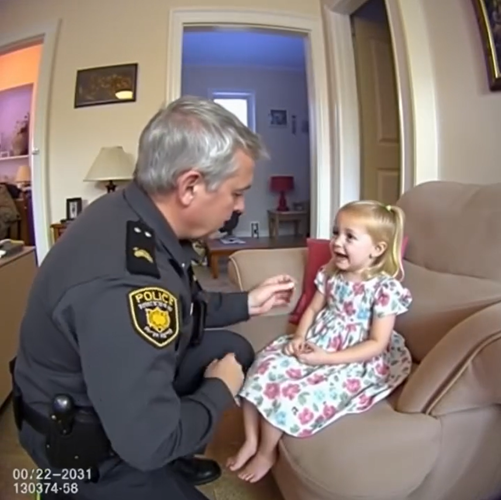
Standing there was a young girl named Liliana, who appeared visibly distressed. Her expression reflected both fear and uncertainty, while her posture suggested discomfort. Recognizing the importance of building trust, Officer López immediately lowered himself to her eye level and spoke gently to avoid causing alarm.

Building Trust in a Critical Moment
Using simple and reassuring language, the officer explained that he was there to help and ensure her safety. Although hesitant at first, Liliana responded with a quiet willingness to communicate.
As the conversation progressed, Officer López carefully asked if she was experiencing any physical discomfort. After a moment of hesitation, the child revealed visible swelling in her abdominal area.
At that point, the situation shifted from concern to urgency.
Understanding that immediate medical attention was necessary, Officer López quickly contacted emergency medical services, clearly communicating the need for a rapid response. While waiting for paramedics to arrive, he remained with the child, continuing to speak calmly and provide reassurance.

Key Information Emerges
During their conversation, Liliana shared important details about her recent experiences. She explained that food had been brought into the home by her father and another adult on multiple occasions. According to her account, she had been encouraged to eat it, even when it seemed unusual.
She described developing stomach pain and discomfort after consuming the food.
Officer López listened carefully, documenting the information while ensuring the child felt supported and not at fault. His approach focused on gathering facts without increasing her distress—an essential aspect of handling sensitive cases involving minors.
Additional Concerns Inside the Home
Liliana then guided the officer to another room, where her mother was found in a weakened and unresponsive condition. It quickly became clear that more than one person in the household required medical attention.
When emergency responders arrived, they assessed both individuals and determined that immediate transport to a hospital was necessary for further evaluation and care.
Officer López coordinated with paramedics to ensure a smooth and organized response, prioritizing safety and timely treatment.

Ongoing Investigation and Support
Later that day, authorities confirmed that both Liliana and her mother were receiving medical care and undergoing further examination. While their condition was being stabilized, attention turned toward understanding the circumstances that led to the situation.
Officials initiated a formal investigation to review all available information. Preliminary findings indicated that there may have been concerning actions involving individuals connected to the household. However, authorities emphasized that conclusions would only be drawn after a thorough and careful review of the facts.
Multiple agencies became involved to ensure that the investigation was handled responsibly and comprehensively.
Community Response and Recovery Efforts
As news of the situation spread in general terms, members of the community expressed concern and support for the family. Efforts were made to ensure that both Liliana and her mother would receive not only medical care but also emotional and social support during recovery.
Professionals worked to create a safe and stable environment for them moving forward, addressing both immediate needs and long-term well-being.
Vanessa, whose initial concern prompted the response, reflected on the importance of speaking up. Her decision to report what felt unusual played a key role in ensuring timely intervention.
The Role of Compassion in Law Enforcement
For Officer López, the experience reinforced the importance of patience, empathy, and communication when responding to sensitive situations. His ability to build trust with a frightened child allowed critical information to surface, ultimately helping guide the response.
Cases like this highlight how small, thoughtful actions—such as speaking calmly or taking time to listen—can have significant outcomes in moments of crisis.
A Reminder of the Importance of Awareness
While the investigation remains ongoing, the situation serves as a broader reminder of the importance of awareness and timely action. Recognizing when something may be wrong and reporting concerns can make a meaningful difference, particularly when vulnerable individuals are involved.
The coordinated efforts of law enforcement, medical professionals, and community members demonstrate how effective response systems can help protect and support those in need.
As Liliana and her mother continue their recovery, the focus remains on ensuring their safety and well-being—an outcome made possible by vigilance, compassion, and swift professional action.

