
A Day at the Zoo: A Startling Incident Inside a Gorilla Enclosure
A peaceful visit to the zoo turned into a deeply emotional and unforgettable moment when a young child accidentally ended up inside a gorilla enclosure. What began as a normal family outing quickly escalated into a situation that drew the attention of visitors, staff, and security, as concern spread throughout the area.
The event unfolded during what appeared to be an ordinary day. Families were walking between exhibits, observing animals, taking photographs, and enjoying the calm atmosphere typical of a public zoo. Among the crowd was a family visiting with their young child. Like many others, they were spending time near the primate enclosure, where visitors often gather to watch gorillas in a carefully secured habitat designed to ensure both animal welfare and public safety.
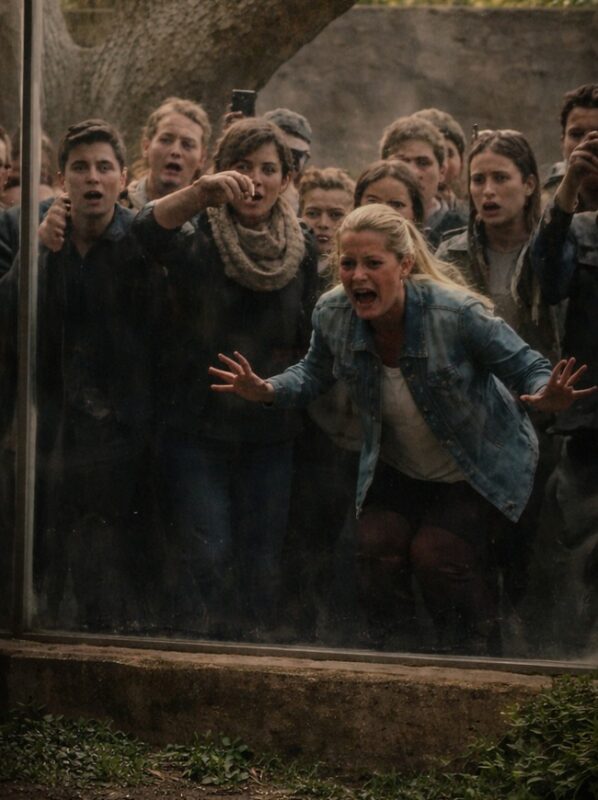
For most visitors, everything appeared routine. People stood behind reinforced glass barriers, speaking quietly, pointing out the animals to their children, and observing a large gorilla resting within the enclosure. The animal appeared calm and mostly indifferent to the surrounding activity, as is often the case in well-managed zoo environments.
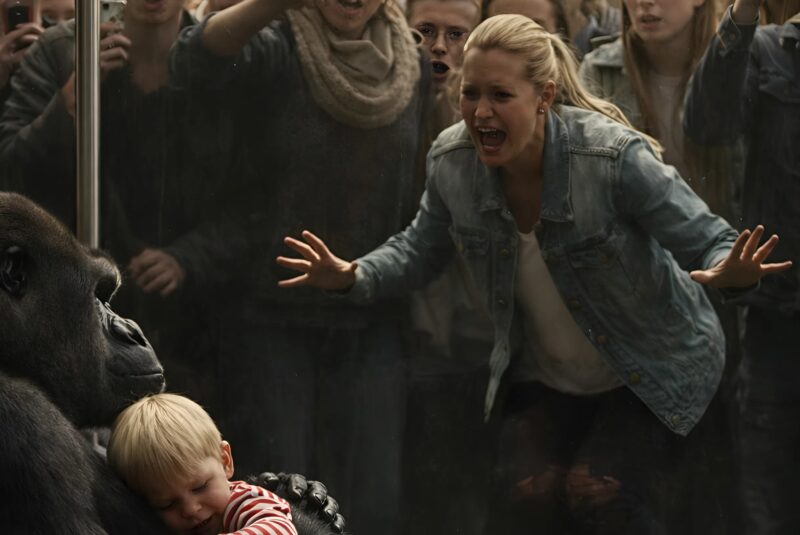
However, the situation changed suddenly and unexpectedly when a child became separated from their parent and entered the restricted area of the enclosure. Within moments, the calm atmosphere shifted into confusion and alarm. Visitors nearby began reacting immediately, realizing that a serious safety breach had occurred.
Several people called out for assistance, while others rushed to alert zoo staff. The child’s mother, visibly distressed, approached the barrier in a state of panic, calling for help and trying to communicate what had happened. Her emotional reaction reflected the fear any parent would experience in such a situation, especially knowing that their child was in a restricted animal habitat.
Inside the enclosure, the child was visibly frightened and began crying. The sound of distress drew attention from nearby animals, including a large gorilla that had previously been resting at a distance. At first, the animal slowly turned its attention toward the source of the disturbance, observing the situation with caution.
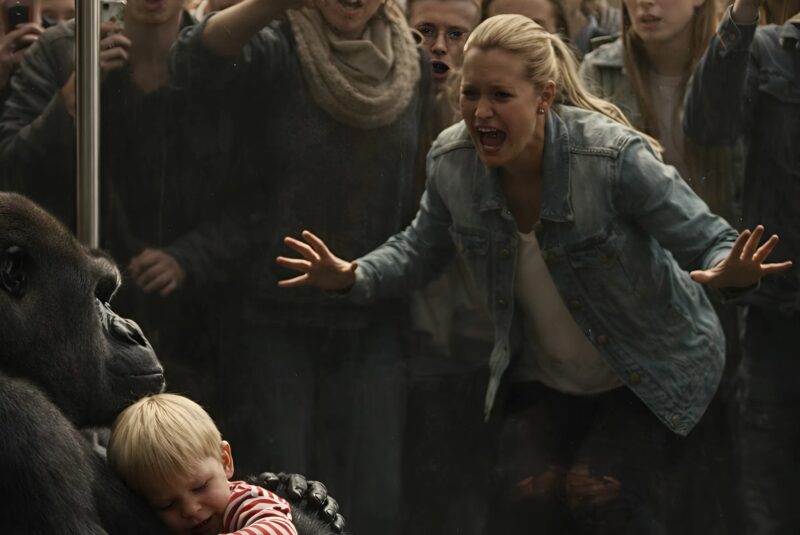
Zoo environments are designed to minimize direct interaction between humans and animals, particularly in enclosures housing large primates. However, unexpected incidents can still occur, and animal behavior in such moments is not always predictable. Visitors watched closely as the gorilla began to move toward the child, prompting increased concern among those witnessing the scene.
As the gorilla approached, tension among the crowd grew. Some visitors expressed fear that the situation could become dangerous, while others stood in silence, unsure of how to respond. Zoo staff were reportedly alerted and began preparing a response, following emergency procedures designed for incidents involving enclosure breaches.
Despite the rising anxiety outside the enclosure, what followed inside was not what many expected. Instead of displaying aggression, the gorilla’s behavior appeared cautious and controlled. It approached the child slowly, maintaining a non-threatening posture. Observers later noted that the animal seemed attentive and alert, but not hostile.
When the gorilla reached the child, it paused. After a brief moment of observation, it gently engaged with the child in a way that appeared calm and careful. Rather than causing harm, the animal’s actions suggested curiosity and restraint. It is important to note that interpretations of animal behavior can vary, and trained professionals are best equipped to assess such interactions accurately.
Witnesses described the moment as striking and emotionally intense. The child, still frightened and crying, remained on the ground while the gorilla stayed close. Instead of escalating the situation, the animal’s presence appeared to stabilize it temporarily, preventing any sudden movement or additional distress.
Zoo personnel and security teams continued their response, working to safely resolve the situation according to established safety protocols. In incidents involving large animals, trained staff prioritize both human safety and animal welfare, ensuring that intervention is carried out carefully and without unnecessary risk.
After a short period, the situation was brought under control by zoo staff. The child was safely retrieved from the enclosure without physical harm. Medical and safety checks were conducted immediately to ensure the child’s well-being. Authorities also reviewed how the child gained access to the restricted area in order to prevent similar incidents in the future.
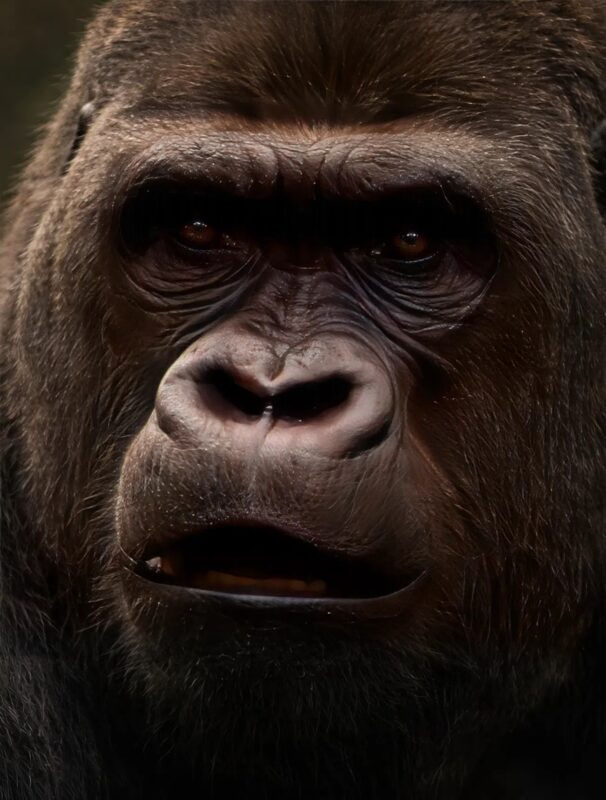
The gorilla remained calm throughout the resolution process and was not harmed or distressed during the intervention. Zoo officials later emphasized the importance of secure barriers, supervision of children, and adherence to safety guidelines when visiting wildlife facilities. Enclosures are specifically designed to prevent unauthorized entry, and even brief lapses in supervision can lead to serious consequences.
Following the incident, many visitors reflected on what they had witnessed. For some, it was a reminder of how quickly unexpected situations can develop in public spaces. For others, it highlighted the importance of maintaining strict safety measures in environments where humans and animals exist in close proximity.
Experts in animal behavior often stress that wild animals in captivity should not be assumed to react in predictable ways. While some primates may show calm or non-aggressive behavior in certain circumstances, each situation is unique and influenced by many factors, including stress, environment, and prior conditioning.
Zoo administrations typically conduct thorough reviews after any enclosure incident. These reviews assess physical security measures, visitor behavior, staff response times, and animal welfare considerations. The goal is always to strengthen safety systems and reduce the risk of future occurrences.
Although the event was resolved without injury, it left a strong impression on those who witnessed it. The emotional intensity of seeing a child in distress, combined with the presence of a large animal, created a moment that many described as unforgettable.
In the aftermath, discussions among visitors and online audiences focused not only on the incident itself, but also on broader themes such as safety awareness, parental supervision, and respect for wildlife environments. Public spaces that house animals carry inherent responsibilities for both staff and visitors, and adherence to rules plays a critical role in ensuring safe experiences for everyone involved.
Ultimately, the incident served as a reminder of the importance of vigilance and safety in environments where humans and animals share proximity. While no harm occurred, it highlighted how quickly situations can change and how essential it is for safety systems and trained personnel to respond effectively.
The zoo continued normal operations after the event, with additional attention given to safety protocols and visitor awareness. For many who were present that day, however, the memory of what happened remained a powerful reminder of both the unpredictability of life and the importance of careful supervision in public spaces.

