

A man with a suspicious appearance entered a small retail store in the middle of the day. It was around two in the afternoon, a time when most shops expect a steady flow of customers. The man wore a gray hood that partially covered his face, and his hands had visible tattoos. His presence immediately drew attention in an unsettling way, not because of anything he did, but because of the impression he gave at first glance.
He walked slowly through the entrance and moved between the shelves, as if searching for something simple like a bottle of water or a snack. The store itself was quiet, with only the faint hum of refrigerators and the distant noise of traffic outside the glass door. Everything seemed ordinary at first, yet something about the atmosphere felt unusual.
As he continued walking, the man noticed something that made him stop. Behind the counter, the cashier was asleep. Her head rested on her arms, and she appeared completely unaware of her surroundings. The cash register beside her was left open, and a small amount of money was visible near it. There was no one else inside the store at that moment.
For a few seconds, the man simply stood still and observed the situation. He looked around carefully, as if trying to confirm whether he was truly alone. The store was empty except for him and the sleeping employee. The situation created a moment of tension, where everything seemed unusually exposed and unguarded.

He slowly moved closer to the counter. His steps were cautious, and his expression remained serious. The open cash register and the unattended money made the situation appear risky, and it would have been easy for someone in his position to take advantage of it. The silence of the store made every movement feel more noticeable.
The man leaned slightly forward, checking whether the cashier was deeply asleep. He studied the scene carefully, as if evaluating what to do next. The environment was still, and there was no sign that anyone else would enter the store anytime soon. The opportunity to act without being seen was present, and for a moment, the situation seemed uncertain.
However, instead of acting immediately, the man paused again. He raised his head and looked around the store. His attention shifted toward the ceiling corners and walls, where security cameras were usually placed. After a few seconds, he noticed one of the cameras and focused his gaze directly toward it.
He stood still for a moment, looking into the camera lens. It was unclear what he was thinking, but the awareness that he was being recorded seemed to influence his next actions. The tension in the scene changed, as if the presence of surveillance had altered the course of events.
Instead of taking anything from the open register or the unattended area, the man turned away from it. He walked toward the shelves and selected a bottle of water along with a few other small items. His movements became calm and controlled. He did not rush or act in a suspicious manner. Instead, he behaved like an ordinary customer making a regular purchase.

He then approached the counter and carefully placed the items in front of him. The cashier remained asleep and did not react. The man reached into his pocket and took out money. He counted the exact amount needed to pay for the items, making sure the total was correct.
After counting the money, he placed it next to the cash register. He positioned it in a way that made it easy to notice once the cashier woke up. There was no attempt to take advantage of the open register or the sleeping employee. Instead, everything was left in proper order.
He stood there for a brief moment, looking at the sleeping cashier. His expression remained neutral, and there was no visible sign of anger or frustration. After a short pause, he moved behind the counter area and picked up a small sign that was used to indicate whether the store was open or closed.
Before leaving, he carefully adjusted the sign so that it read “closed.” This action ensured that no new customers would enter while the cashier was still asleep. It was a small but thoughtful step that showed attention to the situation rather than exploitation of it.
He then walked toward the exit. The store door closed quietly behind him, and the environment returned to silence. Inside, the cashier remained asleep, unaware of what had just happened.
Some time later, the store’s surveillance footage was reviewed. When the recorded events were observed, the sequence of actions surprised those who saw it. The man’s appearance had initially created a negative impression, suggesting possible harmful intentions. However, the footage showed a completely different outcome.
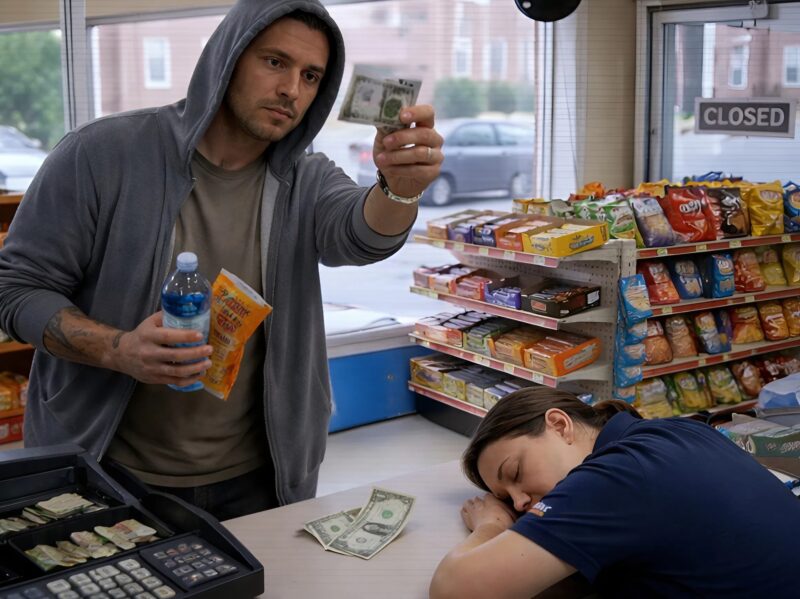
Instead of taking advantage of the situation, he had chosen to act responsibly. He purchased items, paid in full, left the money properly, and even ensured the store would not remain open in an unsafe condition. His behavior contradicted the initial assumptions that could have been made based on appearance alone.
The incident became an example of how first impressions can be misleading. A person’s outward appearance does not always reflect their actions or intentions. In this case, what seemed like a potentially negative situation turned into one that demonstrated unexpected consideration.
The footage served as a reminder that situations should be understood based on actions rather than assumptions. It also highlighted how easily judgment can be influenced by appearance, and how reality can sometimes be very different from expectations.
In the end, the story showed that appearances can be deceptive, and that careful observation often reveals a more accurate picture of what is really happening.

