How to Reduce the Appearance of a Bleach Stain on Clothing Safely
Understanding What a Bleach Stain Really Means
A bleach stain on clothing is one of the most noticeable types of fabric damage because it does not behave like a typical stain. Instead of sitting on the surface of the material, bleach alters the actual structure and color of the fibers themselves. This is why the affected area often appears lighter, faded, or uneven compared with the rest of the garment.
The change in color can vary depending on the fabric type and dye used in the clothing. Some garments may develop pale patches, while others may shift toward yellowish or orange tones. These variations are a direct result of the chemical reaction between bleach and textile dyes.
Because the original color of the fabric has already been altered, the goal is not to remove the stain in the traditional sense. Instead, the focus is on reducing visual contrast, softening the appearance of the damaged area, or finding ways to make the mark less noticeable in everyday wear.
In many situations, a bleach stain does not automatically mean the garment is unusable. With careful handling and realistic expectations, it is often possible to improve its appearance or repurpose the item in a practical way.
Why Caution Is Essential Before Any Treatment
Any attempt to improve a bleach-stained garment requires patience and controlled handling. Since the fabric has already been chemically affected, aggressive treatment can make the situation worse rather than better. Excess rubbing or repeated harsh applications may increase the visible damage or weaken the fibers.
When using any liquid-based approach, precision becomes important. The application should always be minimal and carefully controlled to avoid spreading the discoloration further. Overuse of any substance can result in uneven patches that are more noticeable than the original stain.
The purpose of gentle handling is to preserve as much of the remaining fabric quality as possible. A careful approach helps maintain the structure of the garment while attempting to reduce the appearance of the damaged area.
Understanding these limitations is essential before any method is applied. The fabric has already been altered, and the goal is improvement rather than full restoration.
Materials Used for a Controlled Application Method
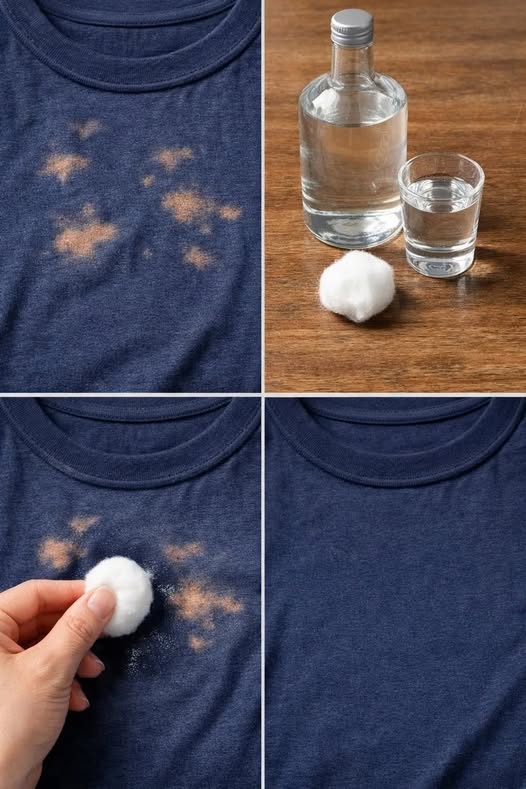
One approach sometimes used to soften the appearance of bleach stains involves the careful use of alcohol applied through a cotton-based tool. A makeup remover pad or a clean cotton ball is typically used to ensure precise and gentle application.
The amount of liquid used must remain very small. In a single application, only a few milliliters are needed to slightly dampen the cotton material. The pad should feel moist but never saturated to the point of dripping.
Controlling the moisture level is essential because excess liquid can spread the discoloration beyond its original boundaries. A damp but not wet pad allows for better precision and reduces the risk of unintended expansion of the damaged area.
Over the entire garment, the total amount used should remain limited to avoid overprocessing the fabric. This restraint helps preserve the integrity of the clothing while focusing only on the affected area.
Careful Application Process for the Affected Area
The application process begins by lightly dampening a cotton ball or makeup remover pad with a small amount of alcohol. The material should be evenly moist but not wet enough to release liquid when pressed.
Once prepared, the pad is gently dabbed onto the discolored area. The movement should be soft and controlled, avoiding any rubbing or scrubbing motion. Rubbing can push the discoloration further into surrounding fibers and increase the visible size of the mark.
The dabbing process is typically carried out for a short period, allowing the solution to interact with the affected fibers without overwhelming the fabric. The focus remains strictly on the stained area to maintain consistency in the rest of the garment.
Keeping the application localized is important, especially for darker fabrics where any change in tone may become more noticeable. Precision helps ensure that the surrounding material remains unaffected.
Timing, Rinsing, and Repetition Guidelines
After application, the treated area is usually left undisturbed for a short period. This brief pause allows the solution to act without remaining on the fabric for too long. Extended exposure is not beneficial and may increase the risk of uneven results.
Following this waiting period, the area should be rinsed thoroughly with clean water. This step is essential because it stops any further interaction between the solution and the fabric. A proper rinse also prepares the garment for washing.
The timing of each stage is important. Leaving the treatment on longer than necessary does not improve results and may create additional inconsistencies in color or texture.
If needed, the process can be repeated only once. A second application follows the same careful method, using a fresh cotton pad and the same limited amount of liquid. Repeating the process beyond this is not recommended, as it may further alter the fabric in unwanted ways.
After any treatment, the garment should be washed immediately according to its care instructions. This final wash removes any remaining residue and restores the fabric’s normal feel and appearance as much as possible.
Essential Safety Rule Regarding Bleach and Alcohol
One critical safety consideration is that bleach and alcohol must never come into contact with each other. Combining these substances can create hazardous reactions and should always be avoided under any circumstances.
Before applying any alcohol-based method, the fabric must be thoroughly rinsed. This ensures that no residual bleach remains in the fibers. Even small traces of bleach can react negatively when exposed to alcohol.
This precaution is especially important when the bleach exposure is recent. Proper rinsing ensures that the garment is safe for any further treatment and reduces the risk of chemical interaction.
Safety depends on separation. Bleach and alcohol must remain completely isolated throughout the entire process.
Fabrics That Are Not Suitable for This Method
Not all fabrics respond well to alcohol-based treatment. Delicate materials such as wool, silk, and viscose are particularly sensitive and may react negatively to moisture and handling.
These fabrics can lose their texture, shape, or structural integrity when exposed to liquids or repeated manipulation. Even a gentle application that works on durable fabrics may be too harsh for delicate textiles.
Because of this sensitivity, the method should be avoided entirely on such materials. Attempting to improve a bleach stain on these fabrics may result in further damage rather than improvement.
Fabric type plays a major role in determining the appropriate response. Respecting the limitations of the material helps prevent additional harm.
What the Method Can and Cannot Achieve
This approach does not remove a bleach stain in the traditional sense. Since bleach permanently alters fabric color, complete restoration is not possible through surface treatment.
What the method may achieve is a reduction in visual contrast between the damaged area and the surrounding fabric. This can make the stain less noticeable, especially when it is small or not heavily discolored.
On darker garments, the treated area may appear slightly blended or softened in tone. However, the final result depends on the fabric type and the extent of the original discoloration.
It is important to understand that the goal is improvement rather than perfection. Managing expectations helps ensure a more realistic outcome.
When the Stain Remains Visible
If the discoloration remains noticeable after careful treatment, other approaches can be considered. At this stage, the focus shifts from correction to adaptation.
One option is textile dyeing, which can help restore uniform color across plain garments. This approach works by recoloring the entire piece rather than targeting only the damaged area. It is especially effective for clothing with a single solid shade.
For smaller localized marks, textile markers or fabric felt can be used to adjust the tone of the affected area. This allows for more precise correction without altering the entire garment.
In cases where the stain is highly visible or difficult to blend, decorative solutions such as embroidery, patches, or fabric embellishments can transform the damaged area into part of the design. These techniques shift attention away from the stain and give the garment a renewed appearance.
Another creative option is tie-dye, which transforms the entire garment into a patterned design. This approach can effectively integrate the stain into a new visual style, especially when the damage is widespread or irregular.
Preventing Future Bleach Damage
The most effective way to avoid bleach stains is careful handling during cleaning tasks. Removing clothing before using bleach reduces the risk of accidental contact with fabric.
Even small splashes can cause permanent discoloration, particularly on dark or richly dyed materials. Proper dilution and controlled use are important when working with bleach in any context.
In many cases, gentler cleaning alternatives can reduce the need for bleach altogether. Softer solutions lower the risk of accidental damage while still maintaining cleanliness.
Prevention remains the most reliable method of protecting clothing, since bleach damage cannot be fully reversed once it occurs.
Conclusion
A bleach stain on clothing is often permanent, but its appearance can sometimes be reduced through careful and controlled methods. The alcohol-based approach, when used sparingly and safely, may soften visible contrast on certain fabrics.
When treatment alone is not enough, alternative solutions such as dyeing, fabric markers, embroidery, patches, or tie-dye can restore usability and appearance in different ways.
The key lies in careful handling, respect for fabric limitations, and realistic expectations. With the right approach, a bleach stain does not always mean the end of a garment, but rather an opportunity for repair, transformation, or creative reuse.
