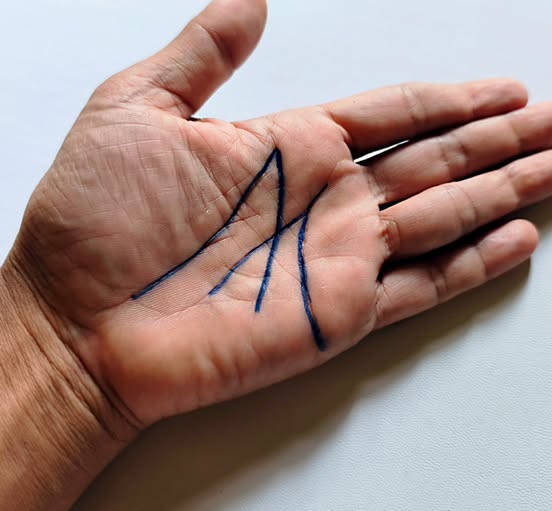
What It Means When the Lines on Your Palm Form the Letter M, According to Palmistry
The Long-Standing Interest in Palm Reading
For generations, people have examined the palms of their hands in search of deeper meaning. Across many cultures, palmistry has remained a popular tradition that claims to reveal insights into personality, character, strengths, and life experiences through the study of hand features.
Unlike fingerprints, which are entirely unique to each individual, palm lines also vary significantly from person to person. The distinctive patterns found on every hand have contributed to the belief that palms may contain clues about a person’s nature and potential.
Among the many markings discussed by palmistry practitioners, one of the most intriguing is the appearance of a shape resembling the letter M. This formation has attracted considerable attention due to the special qualities traditionally associated with it.
According to palmistry traditions, the M-shaped pattern is believed to be relatively uncommon and is often regarded as a sign of notable personal characteristics.
Understanding the Foundations of Palmistry
Palmistry is an ancient practice centered on the interpretation of hands and their features. Practitioners analyze palm lines, finger proportions, hand shapes, and various markings to develop insights about an individual’s personality and life path.
While palmistry continues to be practiced around the world, it is generally regarded as a traditional art rather than a scientific field. Its interpretations are based on symbolism, historical teachings, and longstanding beliefs that have been passed through generations.
Many followers of palmistry do not see palm lines as precise predictions of future events. Instead, they view them as indicators of tendencies, personality traits, emotional patterns, and personal strengths.
Within this tradition, certain line formations are believed to carry special significance, and the M-shaped pattern is among the most frequently discussed.
The Major Lines Examined in Palm Reading
To understand how the letter M is formed, it is important to first recognize the major lines that palm readers traditionally analyze. Each line is associated with a particular aspect of life, personality, or experience.
The Heart Line
The heart line is commonly linked to emotions, relationships, and emotional expression. Palm readers often study its depth, length, and overall shape to gain insight into how an individual approaches personal connections.
A clearly defined heart line is often interpreted as a sign of emotional awareness and meaningful interpersonal relationships. Practitioners may also use it to assess how openly a person communicates feelings and handles emotional situations.
The Head Line
The head line is associated with intellect, reasoning, and thought processes. According to traditional interpretations, it reflects how a person approaches learning, decision-making, and problem-solving.
Palm readers frequently analyze whether this line appears straight, curved, long, or short. These variations are believed to offer clues about analytical abilities, creativity, practicality, and imagination.
Within palmistry traditions, the head line is often considered an indicator of how individuals process information and respond to challenges throughout life.
The Life Line
The life line is among the most recognized features of the palm, though it is often misunderstood. Contrary to common misconceptions, traditional palmistry does not generally interpret this line as a measure of lifespan.
Instead, it is associated with vitality, resilience, energy, and significant life experiences. The line curves around the base of the thumb and is often examined for indications of adaptability and personal strength.
Many practitioners view the life line as a reflection of overall life force and the ability to navigate changing circumstances.
The Fate Line
The fate line is commonly linked to purpose, direction, and career development. Not everyone has a prominent fate line, and its appearance can vary considerably between individuals.
When clearly visible, it is often interpreted as a sign of a strong sense of purpose or a well-defined path in life. A lighter or less distinct line may suggest flexibility and openness to change.
Palm readers frequently associate the fate line with the interaction between personal ambitions and external influences.
The Sun Line
The sun line is often connected with creativity, achievement, and recognition. In traditional palmistry, a strong sun line may be interpreted as a sign of artistic talent, fulfillment, or appreciation from others.
Although not everyone possesses a prominent sun line, its presence is generally viewed positively. It is often linked to self-expression and accomplishments gained through personal effort.
How the Letter M Is Formed
According to palmistry, the letter M appears when several major palm lines intersect or align in a way that creates a shape resembling the capital letter.
This formation typically involves the heart line, head line, life line, and in some cases the fate line. When these lines come together in a specific pattern, practitioners identify the resulting shape as an M.
The marking has become one of the most recognized symbols in modern palm reading and is frequently discussed in palmistry circles.
Those who follow these traditions often believe that individuals with this pattern possess distinctive personal qualities that set them apart from others.
A Symbol Associated With Intuition
One of the most common interpretations attached to the M-shaped formation is strong intuition. Palm readers often suggest that individuals with this marking have a natural ability to trust their instincts and recognize situations accurately.
According to these beliefs, such individuals may arrive at sound conclusions without requiring extensive information. They are often described as highly perceptive and capable of sensing underlying dynamics in social situations.
Supporters of palmistry believe this intuitive awareness helps them navigate both personal and professional relationships more effectively.
This interpretation has contributed significantly to the popularity of the M marking within palm-reading traditions.
The Ability to Assess Character
Another widely discussed belief is that people with an M-shaped formation possess a strong ability to evaluate character. Palm readers frequently describe them as attentive observers who notice details that others may overlook.
Within traditional interpretations, they are often said to have a talent for recognizing honesty, sincerity, and hidden intentions. This belief has led to the reputation of M-marked individuals as skilled judges of human behavior.
Supporters of these interpretations suggest that such awareness can be beneficial in friendships, relationships, and professional environments.
The ability to identify inconsistencies and understand people quickly is considered one of the hallmark qualities associated with the symbol.
Leadership and Determination
Leadership is another characteristic frequently linked to the M formation. Palmistry traditions often suggest that individuals with this marking naturally inspire confidence and trust.
They are believed to possess strong communication abilities, determination, and a willingness to take responsibility when needed. These qualities are often associated with positions of influence and leadership.
According to traditional interpretations, their confidence allows them to guide others effectively while remaining focused on long-term goals.
This combination of insight and determination is often viewed as a key reason why the M formation attracts so much attention.
Balancing Logic and Emotion
Some palm readers interpret the M-shaped pattern as evidence of harmony between emotional understanding and rational thought. Because the formation involves lines associated with both the heart and the mind, it is often viewed as a symbol of balance.
This balance is believed to help individuals make thoughtful decisions while remaining sensitive to the needs and feelings of others. Rather than relying entirely on emotion or logic, they are thought to combine both perspectives effectively.
Supporters of palmistry often regard this ability as particularly valuable in relationships, leadership roles, and situations requiring careful judgment.
The combination of empathy and practical thinking is frequently highlighted as one of the strengths connected to the marking.
The Simian Line Connection
The M-shaped formation is sometimes discussed alongside what palm readers call the Simian line. Within palmistry traditions, this feature is often associated with focus, determination, and a highly concentrated approach to life.
Individuals believed to possess this characteristic are frequently described as persistent and deeply committed to achieving their goals. They are often viewed as people who continue pushing forward despite obstacles and setbacks.
While interpretations vary among practitioners, the Simian line is commonly linked to personal drive and a strong sense of purpose.
This connection has further contributed to the fascination surrounding unique palm markings and their perceived meanings.
The Importance of Dominant and Non-Dominant Hands
Many palm readers place considerable importance on which hand contains specific markings. Traditional interpretations often distinguish between the dominant and non-dominant hand when analyzing personality traits and life direction.
The non-dominant hand is frequently viewed as representing natural abilities, inherited qualities, and untapped potential. The dominant hand, on the other hand, is often interpreted as reflecting how those qualities are expressed through actions and life choices.
For right-handed individuals, this typically means greater attention is given to the left hand when examining innate traits. Some practitioners believe that the appearance of an M formation on the non-dominant hand carries special significance.
Others consider the presence of the marking on both hands particularly noteworthy within palmistry traditions.
Public Figures Frequently Mentioned in Palmistry Discussions
Several well-known public figures have been cited by palm readers as examples of individuals who reportedly possess an M-shaped formation. Among those commonly mentioned are :contentReference[oaicite:0]{index=0}, :contentReference[oaicite:1]{index=1}, and :contentReference[oaicite:2]{index=2}.
Supporters of palmistry often point to the accomplishments, influence, and public recognition of these individuals as examples of the qualities associated with the marking.
Their careers span different fields, including entertainment, public service, advocacy, and leadership, making them frequent subjects in discussions about palmistry interpretations.
References to well-known figures have helped increase public curiosity about the M formation and its traditional meanings.
Why the M Formation Remains Popular
The continued fascination with the M-shaped marking reflects a broader interest in self-discovery and personal meaning. Many people are naturally drawn to symbols that appear to offer insight into character, strengths, and potential.
Whether viewed as a cultural tradition, a form of entertainment, or a tool for personal reflection, palmistry continues to attract interest across generations and cultures.
The idea that a simple pattern on the hand could reveal something unique about an individual remains compelling to many people. As a result, the M formation has become one of the most recognized symbols in modern palm reading.
A Tradition Based on Interpretation Rather Than Science
It is important to note that palmistry is based on traditional beliefs and symbolic interpretations rather than scientific evidence. Its conclusions stem from cultural practices, historical teachings, and longstanding traditions rather than measurable scientific methods.
For some individuals, palmistry serves as a source of personal reflection and insight. Others simply enjoy the curiosity and conversation it generates.
Regardless of how it is viewed, the practice continues to hold a place in popular culture because of its ability to encourage people to think about personality, potential, and self-understanding.
Whether a person’s palm contains an M-shaped formation or not, the fascination surrounding these unique markings continues to inspire discussion and interest around the world.
