
Hidden Mistakes, Behind-the-Scenes Secrets, and Fascinating Facts About M*A*S*H
A Television Series That Became a Cultural Landmark
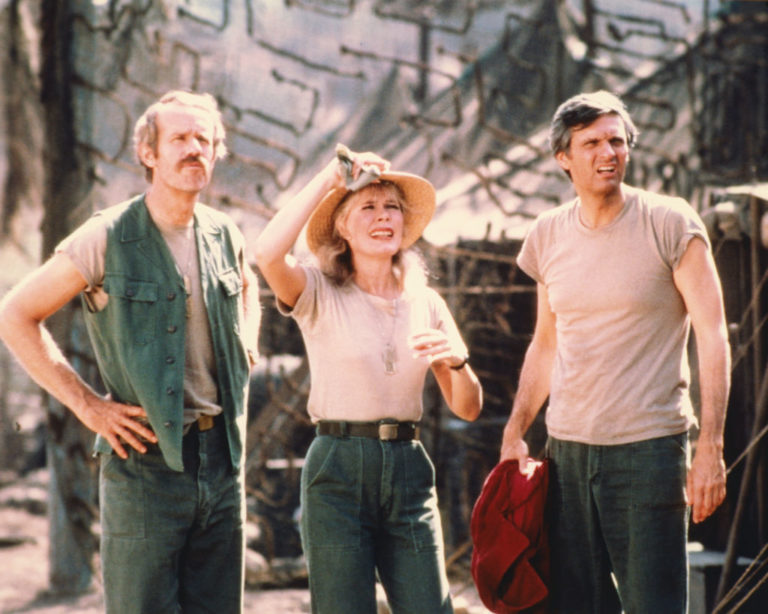
For many viewers, M*A*S*H was more than just another television program. It became one of the defining shows of its era, blending humor, drama, emotion, and satire in a way that connected with audiences across generations.
Set during the Korean War, the series followed the lives of doctors, nurses, and military staff stationed at a mobile army surgical hospital. Through surgery, conflict, friendship, and humor, the characters tried to survive the emotional and physical realities of war.
The show gained a reputation for balancing comedy with deeply emotional storytelling. While early seasons leaned heavily into humor and satire, later episodes explored more serious themes, creating a unique tone that helped distinguish the series from other television programs of its time.
Its influence became undeniable during the finale in 1983, which attracted an enormous audience and remains one of the most-watched prime-time television episodes ever broadcast in the United States.
Even decades later, fans continue revisiting the series and discovering details that make the experience even more enjoyable. Beyond the memorable characters and emotional moments, the show also contained continuity errors, production secrets, and little-known behind-the-scenes stories that many viewers never noticed.
William Christopher’s Health Scare During Season Five
One of the more serious behind-the-scenes moments involved William Christopher, the actor who portrayed Father Mulcahy. During the production of season five, Christopher became seriously ill with hepatitis.
The situation became so severe that producers reportedly considered removing the character entirely from the series. Father Mulcahy had become an important presence within the show, serving as both a moral center and a compassionate voice among the chaos of war.
Alan Alda stepped in to help preserve the character’s place in the series. Understanding Christopher’s personal circumstances, especially the importance of stable employment while caring for his son with autism, Alda wrote an episode that incorporated the illness directly into the storyline.
The episode, titled “Hepatitis,” allowed Christopher to remain involved in the production while also giving the series a realistic and emotionally grounded narrative connected to his condition.
The decision ultimately helped keep Father Mulcahy as part of the show and demonstrated the strong relationships that existed among members of the cast and creative team.
An Unsettling Coincidence Involving Larry Linville
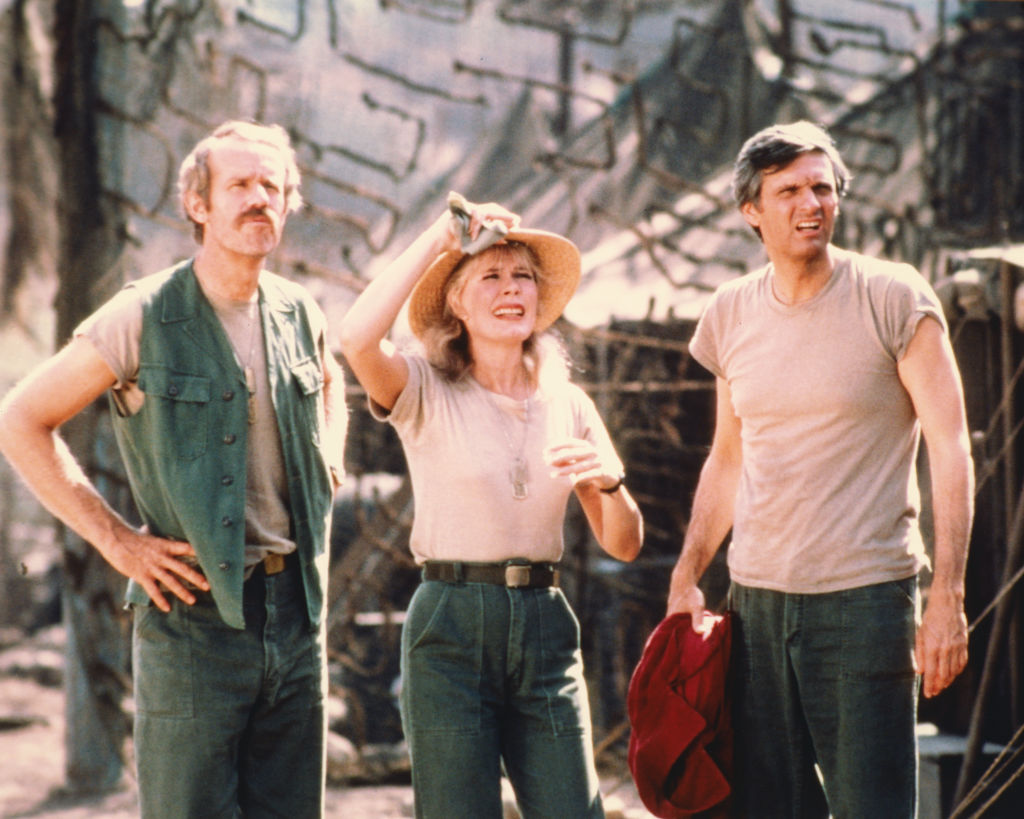
The “Hepatitis” episode also contained a moment that later became an eerie piece of M*A*S*H history. During a scene, Frank Burns casually mentions having “a pea-sized tumor under my sternum.”
Years later, actor Larry Linville, who played Frank Burns, passed away from complications related to a malignant tumor located beneath his sternum.
The coincidence has remained one of the more unsettling stories associated with the series, especially for longtime viewers familiar with the episode.
Although entirely accidental, the connection between the fictional line and the actor’s later illness became one of those strange moments where television and real life unexpectedly intersected.
Jamie Farr Was Never Supposed to Stay
Jamie Farr’s portrayal of Corporal Max Klinger became one of the show’s most recognizable and beloved performances. Known for wearing dresses and attempting increasingly elaborate schemes to secure a discharge from the army, Klinger brought a unique comedic energy to the series.
However, the role was never intended to become permanent.
Originally, Farr was scheduled to appear in only a single episode. Audiences responded so positively to the character that producers quickly realized they had something special.
Klinger eventually evolved into a regular part of the cast, becoming one of the defining characters of the show. His humor, loyalty, and emotional growth over the years helped transform him from a comic side character into an essential part of the series.
The Real Story Behind Klinger’s Dog Tags
Another detail connected to Jamie Farr added authenticity to his role on screen. The dog tags worn by Klinger during the series were not props created for television production.
They were Farr’s actual military dog tags from his own time in the service before he became an actor.
The tags reportedly contained his real personal information, including his name, serial number, and religious identification.
For many fans, this detail added another layer of realism to a show already praised for grounding its humor in genuine military experiences and emotional truth.
Military Timeline Mistakes Fans Eventually Noticed
Although M*A*S*H earned praise for its writing and performances, attentive viewers eventually noticed several historical inaccuracies connected to military equipment and timeline details.
One notable example appeared in the season two episode “For the Good of the Outfit.” In Henry Blake’s office, a Bell Huey UH-1 helicopter could be seen hanging as part of the decor.
The issue was that the Huey helicopter did not make its first flight until 1956, several years after the Korean War period in which M*A*S*H was set.
The mistake became one of the series’ better-known anachronisms, particularly among military history enthusiasts.
Other timeline inconsistencies also appeared throughout the show, especially in references to music and popular culture that did not align with the Korean War era.
Radar’s Rabies Episode Included Musical Anachronisms
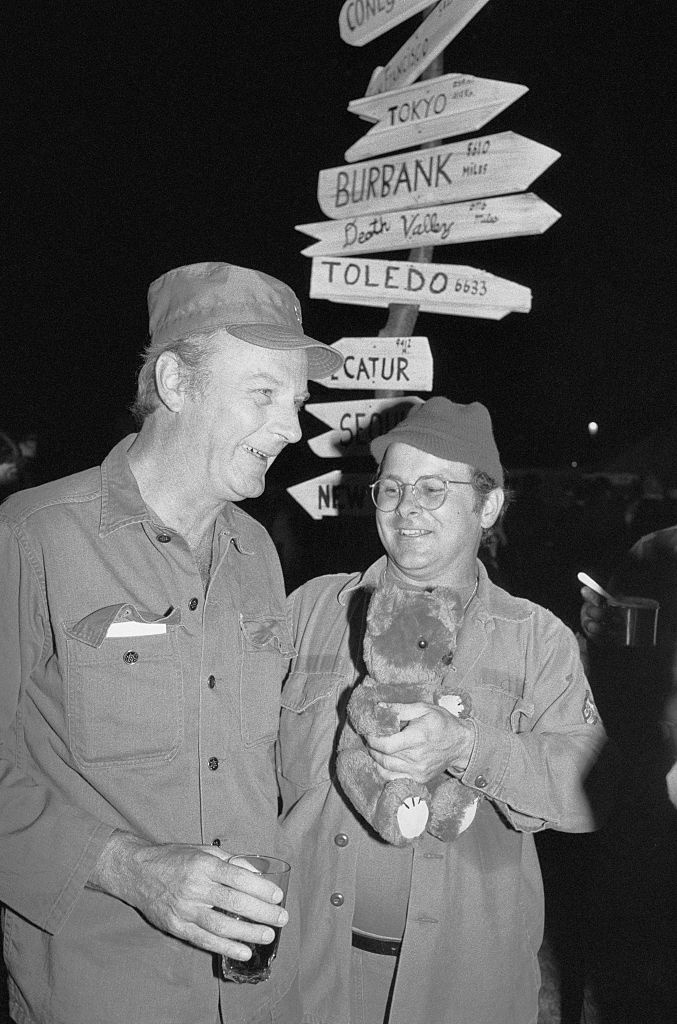
In the 1974 episode “Mad Dogs and Servicemen,” Radar becomes bedridden due to concerns that he may have rabies.
During the episode, Margaret Houlihan reads him a letter mentioning the songs “Diddy Wah Diddy” and “The Wayward Wind.”
The problem was that both songs were released in 1956, years after the Korean War had already ended.
For casual viewers, the references likely passed unnoticed. For dedicated fans paying attention to historical details, however, the songs became another example of the show occasionally drifting outside its intended timeline.
The Shocking Death of Lieutenant Colonel Blake
One of the most unforgettable moments in television history occurred when Lieutenant Colonel Henry Blake was unexpectedly killed off after leaving the series.
When actor McLean Stevenson departed the show in 1975, audiences expected his character to receive a peaceful farewell. Instead, the series revealed that Blake had died in a plane crash while returning home to the United States.
The decision stunned viewers. At the time, it was extremely unusual for a major television character to be removed in such a tragic and abrupt way.
Writers and producers defended the creative choice by explaining that it reflected the unpredictable and painful realities of war. The suddenness of Blake’s death mirrored the harsh truth that not every soldier or officer made it safely home.
The emotional impact of the scene became one of the defining moments of the series and helped establish M*A*S*H as a program willing to challenge audience expectations.
The Producers Changed Their Approach After Viewer Backlash
Following Blake’s death, the production team received an overwhelming amount of angry correspondence from viewers who were devastated by the loss of the character.
The reaction was so intense that writers and producers reportedly made an agreement regarding future departures from the series.
They decided that if additional cast members chose to leave the show, their characters would no longer receive such tragic endings.
The response from audiences had demonstrated just how emotionally connected viewers had become to the characters and stories unfolding within the series.
Gary Burghoff Hid a Physical Condition During Filming
Gary Burghoff, who portrayed Radar O’Reilly, became one of the most recognizable faces on M*A*S*H. His performance combined innocence, humor, and emotional sincerity, making Radar one of the show’s most beloved characters.
Many viewers, however, never noticed that Burghoff worked carefully to conceal a physical condition while filming.
He was born with Poland syndrome, a condition involving underdevelopment of chest muscles and sometimes affecting the fingers and hands.
Throughout the series, Burghoff often positioned objects strategically or kept his left hand partially hidden in scenes. Whether holding a clipboard or placing his hand in a pocket, he managed to keep attention focused on the character rather than the condition.
His effort demonstrated both professionalism and determination, especially considering how physically demanding television production schedules could be.
Why Gary Burghoff Left the Series
Burghoff appeared in every episode during the first three seasons of M*A*S*H. Over time, however, the demands of production reportedly placed increasing strain on his personal and family life.
As a result, his appearances were eventually reduced significantly before Radar ultimately departed the series during season seven.
The two-part farewell episode “Good-Bye Radar” explained the character’s discharge from military service and remains one of the show’s more emotional storylines.
After leaving the series, Burghoff reflected openly on the decision, emphasizing that personal priorities mattered more to him than fame or financial success.
“I didn’t leave M*A*S*H a wealthy man,” Burghoff said in an interview with People. “I could have renegotiated my contract, but money wasn’t the most important thing in my life…You either want to be rich and famous, or you want to be a daddy. You can’t do both.”
Hawkeye’s Ever-Changing Personal History
One of the stranger continuity issues throughout the series involved Hawkeye Pierce’s backstory.
In earlier episodes, Hawkeye was described as being from Vermont, with both parents alive, a sister, and additional family members mentioned occasionally in conversation.
As the series evolved, however, details changed dramatically. Hawkeye later became associated with Crabapple Cove, Maine, while his family history shifted to portray him as an only child whose mother died when he was young.
Rather than strictly preserving continuity, the writers appeared more interested in reshaping the character in ways that better supported emotional storytelling in later seasons.
Alan Alda reportedly appreciated the opportunity for the character to grow and evolve, even if it meant altering previously established details.

Alan Alda’s Historic Achievements
Alan Alda’s influence on M*A*S*H extended far beyond acting. Throughout the series, he also contributed extensively as a writer and director.
His work earned him a unique place in television history as the first individual to win Emmy Awards for acting, writing, and directing on the same series.
Alda’s writing often blended humor with emotional depth, helping define the tone that separated M*A*S*H from many other television comedies of its era.
One memorable example occurred during the episode “Comrades in Arms,” when Hawkeye jokingly says, “Don’t blame me, I didn’t write this stuff.”
The humor of the moment came from the fact that Alda himself had actually written the episode.
The Evolution of Hawkeye and Margaret Houlihan
The relationship between Hawkeye Pierce and Margaret Houlihan became one of the most important emotional developments in the series.
During earlier seasons, their interactions focused primarily on conflict, sarcasm, and professional rivalry. Beneath that tension, however, there was also mutual respect as skilled medical professionals working under impossible circumstances.
Over time, the relationship evolved into something more emotionally layered and mature.
Loretta Swit later described their bond as one built on deep affection and understanding.
“They became loving friends. There are different kinds of love, and there was a very strong love between them.”
Their relationship reached a major turning point during the two-part episode “Comrades in Arms,” where the characters found themselves isolated together during a dangerous bombing situation.
The emotional vulnerability of the episode eventually led to a romantic encounter between them.
According to Swit, the storyline had actually been written several seasons earlier but was delayed because producers worried audiences might not accept it.
The episode ultimately became one of the defining dramatic moments of the later years of M*A*S*H.
Loretta Swit’s Long Nails and the “Hot Lips” Nickname
Fans revisiting later episodes of the series often notice Margaret Houlihan’s unusually long fingernails.
In certain scenes, particularly in “Comrades in Arms,” the nails appear far longer than would realistically be practical for a head nurse working in a wartime surgical environment.
While the detail may seem small, it became another frequently discussed realism issue among longtime viewers.
Swit also expressed dissatisfaction with the nickname “Hot Lips,” which followed her character throughout much of the series.
She believed the nickname reduced Margaret to a stereotype rather than recognizing her as a capable military officer and medical professional.
“I get that nicknames come from affection, but to me, it felt like an insult. She wasn’t just a body part; she was a major in the U.S. Army, and she deserved respect.”
Over time, Swit reportedly continued encouraging writers to develop Margaret into a more complete and respected character, contributing to the deeper dramatic portrayal seen in later seasons.
The Famous Goodbye Kiss in the Finale
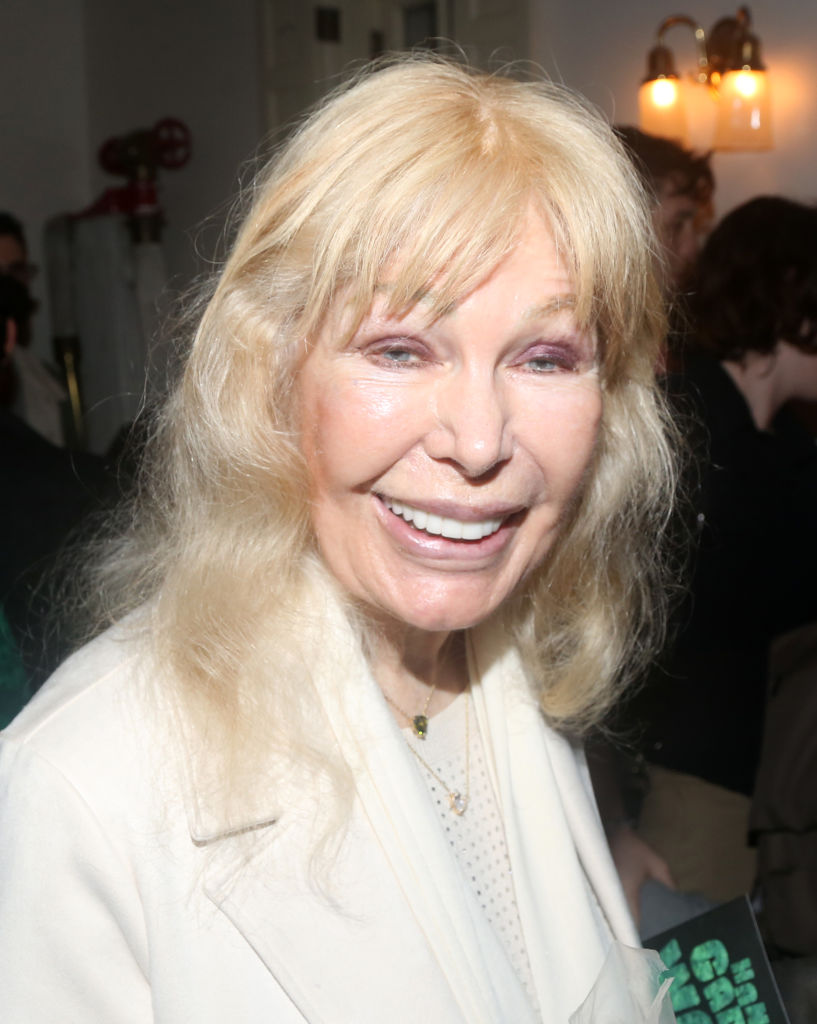
The final episode of M*A*S*H brought emotional closure to nearly every major character while also delivering one particularly memorable scene between Hawkeye and Margaret.
As Hawkeye prepared to say goodbye, the two shared an unusually long and awkward farewell kiss that left the surrounding characters visibly uncomfortable.
Swit later joked about the moment by calling it “the longest kiss in television history.”
The finale also marked a special milestone for Alda and Swit. They were the only two principal cast members to appear in both the premiere episode and the series finale.
Their connection, both on screen and behind the scenes, became one of the defining relationships that helped carry the series through its entire run.
Even years later, M*A*S*H continues to attract loyal viewers who appreciate not only its humor and emotional storytelling but also the fascinating production stories, hidden mistakes, and unforgettable moments that shaped television history.

