
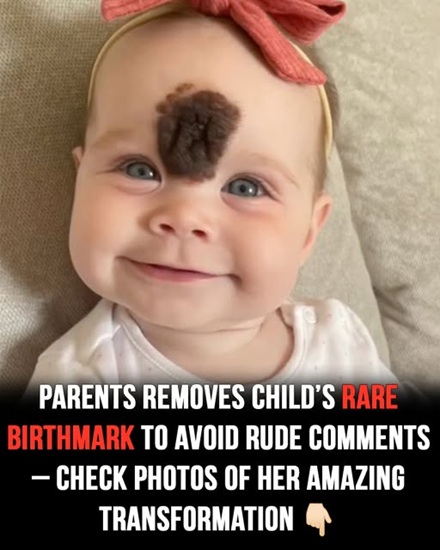
Baby Born With Rare Forehead Birthmark Inspires Worldwide Discussion About Parenting, Confidence, and Compassion
A Joyful Birth Followed by Unexpected Concern
When Vienna Brookshaw was born in April 2021 in the United Kingdom, her parents experienced the same excitement and emotion that many families feel while welcoming a new child into the world.
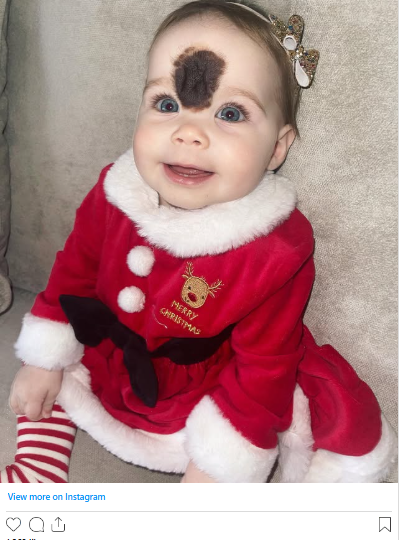
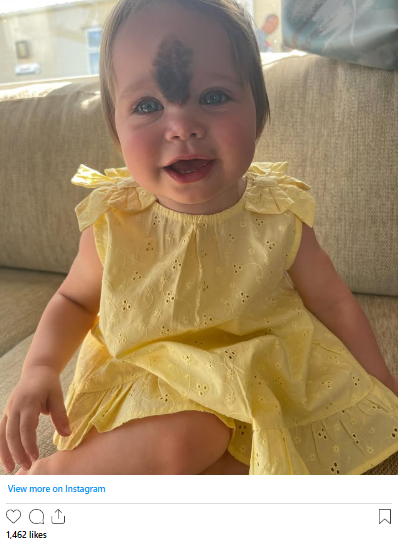
After months of anticipation, finally meeting their daughter brought overwhelming happiness and relief. However, shortly after her birth, they noticed a dark mark positioned in the center of her forehead between her eyebrows.
The birthmark immediately stood out because of its location on her face. Although doctors reassured the family that it did not pose an immediate danger to Vienna’s physical health, her parents quickly began thinking about how the visible mark might affect her emotionally as she grew older.
The birthmark was later identified as congenital melanocytic nevus, commonly known as CMN, a rare skin condition that develops before birth.
Understanding Congenital Melanocytic Nevus
CMN develops when pigment-producing skin cells grow together in concentrated areas, creating darker patches on the skin.
The appearance of the condition can vary greatly from person to person. Some individuals have small marks that are barely noticeable, while others develop much larger areas of pigmentation.
Medical specialists describe the condition as relatively uncommon, affecting approximately one in every 20,000 newborn babies.
In Vienna’s case, the placement of the birthmark in the middle of her forehead made it highly visible during everyday interactions.
As her parents adjusted to life with their newborn daughter, they quickly realized how much public attention the mark attracted.
Public Reactions Began Affecting the Family
While spending time outside with Vienna, the family often noticed strangers staring at their daughter.
Some people asked questions about the mark on her forehead, while others reacted with visible curiosity.
Although many of those reactions were not intentionally cruel, the repeated attention became emotionally difficult for Vienna’s parents.
Her mother, Celine Casey, later spoke openly about how painful those moments sometimes felt, especially while adjusting to motherhood and trying to protect her child from judgment.
The experiences strengthened concerns about how Vienna might eventually feel once she became old enough to understand comments about her appearance.
The family worried that public attention could one day affect her confidence, emotional well-being, and social experiences during childhood.
A Mother’s Love and Fear for the Future
Celine repeatedly emphasized that her daughter’s appearance never changed the love their family felt for her.
She described Vienna as beautiful exactly as she was and explained that the family adored her completely.
At the same time, like many parents, she feared the possibility of bullying or teasing once Vienna reached school age.
Children who appear visibly different from their peers sometimes face difficult social experiences, and Vienna’s parents worried about the emotional consequences that could follow.
Those concerns became one of the main reasons the family began exploring medical treatment options, despite the fact that the birthmark itself was medically harmless.
For them, the issue was not about superficial beauty standards but about trying to reduce the possibility of emotional pain later in their daughter’s life.
The Difficulty of Pursuing Treatment
Doctors reportedly informed the family that removing the birthmark would most likely be classified as a cosmetic procedure rather than medically necessary surgery.
Because of that classification, the National Health Service in the United Kingdom was reportedly unable to fund the operation.
The decision placed Vienna’s parents in a painful position emotionally and financially.
Although they understood the medical reasoning, they still felt deeply concerned about the future social impact the birthmark could have on their daughter.
Private medical treatment came with extremely high costs, especially during a period when healthcare systems were still dealing with the wider effects of the COVID-19 pandemic.
Like many families, they were already managing financial pressures connected to everyday responsibilities and medical expenses.
Consulting Specialists and Exploring Options
Determined to learn more, Vienna’s parents began consulting surgeons and specialists experienced in treating congenital melanocytic nevus.
Medical professionals explained that removing the birthmark safely would likely require several procedures over an extended period of time.
Because the mark was located on a delicate area of the face, doctors needed to proceed carefully to minimize scarring and protect surrounding skin tissue.
The family quickly realized that the process would be long, emotionally demanding, and medically complex.
Despite those challenges, they remained committed to exploring every available option for their daughter.
The decision involved balancing emotional concerns, medical advice, and financial realities all at once.
The Family Turns to Crowdfunding
As treatment costs became clearer, Vienna’s parents decided to seek public support through crowdfunding efforts.
After the family shared their story online, it quickly attracted attention from people around the world.
Many individuals sympathized with the difficult decisions Vienna’s parents were facing and donated money to help cover the costs of surgeries and medical appointments.
Supporters also shared messages of encouragement and compassion.
Parents, healthcare workers, and people living with visible differences themselves expressed understanding for the family’s emotional situation.
For many supporters, the story represented something much larger than appearance alone. It reflected the powerful instinct parents often feel to protect their children from suffering whenever possible.
A Broader Public Debate Emerges
As Vienna’s story spread online, it also sparked broader conversations about parenting, appearance, confidence, and visible differences.
Some people strongly supported the family’s decision to remove the birthmark, believing the surgery could help Vienna avoid future bullying or emotional struggles.
Others argued that visible differences should be accepted rather than surgically altered, particularly at such a young age.
The discussion touched on larger social issues involving beauty standards, childhood self-esteem, and public reactions toward people who look different.
Despite the differing opinions, many observers agreed that Vienna’s parents were motivated by love and concern for their daughter’s happiness.
Celine explained that the family never considered Vienna flawed or imperfect. Instead, they were focused on reducing the risk of emotional pain caused by negative reactions from others.
The Emotional Complexity of Parenting Decisions
Throughout the public discussion, Celine spoke honestly about the emotional difficulty of making decisions for a young child.
She acknowledged that every parent approaches these situations differently and that there is rarely a perfect answer.
Many parents understood the enormous emotional responsibility involved in making choices that could affect a child’s future confidence and well-being.
The situation required Vienna’s parents to consider medical guidance, emotional concerns, financial limitations, and public scrutiny simultaneously.
Observers noted that the story reflected how complicated parenting decisions can become when children are too young to make those choices independently.
Even among people who disagreed about surgery, many respected the sincerity of the family’s intentions.
Vienna Undergoes Multiple Procedures
Over time, Vienna underwent several medical procedures designed to gradually remove the birthmark from her forehead.
The surgeries reportedly progressed successfully, although the recovery process required patience and careful monitoring.
Because facial skin is extremely sensitive, doctors closely supervised the healing process to reduce complications and achieve the best possible outcome.
Vienna’s parents regularly shared updates about her progress and thanked supporters who had followed the family’s journey from the beginning.
Each stage of treatment represented both physical healing and emotional relief for the family.
The long process demonstrated the level of commitment required when pursuing delicate facial procedures in young children.
A Positive Recovery and a Growing Child
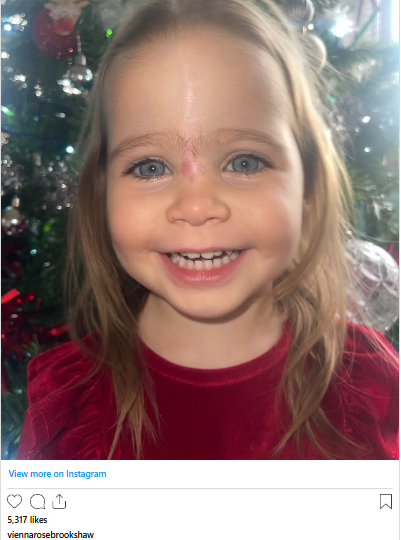
Eventually, much of the birthmark was successfully removed, leaving behind only a smaller scar that became far less noticeable than the original mark.
Updates shared by her mother described Vienna as healthy, energetic, and thriving.
Photographs posted online showed a smiling child surrounded by love and support from her family.
For many people who followed the story, those updates symbolized resilience and hope rather than simply cosmetic change.
The family expressed deep gratitude toward the medical professionals and supporters who helped them throughout the difficult journey.
The positive outcome brought relief after months of uncertainty, emotional strain, and medical procedures.
The Story Raises Awareness About CMN
Before Vienna’s story gained widespread attention online, many people had never heard of congenital melanocytic nevus.
The public discussion surrounding her experience helped increase awareness about the condition and the emotional challenges some families face when raising children with visible differences.
Medical experts explain that most cases of CMN are harmless, although some larger forms may require monitoring depending on their size and placement.
The conversations also encouraged broader discussions about bullying, self-esteem, empathy, and how society reacts to people who appear different.
Many individuals living with birthmarks or skin conditions began sharing their own experiences after hearing Vienna’s story.
Some recalled painful childhood memories involving teasing and isolation, while others described eventually learning to embrace their appearance with confidence.
Different Experiences and Different Choices
The public response highlighted that experiences involving visible differences vary greatly from person to person.
Some individuals support medical treatment whenever possible, especially if it may reduce emotional hardship later in life.
Others strongly advocate for self-acceptance and representation without surgical intervention.
The discussions demonstrated that there is no single correct response to conditions like CMN.
Each family and individual must navigate these decisions based on personal experiences, emotional priorities, and hopes for the future.
Vienna’s story became an example of how deeply personal those choices can become.
A Story About More Than Appearance
As public interest continued growing, many people came to view Vienna’s story as something much larger than cosmetic surgery or physical appearance.
The story evolved into a broader reflection on parenting, empathy, protection, and the emotional weight carried by families facing public judgment.
It reminded people that visible conditions affect not only individuals but entire families trying to navigate social reactions and emotional concerns.
Many supporters praised the family’s openness and willingness to speak honestly about the challenges they experienced.
The conversations inspired by Vienna’s journey encouraged people to think more carefully about kindness, compassion, and sensitivity toward children and adults who look different.
The story also highlighted how quickly strangers sometimes form opinions without fully understanding the emotional realities behind family decisions.
Vienna Continues Growing Surrounded by Love
Today, Vienna Brookshaw is described as a happy child continuing to grow in a loving and supportive environment.
Her mother occasionally shares updates about her recovery and expresses appreciation for the people who supported the family during difficult moments.
Although the surgeries significantly reduced the visibility of the birthmark, many believe the most lasting impact of the story came from the important conversations it inspired.
Those discussions encouraged empathy from multiple perspectives and reminded many people of the emotional complexity behind parenting choices.
For Vienna’s family, the journey involved uncertainty, difficult decisions, and emotional strain, but it also brought overwhelming support from strangers around the world.
Ultimately, Vienna’s story became a powerful example of parental devotion and the lengths many families are willing to go in order to support and protect the children they love most.

