
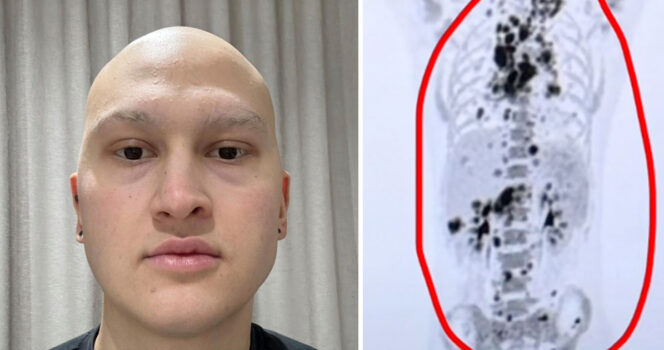
A 21-year-old Australian man’s experience with a serious illness has highlighted how easily early warning signs can be misunderstood, especially when symptoms resemble common, less severe conditions. What initially seemed like a minor chest infection eventually led to a diagnosis of stage 4 Hodgkin’s lymphoma.
Early Signs Overlooked
Jay Shew, like many young adults, did not initially suspect that anything serious was wrong. In August 2023, he began experiencing mild symptoms but assumed they were temporary and not worth immediate medical attention.
Reflecting on that time, he explained that he continued living his daily life without concern. He felt generally normal and did not associate his condition with any major health issue.
He later acknowledged that this mindset played a role in delaying further investigation. Like many people his age, he did not prioritize getting checked for symptoms that seemed minor at first.
Unexpected Blood Test Results
The first indication that something might be wrong came from a routine blood test. Despite feeling fine, the results showed elevated calcium levels.
At the time, he did not fully understand the significance of this finding. It was only later that he learned high calcium levels can sometimes indicate underlying health problems, including certain types of cancer or bone-related conditions.
Because he had no obvious symptoms at that stage, the abnormal result did not immediately lead to a deeper sense of urgency.
Physical Changes Become Noticeable
Over the following weeks, his condition began to change. He experienced rapid and significant weight loss, dropping to around 154 pounds despite being 6-foot-2.
People around him began noticing the changes before he did. Friends and family commented on how thin and pale he looked, with some describing him as unusually weak or unwell.
Despite these observations, he struggled to recognize the severity of the changes himself. When he looked in the mirror, he did not see the same level of physical decline others were pointing out.
This disconnect made it easier to continue dismissing concerns, even as the signs became more visible.
Symptoms Intensify
As time passed, the symptoms became more severe and harder to ignore. He began experiencing intense lower back pain, particularly at night, which disrupted his sleep.
He also developed night sweats so severe that they left his clothing soaked. At one point, he initially believed something else had happened, only to realize the extent of the sweating.
Fatigue became another major issue. Everyday activities left him exhausted, and he often needed to rest shortly after waking up.
Additional symptoms included dry skin, persistent itching, and discomfort in his chest. While each symptom could be explained individually, together they formed a pattern consistent with a more serious condition.
At the time, however, he did not recognize that these were common symptoms associated with Hodgkin’s lymphoma.
Misinterpreting the Illness
As chest discomfort and respiratory symptoms developed, he believed he was dealing with a chest infection or bronchitis. This seemed like a reasonable explanation based on his symptoms.
He received antibiotics, and for a short period, there appeared to be some improvement. However, the relief was temporary.
Soon after completing treatment, his symptoms returned and became more intense. This marked a turning point, as it became clear that the initial diagnosis had not addressed the underlying problem.
Diagnosis Through Imaging
With his condition worsening, doctors ordered a CT scan to investigate further. The scan revealed the true cause of his symptoms: stage 4 Hodgkin’s lymphoma.
This diagnosis provided clarity but also confirmed that the disease had progressed significantly. Hodgkin’s lymphoma is a cancer that affects the lymphatic system, which is essential for immune function.
The disease develops when certain white blood cells grow uncontrollably and can spread to other parts of the body if not treated.
Because its symptoms can resemble those of common illnesses—such as infections or fatigue—it is sometimes diagnosed later than ideal, particularly in younger individuals who may not expect serious illness.
Treatment and Progress
Following the diagnosis, he began treatment tailored to the advanced stage of the disease. The process required both physical endurance and emotional resilience as he adjusted to the realities of cancer care.
After approximately three months, he shared that he had reached remission. This marked a significant milestone in his recovery and offered a positive outlook after a difficult period.
@jayshew♬ original sound – jayshew
While remission does not always mean the journey is over, it represents a major step forward and reflects the effectiveness of treatment in his case.
Raising Awareness
Since his diagnosis, he has used his experience to raise awareness about the importance of early detection. He emphasizes that symptoms should not be ignored, even if they seem minor or easily explained.
His message is simple: seeking medical advice early can make a significant difference. Even a basic test, such as a blood test, can reveal important clues about underlying health issues.
He also highlighted the broader impact of illness, noting that serious conditions affect not only the individual but also family and loved ones.
Looking Ahead
Although he has reached remission, he continues to reflect on the experience and what he has learned. While he mentioned certain lifestyle factors, he also acknowledged that not all causes of cancer can be clearly identified.
His focus now is on recovery, maintaining his health, and encouraging others to pay attention to their bodies.
His story serves as a reminder that serious illnesses can sometimes present with subtle or misleading symptoms. Recognizing patterns, seeking timely medical care, and following up on unusual test results can play a crucial role in early diagnosis.
Ultimately, his experience underscores the importance of awareness, not only for individuals but for communities as a whole.

