
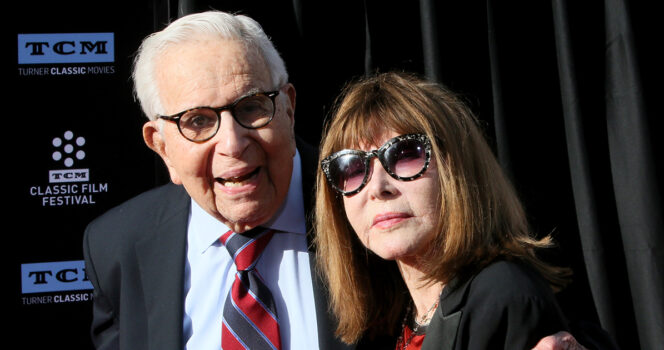
Lee Grant’s Hollywood Rise, Sudden Career Collapse, and Remarkable Comeback Story
A Promising Star in Early 1950s Hollywood
During the early years of 1950s Hollywood, the film industry was filled with glamour, ambition, and strict studio control. Among the many emerging talents of that era, one actress quickly stood out for her striking beauty, expressive performances, and undeniable screen presence.
Lee Grant was widely regarded as one of the most promising actresses of her generation. With classic features and a refined elegance on screen, she captured the attention of producers and audiences alike. Her early career was marked by rapid recognition and strong expectations that she would become one of Hollywood’s leading stars.
Studios quickly began placing her in film roles that highlighted both her charm and her emotional range. Her performances were praised for their natural depth, and her growing popularity suggested a long and successful career ahead in the film industry.
At the height of her early success, Grant seemed positioned for a breakthrough that would secure her place among Hollywood’s elite. However, the trajectory of her career soon shifted in a dramatic and unexpected direction.
Breakthrough Performance and Critical Recognition
Lee Grant made a powerful impression with her debut in the 1951 film version of Detective Story, where she starred alongside Kirk Douglas. Her performance drew significant attention and earned her an Academy Award nomination for Best Supporting Actress.
In addition to this recognition, she also received the Best Actress Award at the Cannes Film Festival, further elevating her status in the international film community. These achievements positioned her as one of the most exciting rising stars in Hollywood at the time.
Audiences responded strongly to her work, praising her emotional depth and screen presence. Critics also highlighted her ability to bring complexity and authenticity to her roles, marking her as a performer with exceptional potential.
At this stage in her career, everything appeared to be moving forward in a positive direction. Her reputation continued to grow, and her future in the industry seemed secure. However, the stability of her career would soon be disrupted in a way that few anticipated.

A Sudden and Unexpected Career Collapse
Despite her rising success, Lee Grant’s career experienced a sudden and dramatic shift. She was unexpectedly removed from opportunities within one of Hollywood’s most influential studio systems. The decision was abrupt and left many within the industry uncertain about the reasons behind it.
Speculation quickly spread regarding the cause of her professional decline. Some believed she may have had disagreements with powerful studio executives, while others suggested that her personal life or public image may have conflicted with the strict expectations placed on film stars during that era.
There were also interpretations that her situation was connected to broader political tensions affecting the entertainment industry at the time. The lack of clear explanation contributed to confusion and ongoing discussion about what had truly led to her exclusion from major studio work.
What remained evident was that a rising Hollywood star had suddenly found herself without the opportunities that had once seemed guaranteed. The shift marked a turning point that would significantly alter the course of her professional life.
Hollywood’s Studio System and Creative Control
During the Golden Age of Hollywood, major studios held significant influence over actors’ careers. Contracts, public images, and casting decisions were often tightly controlled, leaving performers with limited autonomy over their professional paths.
Actors who failed to align with studio expectations risked losing access to roles, being removed from contracts, or facing unofficial exclusion from future projects. This system created an environment where career stability depended heavily on maintaining studio approval.
Lee Grant became one of many performers whose careers were affected by this structure. Despite her talent and early achievements, she found herself struggling to secure consistent work after her initial rise to prominence.
The shift in her career reflected the broader challenges faced by actors working within a system where artistic success did not always guarantee long-term security. Many promising careers were altered or interrupted by the strict control exerted within the industry.
HUAC Speech and Its Impact on Her Career
At a memorial service in 1951 for actor J. Edward Bromberg, Lee Grant delivered a speech that would later become a significant moment in her professional life. In her remarks, she expressed strong sentiments regarding the circumstances surrounding his death and referenced the pressures associated with the House Un-American Activities Committee.
Following this event, her career trajectory changed dramatically over the next several years. Work opportunities became increasingly limited, and her presence in major studio productions diminished significantly.
For a period of approximately 12 years, she struggled to regain the momentum she had once achieved. The frequency of roles decreased, and she faced considerable difficulty re-establishing herself within the mainstream film industry.
This period marked one of the most challenging phases of her professional life, as she transitioned from rising star to an actress facing prolonged career uncertainty.
Struggles and Reduced Opportunities
Throughout the 1950s and early 1960s, Lee Grant’s presence in Hollywood diminished. While she remained active in the industry, the level of visibility and opportunity she had once experienced was significantly reduced.
During this time, she appeared in fewer major productions, and her name gradually became less prominent in mainstream film discussions. Despite her earlier success, she encountered sustained difficulty in securing consistent and high-profile roles.
The gap between her early achievements and later opportunities created a noticeable shift in her career trajectory. The momentum that had once defined her rise in Hollywood was replaced by a period of limited visibility and professional challenges.
Even so, her earlier work continued to be remembered, particularly her breakthrough performance in Detective Story, which remained a defining moment in her career.
Return to Film and Career Revival
After years of reduced opportunities, Lee Grant eventually returned to more prominent roles in the entertainment industry. Her later career included appearances in a range of notable productions that helped re-establish her presence in Hollywood.
She appeared in Valley of the Dolls, Columbo, Shampoo, and Mulholland Drive, demonstrating her continued versatility as an actress across different genres and formats.
Her performance in Shampoo marked a particularly significant milestone, as she went on to receive an American Academy Award for Best Supporting Actress. This recognition symbolized a major professional comeback after years of limited opportunities.
Her return to visibility in the industry highlighted her resilience and enduring talent, showing that her earlier setbacks did not define the entirety of her career.
Legacy and Lasting Impact on Hollywood History
Lee Grant’s career remains a notable example of both early Hollywood success and the unpredictable nature of the entertainment industry. Her journey reflects the rapid rise of a talented actress, followed by an unexpected period of professional decline, and ultimately a successful return to film.
Her early performances continue to be recognized for their strength and emotional depth, particularly her work in Detective Story, which established her as a major talent in the early 1950s.
Her later achievements demonstrated her ability to remain relevant in an evolving industry, even after extended periods away from the spotlight. Her work in later films and television productions contributed to a renewed appreciation of her skills as an actress.
Today, her story is remembered as one of Hollywood’s most striking examples of career fluctuation during a period when studio influence and industry politics played a major role in shaping artistic paths. Despite the challenges she faced, Lee Grant ultimately secured a lasting place in film history through both her early success and her later achievements.

