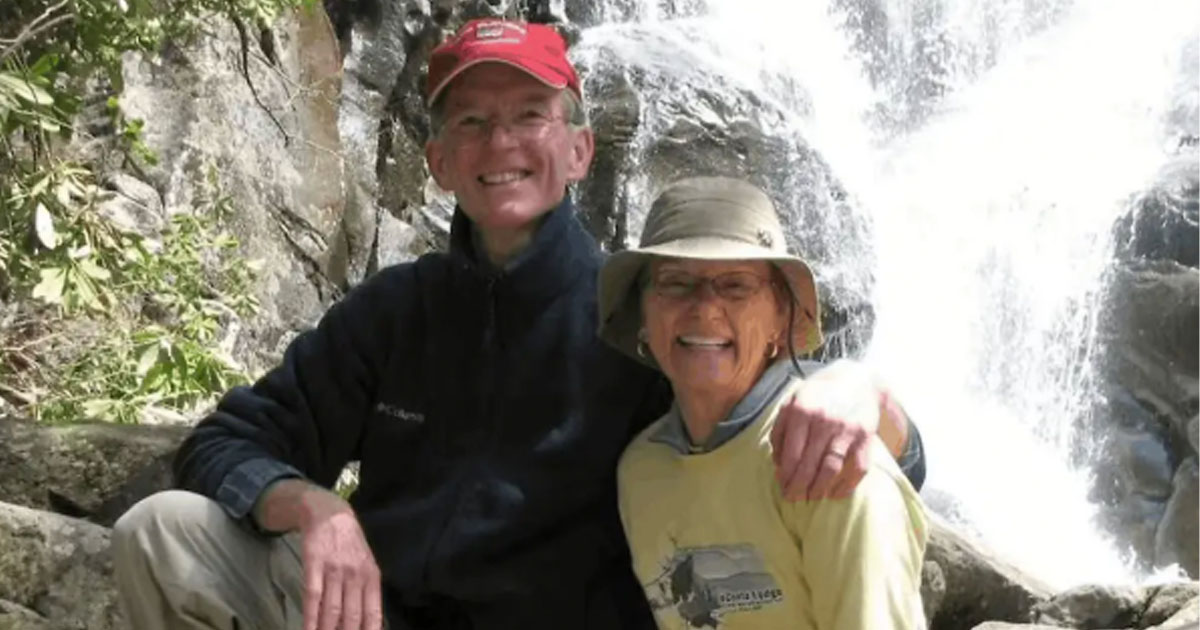
A 66-Year-Old Hiker’s Final Days on the Appalachian Trail: The Story of Geraldine “Gerry” Largay
A Routine Hike That Turned Into a Disappearance
A 66-year-old woman who set out to hike the Appalachian Trail vanished in 2013 after stepping away from the path during what was expected to be a brief detour. Geraldine “Gerry” Largay, a former Air Force nurse from Tennessee, disappeared on July 22, 2013, after leaving the marked trail in Maine.
What began as a simple moment away from the main route turned into a life-threatening situation in the remote wilderness. Largay became disoriented in an isolated area far from established shelters and roads, transforming a routine section of her hike into a desperate struggle for survival.
Her disappearance quickly prompted concern, but despite extensive search efforts, she was not located at the time.
Early Search Efforts and a Growing Mystery
After she was reported missing, search teams launched operations across the surrounding terrain. The Appalachian Trail in Maine is known for its dense forest, difficult navigation, and limited access points, which complicated rescue efforts.
For years, her fate remained unknown. Investigators continued to review leads and conduct searches, but no immediate trace of her location was discovered.
It was later determined that she likely survived for approximately 26 days after becoming lost, enduring harsh conditions in the wilderness before her death.
Messages That Never Reached Help
As investigators later uncovered, Largay attempted to contact her husband shortly after realizing she was lost. At the time of her disappearance, her husband, George Largay, was also hiking the trail, though they were separated by miles.
Her first attempt to send help came in a text message that was never delivered due to poor cell service. In it, she wrote:
“In somm trouble. Got off trail to go to br. Now lost. Can u call AMC to c if a trail maintainer can help me. Somewhere north of woods road. XOX.”
Over the next hour and a half, she sent additional messages seeking assistance, none of which successfully reached anyone. The following day, she sent another message that also failed to transmit:
“Lost since yesterday. Off trail 3 or 4 miles. Call police for what to do pls. XOX.”
These unsent messages later became key evidence in understanding her final movements and attempts to survive.
Life Alone in the Wilderness
After her disappearance, investigators believe Largay spent her final weeks attempting to navigate and survive in extremely difficult conditions. The remote environment offered limited resources, and dense forest terrain made movement and orientation challenging.
When her campsite was eventually discovered years later, it revealed signs of prolonged survival efforts. Personal items were found scattered around the area, including navigation materials, clothing, and survival tools.
Among the belongings recovered were maps, a space blanket, string, a flashlight, a rain jacket, dental floss, and a handmade necklace. These items suggested she attempted to remain prepared while waiting for rescue.
The Discovery of the Campsite
Her remains were ultimately found on October 16, 2015, in a secluded area of the Maine wilderness. The discovery was made by Lieutenant Kevin Adam, a forester with the U.S. Navy, during a later search effort.
The identification process was not immediate. At first, it was unclear whether the remains belonged to Largay or if they were unrelated. The remote location and condition of the site added uncertainty during the initial discovery.
Despite multiple earlier search missions, including K9 tracking teams that reportedly came within close proximity of the campsite, she had remained undiscovered for years.
The Journal That Told Her Story
Among the most significant findings at the campsite was a notebook covered in moss. The notebook contained handwritten entries that provided insight into her final days.
The cover bore the message: “George Please Read XOXO.”
According to investigators reviewing the journal, Largay described her experience after becoming lost and her realization that she could not easily find her way back to the trail. She documented her thoughts and expressed concern for her loved ones.
One of her final entries, dated August 6, 2013, included a message intended for her family:
“When you find my body, please call my husband George and my daughter Kerry.
“It will be the greatest kindness for them to know that I am dead and where you found me – no matter how many years from now.
“Please find it in your heart to mail the contents of this bag to one of them.”
These writings, combined with her unsent texts, allowed investigators to reconstruct a clearer timeline of her final days in the wilderness.
Reconstructing the Final Timeline
Based on her journal and recovered evidence, investigators concluded that Largay spent time moving through unfamiliar terrain before deciding to remain in one location. Her entries suggested that she attempted to travel for a period before recognizing the difficulty of finding her way back to the trail.
After this realization, she established a makeshift campsite and remained there while continuing to leave written messages. These notes reflected her awareness of the severity of her situation and her hope that she would eventually be found.
Her final communications became a critical record for understanding what occurred during her last days alive.
Family Confirmation and Official Findings
Following the investigation, authorities concluded that there was no evidence of foul play. Her death was ruled accidental, with findings indicating that she had become lost after stepping off the trail.
Her family later issued a statement acknowledging the conclusions of the investigation and expressing gratitude to search teams involved in the effort to locate her.
They confirmed that multiple agencies, including medical and law enforcement authorities, had reviewed the case and agreed on the findings.
The statement also expressed appreciation for the Maine Warden Service and other search personnel who dedicated time and resources to locating her.
They noted that the efforts reflected a deep commitment to the case and to finding answers for the family.
A Tragic End in a Remote Landscape
Largay’s story concluded in a quiet but deeply tragic setting deep within the Maine wilderness. Despite carrying some survival supplies, the isolation and difficulty of the terrain ultimately prevented rescue in time.
Her case became a reminder of how quickly a small navigational error in remote environments can lead to serious consequences, even for experienced hikers.
It also highlighted the challenges faced by search teams in vast forested regions where visibility, terrain, and distance can significantly slow recovery efforts.
A Lasting Reminder From the Appalachian Trail
The story of Geraldine “Gerry” Largay remains one of the most widely discussed cases connected to the Appalachian Trail. It underscores both the beauty and the risks of long-distance hiking in remote wilderness areas.
Her final messages, journal entries, and personal belongings continue to offer insight into her experience and final days, preserving a record of determination and endurance in extremely difficult circumstances.
Ultimately, her story stands as a solemn reminder of the importance of preparation, awareness, and caution when navigating isolated natural environments.
